
A Socio-Cultural, Historical, Linguistic and Spiritual Study
Abstract
Clothing and personal adornment constitute important dimensions of human civilization. They serve not only the practical purpose of covering and protecting the body but also reflect the economic conditions, occupational practices, social relationships, cultural identities and aesthetic preferences of a particular period. References to garments, cotton, spinning, weaving, dyeing, tailoring, turbans, ornaments and cosmetics in Sri Guru Granth Sahib provide valuable material for understanding the everyday life and cultural environment reflected in its compositions.
The scriptural references to clothing are particularly significant because they operate at two interconnected levels. At the literal level, they evoke familiar objects, occupations and practices of contemporary society. At the spiritual and metaphorical level, they communicate profound teachings concerning human mortality, humility, inner purity, moral conduct and the impermanence of worldly beauty. Guru Nanak Dev Ji and other contributors employ familiar images of garments and bodily adornment to expose the limitations of external appearances and emphasise the importance of inner transformation.
The present study examines selected references to clothing and personal adornment in Sri Guru Granth Sahib, with particular attention to their linguistic, historical, social, literary and spiritual significance. It also considers the need to distinguish direct textual evidence from historical interpretation, thereby providing a balanced framework for further research into the material culture of medieval Punjab.
Introduction
Clothing is one of the earliest and most essential expressions of human civilization. From the earliest stages of human existence, people have used different materials to cover their bodies, protect themselves from climatic conditions and distinguish themselves through appearance. With the development of settled communities, agriculture, animal husbandry and specialised occupations, the production and use of clothing became increasingly sophisticated.
In the Indian subcontinent, textile production developed into an important economic and cultural activity. Cotton, wool, silk and other fibres were processed into yarn and woven into different varieties of cloth. The resulting garments varied according to geographical conditions, economic circumstances, occupation, social position and personal preference.
The references to clothing in Sri Guru Granth Sahib are significant because they provide glimpses of this material world. The vocabulary of garments, cotton, turbans, stitched clothes, patched garments and personal decoration appears within different poetic and spiritual contexts. These references demonstrate the familiarity of the composers with objects and practices associated with everyday life.
It is important, however, to understand that Sri Guru Granth Sahib is primarily a spiritual and philosophical scripture rather than a historical chronicle or a technical treatise on textile manufacturing. Consequently, references to clothing should be examined in relation to their immediate textual context. A garment may represent physical appearance, social identity, religious conformity or the temporary nature of worldly existence.
The present study therefore approaches clothing from two complementary perspectives: first, as an element of the material and social environment, and second, as a literary and spiritual symbol employed in Gurbani.
Clothing and the Human Body
Clothing is closely associated with the human body and its social presentation. It provides protection, preserves modesty and contributes to personal appearance. In traditional societies, the type, quality and condition of clothing could also indicate economic circumstances and social position.
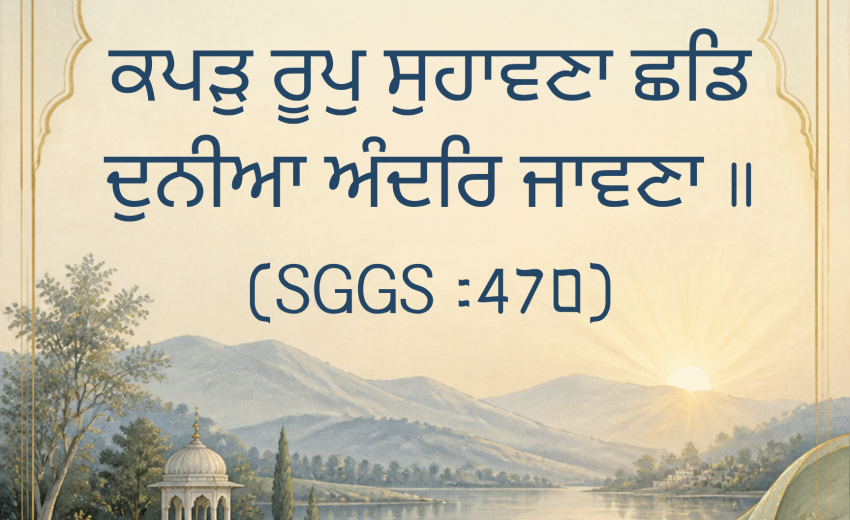
Guru Nanak Dev Ji refers to beautiful garments and physical appearance in a significant passage in Asa Ki Vaar:
ਕਪੜੁ ਰੂਪੁ ਸੁਹਾਵਣਾ ਛਡਿ ਦੁਨੀਆ ਅੰਦਰਿ ਜਾਵਣਾ ॥ (SGGS :470)
The sense of the verse is that beautiful clothing and bodily appearance must ultimately be left behind when a person departs from this world.
The significance of this passage extends beyond the literal reference to garments. It draws attention to the temporary nature of physical beauty and worldly possessions. A person may spend considerable time and resources in maintaining an attractive appearance, but neither clothing nor bodily beauty can accompany the individual beyond death.
The verse also reflects the social importance attached to attractive garments. The expression kaparh roop suhavna brings together clothing and beauty, suggesting that dress was recognised as an important element of personal appearance.
Guru Nanak Dev Ji, however, redirects attention from outward appearance towards the moral consequences of human actions. The emphasis is not upon condemning clothing or aesthetic appreciation but upon recognising their limitations.
Cotton and the Textile Tradition
Cotton occupies an important position in the textile history of the Indian subcontinent. Its cultivation, processing and conversion into yarn supported numerous occupations and provided material for garments used by different sections of society. Cotton production involved several stages, including cultivation, harvesting, separation of fibre from seeds, cleaning, carding, spinning and weaving. The resulting cloth could subsequently be dyed, finished and stitched into garments.
A particularly interesting reference occurs in the Saloks of Sheikh Farid Ji:
ਫਰੀਦਾ ਵੇਖੁ ਕਪਾਹੈ ਜਿ ਥੀਆ ਜਿ ਸਿਰਿ ਥੀਆ ਤਿਲਾਹ ॥ ਕਮਾਦੈ ਅਰੁ ਕਾਗਦੈ ਕੁੰਨੇ ਕੋਇਲਿਆਹ ॥ ਮੰਦੇ ਅਮਲ ਕਰੇਦਿਆ ਏਹ ਸਜਾਇ ਤਿਨਾਹ ॥੪੯॥ (SGGS :1380)
In this passage, cotton, sesame, sugarcane, paper, earthen vessels and charcoal are mentioned together. Sheikh Farid Ji draws upon familiar materials and their processes of transformation to illustrate the consequences of wrongful actions.
The reference to cotton is particularly noteworthy. It indicates that cotton was a familiar material within the social and economic environment understood by the audience. Its processing provides the basis for the metaphor employed in the composition. The passage should not, however, be interpreted as a technical description of cotton production. Its principal purpose is spiritual and moral. Nevertheless, the use of cotton as a familiar example demonstrates the importance of ordinary agricultural and occupational materials in the poetic vocabulary of Gurbani.
Spinning and the Preparation of Yarn
Spinning was an essential stage in traditional textile production. After cotton fibres had been separated and cleaned, they were converted into yarn through the process of spinning. The prepared yarn was subsequently used for weaving cloth. The significance of this occupational activity is particularly evident in Guru Nanak Dev Ji’s celebrated metaphor:
ਦਇਆ ਕਪਾਹ ਸੰਤੋਖੁ ਸੂਤੁ ਜਤੁ ਗੰਢੀ ਸਤੁ ਵਟੁ ॥ (SGGS :471)
The verse may be understood as: Compassion is the cotton; Contentment is the thread; Self-restraint is the knot and Truth is the twist.
This is one of the most illuminating examples of the transformation of an everyday occupation into a spiritual teaching. Guru Nanak Dev Ji employs the familiar process of preparing yarn to construct an ethical model of human character. Just as cotton is transformed into thread through successive stages, human personality must also be shaped through compassion, contentment, self-restraint and truthfulness.
The metaphor is especially effective because it connects a familiar domestic and occupational activity with the cultivation of spiritual qualities. It demonstrates the Guru’s ability to derive profound philosophical meaning from ordinary objects and processes.The passage is not merely a reference to spinning. It presents a complete moral vision in which ethical qualities become the essential materials of spiritual life.
Weaving and the Symbolism of Fabric
Weaving is the process through which yarn is interlaced to produce cloth. In traditional Indian society, weaving was an important occupation, supporting both domestic requirements and commercial exchange.The preparation of fabric involved technical knowledge, patience and skilled labour. The warp and weft threads had to be arranged carefully to produce a durable and usable piece of cloth.
ਵੇਲਿ ਪਿੰਞਾਇਆ ਕਤਿ ਵੁਣਾਇਆ ॥ ਕਟਿ ਕੁਟਿ ਕਰਿ ਖੁੰਬਿ ਚੜਾਇਆ ॥
(The cotton is ginned, woven and spun; The cloth is laid out, washed and bleached white.) (SGGS : 955)
Although the present textual evidence does not provide a complete technical description of weaving practices, the metaphor of cotton and thread in Guru Nanak Dev Ji’s composition establishes a meaningful connection with textile production.The transformation of cotton into yarn and yarn into cloth also provides an appropriate metaphor for the formation of human character. Individual virtues, when brought together, produce a balanced and integrated personality.This interpretation is consistent with the wider spiritual philosophy of Gurbani, which emphasises the cultivation of virtues rather than the mere performance of external religious practices.
Dyeing and the Permanence of Spiritual Colour
Dyeing was another important aspect of traditional textile production. Cloth was coloured to improve its appearance and to distinguish different varieties of garments. Natural dyes derived from plants, minerals and other substances were used in different textile traditions.
ਨਾਨਕ ਪਾਹੈ ਬਾਹਰਾ ਕੋਰੈ ਰੰਗੁ ਨ ਸੋਇ ॥ ਭੈ ਵਿਚਿ ਖੁੰਬਿ ਚੜਾਈਐ ਸਰਮੁ ਪਾਹੁ ਤਨਿ ਹੋਇ ॥
(O Nanak! Without treatment, the raw fabric cannot be dyed. In the Fear of God it is bleached white, if the treatment of modesty is applied to the cloth of the body.) (SGGS : 468)
In Gurbani, the imagery of colour frequently assumes a spiritual significance. The idea of being coloured in the Divine love is particularly important.The metaphor of colour provides a powerful means of expressing the transformation of human consciousness. Ordinary dye may fade with time, but the spiritual colour of Divine love is represented as enduring.
Thus, the distinction between external and internal colour becomes central to the spiritual interpretation of clothing. A garment may possess an attractive colour, but the human mind must acquire the lasting colour of devotion, truth and remembrance. It is important to distinguish this spiritual metaphor from a technical historical description of dyeing. The former is directly relevant to the theological interpretation of Gurbani, while the latter requires additional evidence from textile history.
Tailoring, Sewing and the Patched Garment
The development of stitched garments introduced further occupations associated with cutting, measuring, sewing and repairing cloth. Needles, thread and scissors became familiar tools in the preparation and maintenance of clothing.
ਲੋਹਾ ਵਢੇ ਦਰਜੀ ਪਾੜੇ ਸੂਈ ਧਾਗਾ ਸੀਵੈ ।। ਇਉ ਪਤਿ ਪਾਟੀ ਸਿਫਤੀ ਸੀਪੈ ਨਾਨਕ ਜੀਵਤ ਜੀਵੈ ॥ ਹੋਇ ਪੁਰਾਣਾ ਕਪੜੁ ਪਾਟੈ ਸੂਈ ਧਾਗਾ ਗੰਢੈ ॥ ਇਉ ਪਤਿ ਪਾਟੀ ਸਿਫਤੀ ਸੀਪੈ ਨਾਨਕ ਜੀਵਤ ਜੀਵੈ ॥ਹੋਇ ਪੁਰਾਣਾ ਕਪੜੁ ਪਾਟੈ ਸੂਈ ਧਾਗਾ ਗੰਢੈ ॥
(The tailor cuts it with his scissors, and sews it with his thread.Thus, the torn and tattered honor is sewn up again, through the Lord's Praise, O Nanak! And one lives life.Becoming worn, the cloth is torn; with needle and thread it is sewn up again.) (SGGS : 955)
A particularly evocative reference to a patched garment occurs in the Saloks of Sheikh Farid Ji:
ਫਰੀਦਾ ਖਿੰਥੜਿ ਮੇਖਾ ਅਗਲੀਆ ਜਿੰਦੁ ਨ ਕਾਈ ਮੇਖ ॥ (SGGS : 1380)
The expression khintharh refers to a patched or pieced garment, while mekha signifies stitches or tacks. The translation conveys the image of a garment containing numerous stitches, whereas the soul has no such stitching. The metaphor is profound. A garment can be repaired through stitching whenever it becomes torn. The human soul, however, cannot be understood through the same material analogy. The uncertainty of life and the vulnerability of the body become central to the spiritual message.
This reference is also significant for the history of clothing. It suggests familiarity with patched garments and the practice of repairing worn-out fabric rather than discarding it immediately. Such practices were economically meaningful in traditional societies, where the reuse and repair of clothing formed part of ordinary domestic life. The passage therefore has both literary and cultural importance. Its primary purpose remains spiritual, but its imagery preserves a valuable reference to the material experience of ordinary people.
Blue Garments and the Political Environment
One of the most historically significant references to clothing occurs in Guru Nanak Dev Ji’s Asa composition:
ਨੀਲ ਵਸਤ੍ਰ ਪਹਿਰਿ ਹੋਵਹਿ ਪਰਵਾਣੁ ॥
ਮਲੇਛ ਧਾਨੁ ਲੇ ਪੂਜਹਿ ਪੁਰਾਣੁ ॥ (SGGS : 472)
The passage refers to people wearing blue garments to gain acceptance from the Muslim ruling establishment while continuing to maintain their own religious practices. The reference must be understood within its immediate social and political context. During the period of Guru Nanak Dev Ji, clothing could function as a visible indication of social affiliation and accommodation with political authority.
The expression neel vastr is therefore significant not simply as a reference to colour but also as an indication of the relationship between outward appearance and political acceptance. The following line highlights the contradiction between accepting a livelihood from those whom one outwardly regards as different and continuing to claim religious exclusiveness.
Guru Nanak Dev Ji exposes this inconsistency through a broader criticism of hypocrisy and superficial religious observance. The passage is important for understanding the social meaning of clothing in the period. Nevertheless, it should not be interpreted as evidence that every individual wearing blue garments belonged to a particular political or religious category. Its central concern is the contradiction between outward conformity and inner sincerity.
Turbans and Traditional Headwear
Headwear has historically formed an important component of clothing in the Indian subcontinent. The turban, in particular, has carried practical, cultural and social significance.
ਫਰੀਦਾ ਮੈ ਭੋਲਾਵਾ ਪਗ ਦਾ ਮਤੁ ਮੈਲੀ ਹੋਇ ਜਾਇ ॥ਗਹਿਲਾ ਰੂਹੁ ਨ ਜਾਣਈ ਸਿਰੁ ਭੀ ਮਿਟੀ ਖਾਇ ॥੨੬॥
( Farid, I was worried that my turban might become dirty. My thoughtless self did not realize that one day, dust will consume my head as well.)(SGGS:1379)
Turban protects the head from climatic conditions and may also communicate identity, dignity, honour and social position. Guru Nanak Dev Ji refers to external religious appearance through the expression:
ਦੁਇ ਧੋਤੀ ਬਸਤ੍ਰ ਕਪਾਟੰ ॥ (SGGS :470)
The passage occurs in a discussion concerning outward religious observances and the importance attached to external appearance.
The reference to garments and headwear must be understood in its broader argumentative context. Guru Nanak Dev Ji challenges the assumption that distinctive clothing or ritual dress alone can establish spiritual attainment.
The turban is not criticised as an article of clothing. Rather, the Guru draws attention to the inadequacy of outward symbols when they are not supported by inner knowledge and righteous conduct. In Sikh cultural history, the turban subsequently acquired particular significance as an expression of Sikh identity and dignity. Its later historical development should be distinguished from the specific context of this early Gurbani passage.
Clothing, Social Status and Personal Appearance
The quality of clothing has often reflected economic circumstances and social position. Fine fabrics, costly garments and elaborate ornamentation were generally associated with greater material resources, while ordinary people relied upon simpler clothing.
In traditional society, clothing could also communicate occupation, regional affiliation and personal preference. The reference to beautiful garments in Asa Ki Vaar demonstrates that attractive clothing was a familiar element of social life. At the same time, Guru Nanak Dev Ji reminds the reader that such possessions are temporary. This distinction between material comfort and spiritual fulfilment is central to the philosophy of Gurbani. The spiritual value of a person cannot be determined by the quality of garments, the richness of fabric or the extent of personal decoration. True worth is reflected in humility, compassion, truthfulness and devotion.
Jewellery and Personal Ornamentation
Jewellery has formed an important part of personal adornment in South Asian society. Gold, silver, precious stones and other materials have been used in the preparation of ornaments. Necklaces, earrings, rings, bangles and other decorative objects have served aesthetic, social and sometimes economic purposes. In many traditional communities, jewellery also represented family wealth, marriage customs and inherited possessions.
ਐਸਾ ਸੀਗਾਰੁ ਬਣਾਇ ਤੂ ਮੈਲਾ ਕਦੇ ਨ ਹੋਵਈ ਅਹਿਨਿਸਿ ਲਾਗੈ ਭਾਉ ॥ ਨਾਨਕ ਸੋਹਾਗਣਿ ਕਾ ਕਿਆ ਚਿਹਨੁ ਹੈ ਅੰਦਰਿ ਸਚੁ ਮੁਖੁ ਉਜਲਾ ਖਸਮੈ ਮਾਹਿ ਸਮਾਇ ॥੧॥
( So, decorate yourself with the decorations that will never stain, and love the Lord day and night. O Nanak! What is the character of the happy soul-bride? Within her, is Truth; her face is bright and radiant, and she is absorbed in her Lord and Master.) (SGGS:785)
A reference to ornaments and personal decoration appears in the poetic imagery of Gurbani. However, the precise historical identification of particular ornaments requires careful examination of the original vocabulary and context. The spiritual significance of ornamentation becomes clear when external beauty is contrasted with inner devotion.
Gurbani does not measure the spiritual worth of an individual through the possession of jewellery or costly objects. The essential concern is the condition of the mind. Consequently, ornaments may be studied as elements of material culture, but their presence in a spiritual composition must also be examined in relation to the poetic purpose for which they are employed.
Cosmetics, Kajal, Garlands and Betel Leaves
Cosmetics and personal decoration formed part of traditional practices of beautification. Kajal or collyrium was applied to the eyes, flowers and garlands were used for adornment, and betel leaves were associated with social customs and personal enjoyment.
An interesting passage occurs in the Bara Maha of Guru Arjan Dev Ji:
ਸਖੀ ਕਾਜਲ ਹਾਰ ਤੰਬੋਲ ਸਭੈ ਕਿਛੁ ਸਾਜਿਆ ॥ ਸੋਲਹ ਕੀਏ ਸੀਗਾਰ ਕਿ ਅੰਜਨੁ ਪਾਜਿਆ ॥ (SGGS :1361)
The passage describes the preparation of kajal, garlands and betel leaves, together with the traditional sixteen forms of adornment. The imagery is associated with the bride preparing herself for the beloved. In the spiritual interpretation, the bride represents the human soul, while the beloved represents the Divine. The preparation of external beauty becomes a metaphor for the soul’s longing for union with the Divine.
The reference is valuable for understanding the vocabulary of personal adornment. It also indicates the familiarity of the audience with cosmetics, floral decoration and traditional forms of beautification. Nevertheless, the central meaning is spiritual rather than merely descriptive. The preparation of the bride becomes an expression of devotion, expectation and longing.
Clothing as a Symbol of Spiritual Identity
One of the most distinctive features of Gurbani is its ability to transform familiar objects into spiritual symbols. Clothing is particularly suitable for this purpose because it is closely associated with the human body, personal identity and social appearance. A garment can be beautiful, expensive or socially prestigious, but its outward qualities cannot determine the spiritual condition of the wearer.
The patched garment in Sheikh Farid Ji’s salok represents the vulnerability of embodied existence. The beautiful garment in Guru Nanak Dev Ji’s Asa Ki Vaar symbolises the impermanence of worldly appearance. The blue garment represents the relationship between external conformity and political acceptance. These examples demonstrate the literary versatility of clothing imagery. The distinction between the outer garment and the inner self becomes a recurring spiritual concern. The human being must move beyond attachment to physical appearance and cultivate an inner life grounded in truth and Divine remembrance.
Clothing and the Critique of Religious Hypocrisy
A significant feature of Guru Nanak Dev Ji’s teachings is the criticism of religious hypocrisy. External clothing, ritual marks and ceremonial practices may create an impression of religious identity. However, such appearances become meaningless when they are not accompanied by ethical conduct.
The discussion of blue garments on SGGS page 472 is particularly important in this regard. It exposes the contradiction between outward religious claims and practical behaviour. Similarly, the reference to clothing and headwear on Ang 470 occurs within a wider critique of empty ritualism. The message is not that all religious symbols or forms of dress are without value. Rather, they must not be mistaken for genuine spiritual attainment. True religious identity is established through truthful living, humility, compassion and an understanding of the Divine.
The Historical Value of Clothing References in Gurbani
References to clothing in Sri Guru Granth Sahib provide valuable evidence for the study of medieval social and cultural history.
They offer insights into: The familiarity of cotton and textile materials;The relationship between agriculture and domestic production;The use of spinning and yarn as occupational images;The existence of stitched and patched garments;The social significance of coloured clothing;The use of turbans and other forms of headwear;The vocabulary of jewellery and personal adornment;The use of cosmetics, garlands and betel leaves;The relationship between external appearance and religious identity.
However, these references should not be treated as a complete record of the textile industry or dress practices of the period. For example, the mention of cotton does not independently establish the varieties cultivated, the scale of production or the precise methods of processing. Similarly, a reference to blue garments does not establish a universal dress code. A responsible historical study must combine scriptural evidence with contemporary literary works, historical records, dictionaries, archaeological findings and research on traditional textiles.
Linguistic and Cultural Significance
The vocabulary of clothing in Gurbani is also important for the study of Punjabi and related linguistic traditions. Words such as kaparh, vastr, dhoti, khintharh, soot, kaajal, haar and tambol reflect the linguistic diversity of the scriptural compositions.
These terms have roots in different linguistic traditions and demonstrate the interaction of Punjabi, Sanskrit-derived vocabulary and other regional languages. Their meanings must be understood in their historical and literary contexts. A word may have acquired additional meanings over time, and its modern usage may not fully represent its earlier significance. The study of such vocabulary can therefore contribute to historical lexicography, comparative linguistics and the cultural history of Punjabi.
The Need for a Multidisciplinary Approach
A comprehensive study of dress and personal adornment in Gurbani requires cooperation among scholars from different disciplines. Textual scholars can establish the exact wording, context and interpretation of the scriptural passages. Historians can investigate the social and political conditions reflected in the references. Linguists can examine the origins and development of the relevant vocabulary.
Similarly, textile historians can explain the processes of spinning, weaving, dyeing and tailoring, while scholars of material culture can investigate garments, ornaments and personal decoration. Such interdisciplinary research would help distinguish between what is explicitly stated in the scripture and what can reasonably be reconstructed from historical evidence. It would also prevent unsupported identifications and ensure that the spiritual meaning of Gurbani remains central to the discussion.
Conclusion
The references to clothing and personal adornment in Sri Guru Granth Sahib constitute a valuable subject for historical, linguistic, cultural and literary research.
Cotton, yarn, patched garments, blue robes, turbans, ornaments and cosmetics provide glimpses of the material environment familiar to the composers and their audiences. These references also demonstrate the close relationship between everyday occupations and the poetic imagination of Gurbani.
The most significant contribution of these passages, however, lies in their spiritual interpretation. Guru Nanak Dev Ji and other contributors employ familiar images of clothing to communicate the impermanence of physical beauty, the limitations of worldly possessions and the importance of inner purity.The patched garment becomes an image of human vulnerability; the beautiful garment reminds the individual of mortality; the blue robe illustrates the danger of external conformity; and the adornment of the bride becomes a metaphor for the soul’s longing for the Divine.
Thus, clothing in Gurbani is much more than a material necessity or an element of personal appearance. It becomes a literary instrument through which profound spiritual and ethical truths are communicated. A systematic study of these references can enrich our understanding of the social history of medieval Punjab while also illuminating the philosophical depth and literary excellence of Sikh scripture.
Ultimately, the central message remains that external beauty is temporary, whereas the cultivation of truth, compassion, humility and Divine remembrance constitutes the enduring adornment of human life.