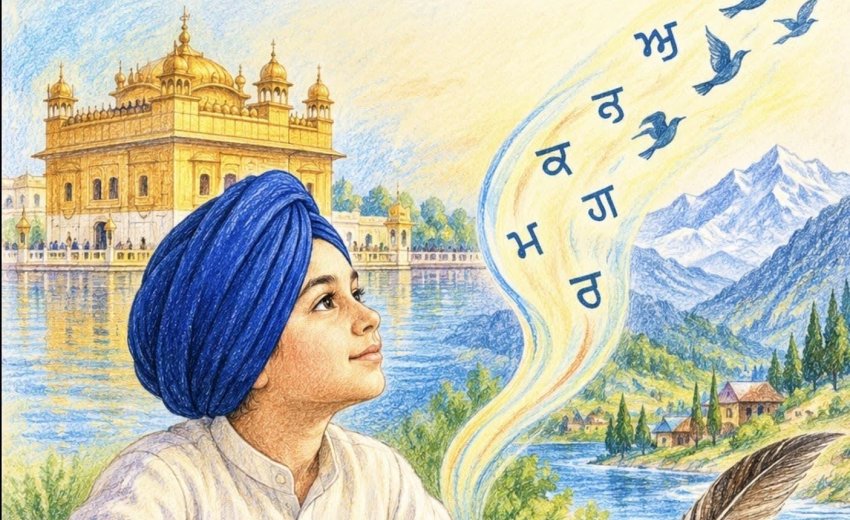

Punjabi Language: The Flight of Our Soul - Linguistic Identity, Cultural Heritage, and Educational Significance
Punjabi is not merely a means of communication; it is the living expression of our collective memory, cultural identity and spiritual heritage. Despite its rich literary tradition and widespread use, Punjabi is sometimes unfairly associated with illiteracy or backwardness. Such misconceptions must be challenged through scholarship, education and cultural awareness.
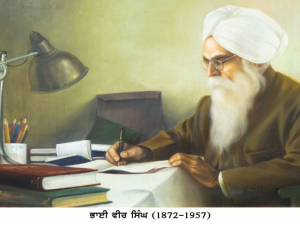
Spoken by millions across the world, Punjabi is a major international language with a distinguished literary heritage. It is written primarily in the Gurmukhi script in Indian Punjab and Shahmukhi in Pakistani Punjab. Its literature embraces the spiritual wisdom of the Sikh Gurus, Baba Farid, Sultan Bahu, Bulleh Shah, Waris Shah, Bhai Vir Singh and numerous other poets and thinkers. This tradition alone demonstrates the language’s intellectual depth and literary vitality.
Mother Tongue and Education
A child’s mother tongue is the natural foundation of learning, thought and emotional development. Education in a familiar language helps children understand concepts, express themselves confidently and remain connected to their cultural environment. Learning English and other languages is equally valuable, but it should not come at the expense of Punjabi. The early years of education should give due priority to the mother tongue, while additional languages are introduced progressively. Penalising children for speaking Punjabi in schools is particularly harmful and should be discouraged.
The technological achievements of countries such as Germany, France, Japan, China and Russia demonstrate that scientific progress does not require the abandonment of native languages. Punjabi, too, can flourish in education, research, administration and digital communication if supported by appropriate policies and institutions.
Punjabi: The Cultural Heritage of Jammu and Kashmir
Jammu and Kashmir forms an important part of the wider Punjabi cultural and linguistic landscape. The rivers Jhelum, Chenab and Ravi connect its historical and geographical experience with the Punjab region. Punjabi and its closely related regional varieties—including Pothwari, Poonchi, Pahari and other local speech forms—reflect centuries of linguistic interaction and cultural exchange. Their precise relationships and classifications merit continued scholarly investigation.
Punjabi is a shared heritage of Muslims, Sikhs, Hindus, Christians and other communities. Its literary traditions transcend religious and social boundaries. The language has also circulated through Gurmukhi, Shahmukhi, Devanagari and other writing practices, allowing people of different educational and cultural backgrounds to participate in its literary life.
The political and administrative separation of Jammu and Kashmir from Punjab has not erased these historical connections. Punjabi literature preserves valuable evidence of the region’s social history, religious diversity, folklore and intellectual development. Its study is therefore essential to understanding the cultural history of Jammu and Kashmir.
Muslim Punjabi Writers of Jammu and Kashmir
Muslim writers and Sufi poets have made substantial contributions to Punjabi literature in the region. Among the notable figures are Mian Muhammad Bakhsh, renowned for Saif-ul-Malook; Ghulam Nabi Rasleen, associated with Rasa Pravandha; Abdullah Larvi, known for his Siharfi compositions; Salim Kasher, whose collections include Tattian Chhawan, Surghi Da Tara and Hawa Di Suli; and Mian Nizamuddin Larvi, whose poetic legacy reflects the region’s Sufi traditions.
Other significant writers include Aziz Khan Karnahi, Syed Husain Shah Bukhari, Sarfraz Hussain Khan Tasin, Sarwar Hasan, Khuda Bakhsh, Ghulam Hyder Gulzar, Ghulam Muhammad Khadim, Iqbal Azeem Chowdhary, Khalid Hussain, Dr Sabar Afaqi ,Dr Rafique Anjum and Dr Snobar . Their work encompasses poetry, Sufi thought, satire, short fiction, criticism and linguistic research. Fazal Kashmiri also deserves recognition for translating important Sikh scriptural compositions, including Japji Sahib and Sukhmani Sahib, into Kashmiri and Urdu.
Many of these writers remain insufficiently documented. Their manuscripts, published works, biographical details and oral traditions require systematic collection, verification and preservation.
Hindu and Other Punjabi Literary Contributors
Punjabi literature in Jammu and Kashmir has also been enriched by Hindu and other non-Muslim writers. Historical and literary figures include Sant Das Chhibber, Sant Rain, Baba Siddhanath, Ram Dhan, Mahatma Niranjan Das, Tara Chand Gosain and Das Mall. Their compositions reflect devotional, philosophical, narrative and folk traditions.
Modern contributors include O. P. Sharma Sarthi, Keval Krishna Shakar, Sapan Mala, Des Raj Danish, Makhan Lal Neer Kashmiri, Vishwa Nath Dil, Dr Sushil Sharma, Dr Jatinder Udhampuri, Dr Baldev Raj Gupta and Dr Asha Gupta. Their work encompasses poetry, drama, folklore, linguistics, literary criticism and translation.
Numerous additional writers remain untraced or inadequately studied. Their recovery requires archival research, examination of private collections, bibliographical surveys and interviews with families and literary communities.
Preserving Our Linguistic Heritage
The history of Punjabi extends across the undivided Punjab and neighbouring regions, while the Partition of 1947 profoundly altered its geographical and literary environment. Its diverse dialects and historical forms reflect a long process of linguistic evolution. Further research into early Punjabi texts, regional vocabularies and literary networks is essential to establish a more comprehensive history of the language.
Punjabi should be promoted in schools, universities, public administration, publishing and digital media. Its visibility can be strengthened through Punjabi signboards, road signs, place names and official communication. At the same time, historical claims, linguistic classifications and biographical accounts should be supported by reliable primary and archival sources.
The preservation of Punjabi is not the responsibility of one religious community or region alone. It is a collective cultural obligation. When a language weakens, a society risks losing a vital part of its historical memory, literary imagination and inherited wisdom.
Punjabi is the flight of our soul. Let us learn other languages, embrace scientific progress and engage with the modern world, while remaining firmly rooted in our mother tongue. To speak, read, write and nurture Punjabi is to honour the generations who have enriched it and to preserve its legacy for those yet to come.