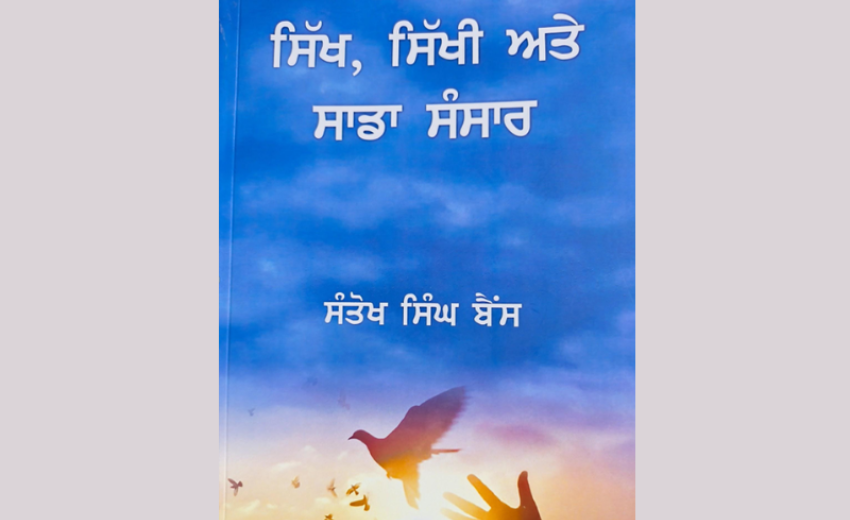

Sikh,Sikhi Ate Sada Sansar is a valuable collection of nineteen selected articles by Santokh Singh Bains, written over a period of forty-six years. Previously published, in abridged forms, in The Sikh Review, The Spokesman Weekly, and North American Sikh Review, these articles examine Sikh religious philosophy, historical heritage, social responsibilities, diaspora experiences, and the global visibility of the Sikh community.
The book’s principal strength lies in the breadth and contemporary relevance of its themes. The opening essays explore the quintessence of Guru Nanak’s philosophy and offer a comparative perspective on Buddhism and Sikhism. These discussions provide an opportunity to understand Sikhism within a wider framework of religious thought, ethical values, and universal human concerns. The author also addresses the destruction of Sikh heritage and the underexplored role of gurdwaras in distributing Sikh literature, highlighting the need to strengthen religious education, historical awareness, and community-based dissemination of knowledge.
A significant dimension of the collection is its emphasis on national integration, universal brotherhood, and interfaith engagement. The article on Bhagat Puran Singh presents a life of renunciation, compassion, and dedicated service as an enduring model of humanitarian commitment. Discussions of Sikh leadership, heritage museums, philanthropy, and financial contributions invite reflection on the institutional responsibilities of the community and the effective utilisation of its considerable human and material resources.
The essays dealing with Sikhs in Western countries are particularly noteworthy. Topics such as Sikh education, observant Sikh men serving in the United States Army and Air Force, hate crimes and violence against Sikhs in America, and participation in international interfaith events illuminate both the achievements and challenges of the Sikh diaspora. The inclusion of Sikh participation in American Rose Parades and the portrayal of a turbaned Sikh driving instructor by Ben Kingsley in Learning to Drive further demonstrates how public representation and cultural participation can influence the wider perception of Sikh identity. These subjects are especially relevant to discussions of religious freedom, visibility, integration, and the preservation of distinct cultural traditions in multicultural societies.
The book also considers Punjab, the Punjabi language, and Punjabiyat, thereby connecting Sikh identity with its linguistic, cultural, and regional foundations. The account of Major Devender Pal Singh, recognised as India’s first blade runner, adds an inspiring dimension of courage, determination, and resilience. Collectively, these subjects demonstrate that Sikh identity encompasses not only religious belief but also humanitarian service, educational advancement, cultural expression, and active participation in public life.
Santokh Singh Bains’s professional experience in journalism and banking, together with his sustained engagement with Sikh affairs in India and abroad, informs the collection’s broad outlook. His articles draw attention to issues that require continued scholarly discussion and collective action. As a compilation of writings produced across several decades, the book would also benefit from a more explicit editorial framework connecting its individual essays and distinguishing historical developments from contemporary concerns.
In conclusion, Sikh,Sikhi Ate Sada Sansar is a thought-provoking contribution to Punjabi writing on Sikh philosophy, heritage, diaspora studies, and contemporary community affairs. Its nineteen articles offer readers a wide-ranging perspective on the challenges, achievements, and responsibilities of Sikhs in a rapidly changing world. The volume is recommended to scholars, students, community leaders, and general readers interested in understanding Sikhism’s enduring ethical ideals and its evolving place in global society.