
Introduction
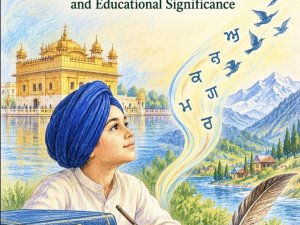
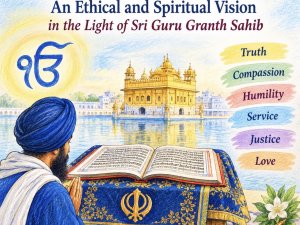
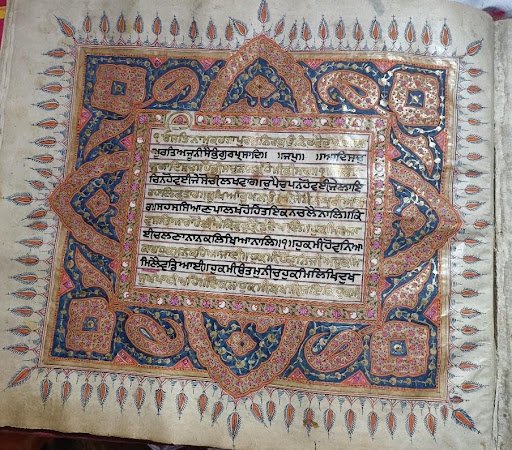
Gurmukhi calligraphy occupies a distinguished position in the intellectual, artistic, and devotional traditions of Sikh civilization. More than a decorative art, it is a sacred discipline that combines aesthetic refinement with spiritual contemplation. Every carefully formed letter of the Gurmukhi script reflects not only artistic skill but also profound reverence for the revealed Word (Gurbani). Throughout Sikh history, generations of scribes (likhārīs) transformed the act of writing into an expression of devotion, preserving the sacred text of the Sri Guru Granth Sahib with extraordinary precision and discipline.
In contemporary times, when digital typography has largely replaced handwritten manuscripts, the survival of traditional Gurmukhi calligraphy depends upon dedicated artists committed to preserving this invaluable heritage. Among the emerging custodians of this tradition in Kashmir is Loveleen Kour, a young calligrapher whose work represents a remarkable synthesis of artistic excellence, cultural preservation, and spiritual commitment.
The Historical Evolution of Gurmukhi Calligraphy
The history of Gurmukhi calligraphy is inseparable from the evolution of the Sikh script itself. The Gurmukhi script was standardized and propagated by Guru Angad Dev Ji during the sixteenth century. By providing a simple, systematic, and accessible writing system, the Guru enabled the Sikh community to preserve and disseminate the teachings of the Gurus among ordinary people.
The preparation of handwritten manuscripts (bīrs) of the Sri Guru Granth Sahib soon developed into a highly specialised vocation. Early Sikh scribes established rigorous conventions governing the size of letters, the spacing of lines, the alignment of text, and the faithful reproduction of Gurbani. Their objective was never excessive ornamentation but clarity, uniformity, and spiritual dignity.
For several centuries, Sikh manuscripts were written predominantly in the larivār style, in which words were written continuously without spaces. This required both exceptional skill from the scribe and deep familiarity with Gurbani from the reader. Every manuscript reflected months, and often years, of painstaking labour.
The principal centres of manuscript production included Amritsar, Kartarpur, Anandpur Sahib, and later numerous educational institutions and scriptoria maintained by gurdwaras and Sikh courts. During the eighteenth and nineteenth centuries, royal patronage encouraged remarkable advances in manuscript illumination. Decorative floral borders, illuminated headings, and ornamental motifs often reveal the influence of contemporary Persian, Mughal, and Punjabi artistic traditions while maintaining the distinctive identity of Sikh manuscript culture.
Although lithographic printing and later movable-type presses transformed the dissemination of Sikh literature during the nineteenth century, handwritten manuscripts retained their religious prestige and artistic significance. Today they constitute indispensable sources for the disciplines of Sikh palaeography, codicology, textual criticism, and manuscript history.
The Tradition of Gurmukhi Calligraphy in Kashmir
The history of Gurmukhi calligraphy in Kashmir forms an important yet relatively understudied chapter in Sikh cultural history. From the establishment of Sikh settlements in the Valley until the twentieth century, handwritten manuscripts remained central to religious life and education.
Important Sikh centres in Srinagar, Baramulla, and Muzaffarabad nurtured accomplished scribes who copied the Sri Guru Granth Sahib, prayer books, historical works, and instructional literature with exceptional care. These manuscripts demonstrate not only technical mastery but also subtle regional characteristics that distinguish Kashmiri examples from those produced in Punjab.
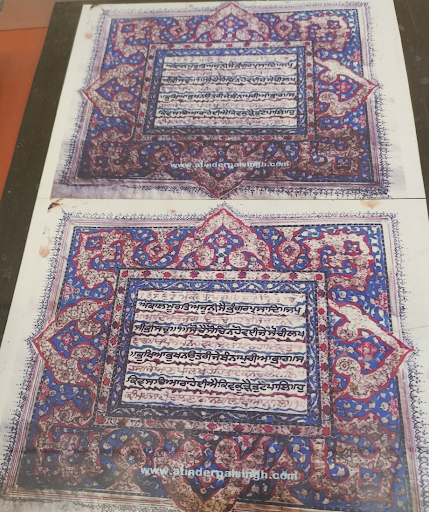
Kashmiri calligraphers frequently incorporated local artistic sensibilities into their work. Fine floral ornamentation, balanced page layouts, delicate marginal decorations, and elegant penmanship reveal a creative dialogue between the broader Sikh manuscript tradition and Kashmir's own rich artistic heritage.
Gurdwaras served as important centres for the preservation of this tradition. Besides functioning as places of worship, they became repositories of manuscripts and centres where younger generations learned both Gurmukhi literacy and the discipline of beautiful handwriting.
The arrival of printing gradually reduced the production of handwritten manuscripts, yet surviving examples continue to provide invaluable evidence for understanding Kashmir's Sikh intellectual and artistic history. Their preservation remains an urgent scholarly responsibility.
Loveleen Kaur: A Young Custodian of a Sacred Tradition
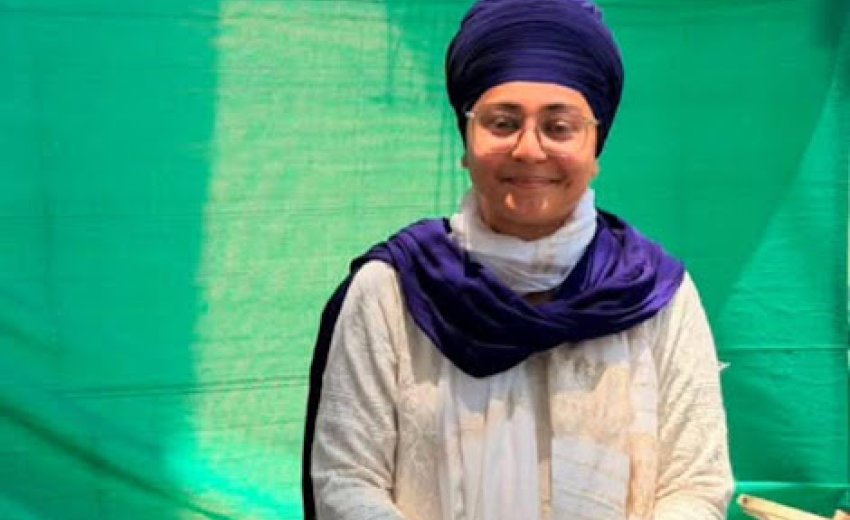
Against this historical background emerges the inspiring contribution of Loveleen Kaur, whose work illustrates the continuing vitality of Gurmukhi calligraphy in Kashmir.
Loveleen Kaur belongs to village Foji Pora in Budgam district, Kashmir, and is the daughter of Sardar Manjeet Singh. She recently completed her B.A. (Honours) in Philosophy from Amar Singh College, Srinagar, combining academic study with artistic practice.
Her introduction to Gurmukhi calligraphy began in 2019, when she participated in a calligraphy competition organised by Komal Library. It was during this event that she first learned the proper use of the traditional kalam (reed pen). Although she regarded herself as a beginner, her natural aptitude earned her Second Prize, an achievement that inspired her to pursue the art more seriously.
A decisive stage in her artistic development came through the guidance of Rajvir Kaur from Punjab, who visited Kashmir during a training camp. Under her mentorship, Loveleen refined the structure of Gurmukhi letters, improved the placement of mātrās, developed balanced spacing, and cultivated the disciplined elegance that characterises accomplished calligraphy. Through continuous practice, perseverance, and patience, her handwriting matured into an impressive artistic expression.
Art as Devotion
For Loveleen Kaur, calligraphy is not merely an aesthetic pursuit; it is an act of seva and spiritual devotion.
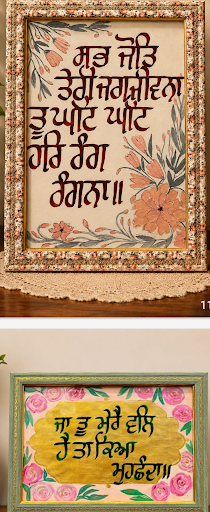
Between 2024 and 2026, she created and distributed more than two hundred framed Gurmukhi calligraphy works. Each composition reflects careful craftsmanship and profound respect for Gurbani.
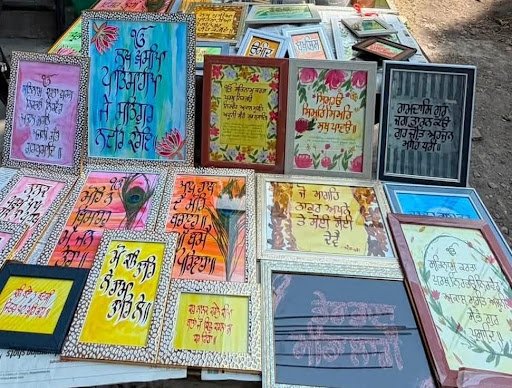
Her artistic philosophy extends beyond decoration. She believes that sacred verses displayed within homes allow family members to encounter Gurbani daily. Repeated visual engagement gradually familiarises individuals with the Divine Word, encouraging contemplation, remembrance, and spiritual reflection.
This understanding restores the original purpose of Sikh calligraphy—as a medium through which beauty serves faith and artistic discipline becomes an instrument of spiritual education.
Preserving Language, Culture, and Identity
Loveleen Kaur views Gurmukhi calligraphy as an important means of preserving Punjab's linguistic heritage and Kashmir's Sikh cultural identity. In an age increasingly dominated by digital communication, handwritten Gurmukhi represents continuity with centuries of Sikh manuscript tradition.
Her work demonstrates how artistic practice can contribute simultaneously to cultural preservation, language promotion, and religious education. By introducing younger generations to the elegance of handwritten Gurmukhi, she encourages them to appreciate both the visual beauty of the script and the profound wisdom contained within Gurbani.
Her academic background in philosophy further enriches her artistic outlook. Philosophy cultivates habits of reflection, while calligraphy demands patience, concentration, discipline, and humility. Together, these pursuits reinforce values that lie at the heart of Sikh intellectual culture.
Contemporary Significance
The revival of Gurmukhi calligraphy possesses significance far beyond artistic appreciation. It contributes directly to several important areas:
Preservation of Sikh manuscript traditions. Promotion of Gurmukhi literacy among younger generations.
Conservation of Kashmir's Sikh cultural heritage.Revival of traditional artistic techniques.Strengthening of devotional engagement with Gurbani.
Documentation of regional calligraphic styles for future scholarship.
Encouragement of interdisciplinary research in art history, palaeography, manuscript studies, and Sikh studies.
Artists such as Loveleen Kaur demonstrate that traditional calligraphy can flourish even within a digital age. By combining historical techniques with contemporary presentation through framed artworks and exhibitions, they ensure that this ancient discipline remains relevant to modern audiences.
Conclusion
The history of Gurmukhi calligraphy is a history of devotion expressed through disciplined artistry. From the manuscript traditions established under the Sikh Gurus to the beautifully executed works produced in Kashmir's gurdwaras and scriptoria, calligraphy has served as a visual embodiment of the Sikh reverence for the Divine Word.
Within this distinguished tradition, Loveleen Kaur represents a promising new generation of artists committed to safeguarding an endangered cultural inheritance. Her achievements demonstrate how individual dedication can contribute meaningfully to the preservation of language, faith, and artistic excellence.
As scholars increasingly recognise the importance of manuscript culture in understanding Sikh intellectual history, contemporary practitioners of Gurmukhi calligraphy assume an equally significant role. They do not merely reproduce beautiful letters; they perpetuate a living tradition that unites art with spirituality, heritage with identity, and history with the aspirations of future generations.
Loveleen Kaur's work therefore deserves appreciation not simply as artistic craftsmanship but as a valuable contribution to the continuing cultural renaissance of Gurmukhi calligraphy in Kashmir and to the wider preservation of Sikh literary civilization.