
Abstract
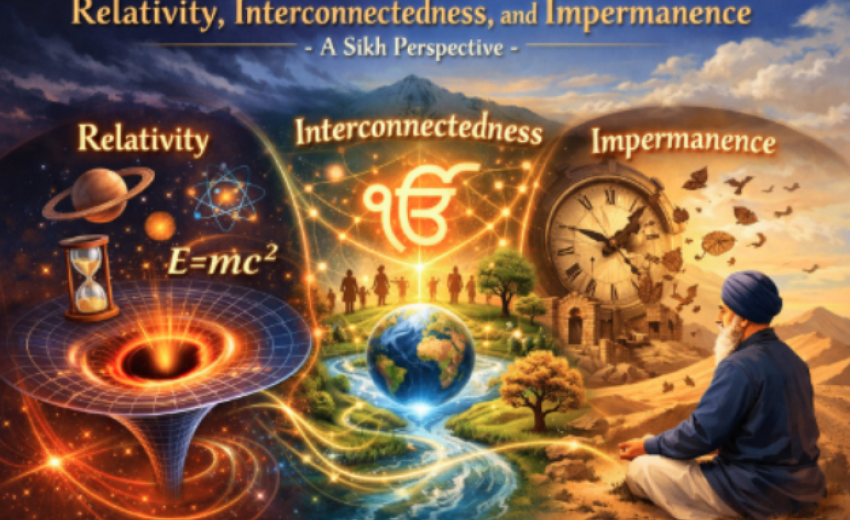
This article explores three foundational metaphysical principles in Sikh philosophy: relativity, interconnectedness, and impermanence. Grounded in the doctrine of Ik Oankār, the affirmation of a single, unifying Divine Reality, Sikh teaching views all existence as embedded within a sacred cosmic order (hukam). The principle of relativity underscores that no phenomenon exists in isolation; rather, every entity and event arises in relation to other beings, contexts, and conditions. The concept of interconnectedness emerges from this relational ontology: all beings are intrinsically linked as manifestations of the same Divine Light, prompting an ethic of universal compassion and equality. Impermanence, the third pillar, recognizes the transitory nature of all created forms, encouraging a deeper spiritual awareness and detachment from fleeting worldly phenomena. Together, these metaphysical principles foster a worldview that transcends dualities and reinforces spiritual humility, ecological responsibility, and moral engagement. The article argues that by integrating these concepts, Sikh philosophy provides profound insights into the nature of physical reality—insights that harmonize with contemporary ecological thought, relational physics, and global ethics. Ultimately, these core principles guide human life toward harmony with the cosmos and alignment with Divine Truth.
Introduction
Sikh philosophy presents a profound and integrated vision of reality in which the physical, moral, and spiritual dimensions of existence are deeply intertwined. Rooted in the foundational revelation of Ik Oankār (the One Divine Reality) that manifests as the entire cosmos, Sikh metaphysics articulates a worldview that is both unified and dynamic. Within this framework, three interrelated principles emerge as essential to understanding the nature of existence: relativity, interconnectedness, and impermanence. These principles, though embedded in the poetic and devotional language of the Sri Guru Granth Sahib (SGGS) (SGGS, 1983; Singh, n.d.), offer a sophisticated conceptual lens through which the relationship between the Creator, creation, and the individual may be understood.
Relativity refers to the idea that nothing in the world exists independently, absolutely, or in isolation. Everything is dependent on conditions, context, and relationships. Relativity in Sikh thought highlights the conditional and context-bound nature of all worldly phenomena, affirming that everything operates within hukam (Divine Order) and nothing possesses absolute independence.
Interconnectedness is the idea that all beings, forces, and elements of nature are part of one continuous web of life. In Sikh philosophy, interconnectedness arises from the doctrine of divine unity, emphasizing that all beings and elements of nature share a common origin and essence in the One Light (Singh, 2009; Singh, 2018a). This principle not only shapes Sikh ontology but also sustains its ethical commitments to equality, compassion, and ecological harmony.
Impermanence means that everything in the world is temporary, constantly changing, and will eventually come to an end. Nothing stays the same forever. According to Sikh doctrine, impermanence underscores the transient, ever-changing nature of material existence, reminding individuals that all forms are subject to cycles of birth, transformation, and dissolution (Singh, 2012; Singh, 2018; Singh, 2020).
Together, these principles provide a holistic metaphysical structure that guides Sikh spiritual practice and ethical engagement with the world. They also resonate with contemporary scientific and philosophical discourses, demonstrating the enduring relevance of Sikh thought in addressing modern questions of identity, environment, and human responsibility.
Relativity: The Contingent Nature of Physical Existence
The notion of relativity in Sikh philosophy does not refer to the technical theory of physics discovered by Einstein, but rather to the contingency and contextual dependence of all worldly phenomena. Everything within the created universe (kudrat) operates within conditions, relationships, and limitations; nothing possesses absolute or independent status. Sikh scripture frequently describes creation as dynamic, fluid, and governed by divine law (hukam), a cosmic order within which all forms are situated relative to one another.
Guru Nanak articulates this idea succinctly:
ਹੁਕਮਿ ਰਜਾਈ ਚਲਣਾ ਨਾਨਕ ਲਿਖਿਆ ਨਾਲਿ॥
Hukam rajāī chalṇā, Nānak likhiā nāl.
Living in harmony with the Divine Order is the destiny written for all, says Nanak. (Jap, SGGS, p. 1).
ਹੁਕਮੈ ਅੰਦਰਿ ਸਭੁ ਕੋ ਬਾਹਰਿ ਹੁਕਮ ਨ ਕੋਇ ॥
Hukmai andar sabh ko, baahar hukam na koe.
All are within the Divine Command; no one is outside it. (Jap, SGGS, p. 1).
These verses establish that existence unfolds within a relational framework ordained by hukam, where beings and events derive meaning only in relation to the cosmic order.
Relativity also appears in the understanding of human identity. Sikh metaphysics emphasizes that the ego-bound self (haumai) is a relative construct shaped by social roles, sensory perception, and temporal conditions. The spiritual path involves transcending this relative sense of self to realize the abiding Divine presence within. Thus, relativity in Sikh thought underscores the limitation of worldly categories and calls attention to the more profound, non-relative Truth (sat).
Interconnectedness: The Unity of the One in the Many
Central to Sikh philosophy is a radical assertion of interconnectedness, grounded in the doctrine of Ik Oankār (One Universal Reality), which expresses itself through infinite forms. This metaphysical unity implies that all beings are inherently linked, not merely as co-inhabitants of the physical world but as manifestations of the same Divine Light.
Guru Arjan proclaims:
ਸਭ ਮਹਿ ਜੋਤਿ ਜੋਤਿ ਹੈ ਸੋਇ ॥ ਤਿਸ ਕੈ ਚਾਨਣਿ ਸਭ ਮਹਿ ਚਾਨਣੁ ਹੋਇ ॥
Sabh meẖ joṯ joṯ hai so-e. Ṭis kai chānaṇ sabh meẖ chānaṇ ho-e.
In all is the Divine Light; that Light is the One. By that Light, all beings are illuminated. (M. 1, SGGS, p. 663)
This affirmation of a shared divine essence dissolves artificial boundaries between species, genders, castes, and nations, thereby providing an ethical foundation for Sikh principles of equality, social justice, and universal compassion.
Interconnectedness extends to ecological consciousness as well. Sikh scripture poetically articulates nature’s deep relationality:
ਪਉਣੁ ਗੁਰੂ ਪਾਣੀ ਪਿਤਾ ਮਾਤਾ ਧਰਤਿ ਮਹਤੁ ॥ ਦਿਵਸੁ ਰਾਤਿ ਦੁਇ ਦਾਈ ਦਾਇਆ ਖੇਲੈ ਸਗਲ ਜਗਤੁ ॥
Paun Guru, Paani Pitaa, Maataa Dharat Mahat. Divas Raat Dui Daai, Daai-aa Khelai Sagal Jagat.
Air is the Guru, Water the Father, and Earth the Great Mother. Day and night are the two nurses, in whose lap all the world is at play. (Jap, SGGS, p. 8).
This verse presents the environment as a sacred web of life, bound to human flourishing. It underscores the responsibility to live harmoniously with nature, recognizing humans as part of a larger cosmic family, never apart from it (Singh, 2021; Singh, 2025).
Thus, interconnectedness in Sikh philosophy is not an abstract metaphysical claim but a foundational principle guiding ethics, social organization, and environmental stewardship.
Impermanence: The Transient Nature of Worldly Forms
Impermanence is another fundamental aspect of Sikh metaphysics. All created phenomena, from the body to the cosmos, exist within cycles of birth, change, and dissolution. Sikh scripture repeatedly warns against attachment (moh) to temporary forms, directing attention instead to the eternal Divine, the only unchanging reality.
Guru Tegh Bahadur states:
ਜਗ ਰਚਨਾ ਸਭ ਝੂਠ ਹੈ ਜਾਨਿ ਲੇਹੁ ਰੇ ਮੀਤ ॥ ਕਹਿ ਨਾਨਕ ਥਿਰੁ ਨਾ ਰਹੈ ਜਿਉ ਬਾਲੂ ਕੀ ਭੀਤਿ ॥
Jag rachnā sabh jhūṭh hai, jāṇi leho re mīt. Kahi Nānak thir na rahai jio bālū kī bhīt.
O friend, realize that the entire creation of the world is false; nothing remains fixed, just as a wall made of sand cannot stand firm – says Nanak. (M. 9, SGGS, p. 1429)
However, Sikh thought does not treat impermanence pessimistically. Instead, it frames transience as an invitation to cultivate awareness, humility, and spiritual detachment. The ephemeral nature of worldly experiences encourages seekers to focus on actions aligned with Truth, virtues, and remembrance of the Divine (Naam).
Impermanence also situates human life within a wider cosmic rhythm governed by hukam. It reminds individuals that their physical existence is part of an ongoing flow, neither beginning nor ending with one lifetime. This perspective inspires a balanced engagement with the world: fully participating in life while acknowledging the temporal nature of its forms.
Synthesizing the Three: A Holistic Sikh Worldview
The Sikh understanding of relativity, interconnectedness, and impermanence forms a coherent worldview that is both spiritually rich and philosophically sophisticated. These three principles together express a vision of reality where:
- Nothing exists independently (relativity),
- Everything arises and unfolds in unity (interconnectedness),
- And all forms undergo constant transformation (impermanence).
This worldview does not lead to escapism but to active participation in life with wisdom and compassion. It motivates Sikhs to:
- Engage ethically with others (because all are interconnected),
- Act responsibly within the world (because everything functions within hukam),
- And avoid attachment to fleeting forms (because impermanence is inherent).
Thus, Sikh philosophy offers a profound model for understanding physical reality, one that resonates with ecological thought, relational physics, and contemporary metaphysical discourse.
Conclusion
The exploration of relativity, interconnectedness, and impermanence reveals that Sikh philosophy offers a deeply relational and holistic understanding of reality, one that bridges metaphysics, ethics, and spiritual practice. Grounded in the primal assertion of Ik Oankār, Sikh thought views creation not as a static or isolated assemblage of entities but as a dynamic, interdependent expression of the Divine. Relativity underscores the contingent nature of all worldly forms, situating every phenomenon within the all-encompassing framework of hukam (Divine Order). This principle dismantles illusions of absolute autonomy and invites individuals to understand themselves as participants in a larger cosmic tapestry.
Interconnectedness, rooted in the unity of the Divine Light within all beings, reinforces the Sikh commitment to equality, justice, and compassion. It affirms that ethical living is not optional but an inherent expression of recognizing the Divine in all. Impermanence, meanwhile, highlights the transient nature of material existence and encourages a balanced engagement with the world, participating fully in life’s responsibilities while remaining unattached to fleeting forms. Together, these principles form a cohesive metaphysical system that supports spiritual growth, social responsibility, and ecological awareness.
In an era marked by global uncertainty, ecological crises, and increasing social fragmentation, the Sikh vision of a relational and impermanent world offers a robust framework for rethinking human identity and responsibility. By acknowledging the conditional, interconnected, and temporary nature of existence, Sikh philosophy encourages humility, resilience, and mindful action. Ultimately, these core metaphysical principles continue to provide profound guidance for individuals seeking meaning, harmony, and ethical clarity in an ever-changing world.
References
Singh, D. P. (2009). Interdependence of Things: A Gurbani Perspective, The Sikh Review, Kolkata. WB. India 57(11). 11-14.
Singh, D. P. (2012). Impermanence of Things - A Gurbani Perspective. Understanding Sikhism - The Research Journal. QC. Canada. 14 (1-2). 67–69.
Singh, D. P. (2018). Impermanence – The Path to Liberation. In Science and Sikhism: Conflict or Coherence. Singh Brothers, Amritsar, India. pp. 244–255.
Singh, D. P. (2018a). Interdependence: Imperative for the Twenty-First Century. In Science and Sikhism: Conflict or Coherence. Singh Brothers, Amritsar, India. pp. 269–274.
Singh, D. P. (2020, Oct.) Barah Maha - The Changing Phases of Nature, The Sikh Review, Kolkata. WB, India. 68 (10). 9-16
Singh, D. P. (2021, August 20). Nature and Gurbani – The Imperative Lessons. Asia Samachar. Malaysia.
https://asiasamachar.com/2021/08/20/40058b/
Singh, D. P. (2025, Sept.3). Eco-Spirituality in Sikhism: Environmental Wisdom from the Guru Granth Sahib. Asia Samachar. Malaysia. https://asiasamachar.com/2025/09/03/eco-spirituality-in-sikhism-environm...
Singh, S. (n.d.). Guru Granth darpan. https://www.gurugranthdarpan.net/
Sri Guru Granth Sahib (SGGS), 1983 (Reprint), S.G.P.C., Amritsar, India. pp. 1–1430.