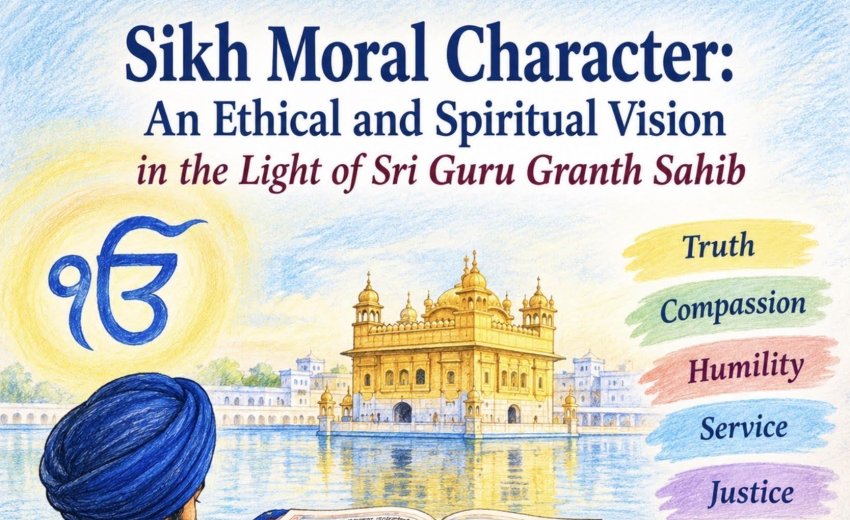

Sikh Moral Character: An Ethical and Spiritual Vision in the Light of Sri Guru Granth Sahib
Abstract
Moral character constitutes one of the central dimensions of Sikh spirituality. Sri Guru Granth Sahib does not regard religion as a matter of external observance alone; rather, spiritual realisation must be expressed through truthful conduct, humility, compassion, self-discipline, honest labour, equality, and service to humanity. The Sikh ethical vision is rooted in Naam, Hukam, Seva, Kirat Karni, Vand Chhakna, Santokh, and freedom from Haumai. The Guru Granth Sahib identifies ego, anger, greed, attachment, and uncontrolled desire as forces that distort human character and obstruct spiritual development. In contrast, the Gurmukh represents the integrated moral personality whose consciousness is oriented towards the Guru and whose conduct reflects the Divine virtues. This study examines the principal components of Sikh moral character through selected passages from Sri Guru Granth Sahib, demonstrating that Sikh ethics joins inner spiritual transformation with responsible social action. It argues that truthful living, humility, equality, compassion, self-restraint, honest livelihood, and selfless service are not independent virtues but interconnected expressions of a spiritually awakened life.
Introduction
The Sikh understanding of moral character emerges from a profound integration of spirituality and everyday life. Sri Guru Granth Sahib teaches that the purpose of human existence is not merely intellectual knowledge or ritual performance but the transformation of consciousness and conduct.
The fundamental question is therefore not simply whether a person possesses religious knowledge, but whether that knowledge has become visible in his or her character.
Guru Nanak Sahib states:
ਸਚਹੁ ਓਰੈ ਸਭੁ ਕੋ ਉਪਰਿ ਸਚੁ ਆਚਾਰੁ ॥
Sachahu orai sabh ko, upar sach aachaar.
“Truth is higher than everything; higher still is truthful conduct.”
— Ang 62.
This verse provides a foundational principle of Sikh ethics. Truth (sach) must become aachaar—conduct, character and lived practice. Sikh morality is consequently not an abstract code but a disciplined way of living.
Hukam: The Foundation of Moral Consciousness
The ethical journey begins with an understanding of Hukam, the Divine Order. In the second pauri of Japji Sahib, Guru Nanak asks:
ਕਿਵ ਸਚਿਆਰਾ ਹੋਈਐ ਕਿਵ ਕੂੜੈ ਤੁਟੈ ਪਾਲਿ ॥
ਹੁਕਮਿ ਰਜਾਈ ਚਲਣਾ ਨਾਨਕ ਲਿਖਿਆ ਨਾਲਿ ॥੧॥Kiv sachiaaraa hoeeai, kiv kooṛai ṭuṭai pāl; Hukam rajaaee chalṇaa, Naanak likhiaa naal.
“How may one become truthful? How may the veil of falsehood be removed? By walking in accordance with the Divine Will.”
— Ang 1.
The verse establishes a fundamental relationship between truthfulness and Hukam. Moral character develops when the individual moves beyond self-centred desire and aligns life with the Divine order.
Acceptance of Hukam should not be understood as moral passivity. Rather, it involves humility, discernment and acceptance of the limits of individual ego while continuing to fulfil one’s responsibilities.
Truthful Living: From Belief to Conduct
Truth is a recurring ethical category in Sri Guru Granth Sahib. Guru Nanak Sahib makes an important distinction between merely speaking about truth and living truthfully.
The statement on Ang 62—
ਉਪਰਿ ਸਚੁ ਆਚਾਰੁ ॥
Upar sach aachaar
—places conduct above verbal profession.
This principle gives Sikh morality an intensely practical character. Truthfulness includes honesty in speech, integrity in professional dealings, fidelity in relationships and consistency between one’s convictions and actions.
The morally developed Sikh therefore seeks to eliminate the contradiction between religious identity and personal conduct.
Haumai: The Principal Obstacle to Moral Development
Haumai, or ego-consciousness, occupies a central place in Sikh analysis of human weakness. It produces an exaggerated sense of “I” and “mine” and separates the individual from humility, compassion and spiritual awareness.
Guru Nanak Sahib states:
ਹਉਮੈ ਦੀਰਘ ਰੋਗੁ ਹੈ ਦਾਰੂ ਭੀ ਇਸੁ ਮਾਹਿ ॥
Haumai deeragh rog hai, daaroo bhee is maahi.
“Ego is a chronic disease, but its remedy is also within it.”
— Ang 466.
The Guru’s teaching indicates that moral transformation begins with recognition of ego. The remedy is not self-negation in the sense of denying one’s dignity, but liberation from self-centredness.
Humility (nimrata) consequently becomes a central Sikh virtue.
Humility and the Rejection of Superiority
Humility is not weakness. In Sikh ethics it is a form of spiritual strength. The humble person does not regard wealth, caste, scholarship, office or social status as grounds for superiority.
The Guru’s teaching on Ang 62 states:
ਸਭੁ ਕੋ ਊਚਾ ਆਖੀਐ ਨੀਚੁ ਨ ਦੀਸੈ ਕੋਇ ॥
Sabh ko ūchaa aakheeai, neech na deesai koe.
“Call everyone exalted; let no one be regarded as low.”
— Ang 62.
This principle provides a theological foundation for human dignity and social equality.
Equality and the One Divine Light
Sikh moral character is inseparable from the recognition of the Divine presence in humanity. Social discrimination is inconsistent with the spiritual vision of the Guru.
The Sikh ethical outlook therefore challenges distinctions based upon inherited status, caste or social privilege. Equality is not merely a social arrangement but an implication of the One Divine Reality.
The moral person must therefore learn to see dignity in every human being.
Naam and the Transformation of Character
Naam is not merely the repetition of a sacred word. Within Sikh spirituality, remembrance of the Divine transforms consciousness and provides the foundation for ethical living.
On Ang 286, Guru Arjan Sahib states:
ਨਾਮ ਰਤਨੁ ਜਿਨਿ ਗੁਰਮੁਖਿ ਪਾਇਆ ॥
Naam ratan jin Gurmukh paaiaa.
“The Gurmukh obtains the jewel of the Naam.”
The passage further states:
ਨਾਮੁ ਧਨੁ ਨਾਮੋ ਰੂਪੁ ਰੰਗੁ ॥ ਨਾਮੋ ਸੁਖੁ ਹਰਿ ਨਾਮ ਕਾ ਸੰਗੁ ॥
Naam dhan, naamo roop rang; Naamo sukh, Har Naam kaa sang.
For the spiritually oriented person, the Naam becomes the true wealth, joy and source of peace.
Naam therefore has an ethical consequence: it redirects consciousness away from ego-centred desires towards Divine remembrance.
The Gurmukh: The Ideal Moral Personality
The Gurmukh is one whose orientation is towards the Guru rather than towards uncontrolled personal desire.
Ang 286 provides a particularly important description:
ਗੁਰ ਕਾ ਸਿਖੁ ਬਿਕਾਰ ਤੇ ਹਾਟੈ ॥
Gur kaa Sikh bikaar te haaṭai.
“The Guru’s Sikh turns away from evil actions.”
The passage continues by describing the Guru’s Sikh as one who receives the wealth of Naam and is spiritually transformed.
The Gurmukh, therefore, is not defined merely by religious affiliation. The term represents a transformed moral personality.
Seva and Selflessness
Selfless service is among the clearest expressions of Sikh moral character.
Guru Arjan Sahib describes the ideal servant:
ਸੇਵਾ ਕਰਤ ਹੋਇ ਨਿਹਕਾਮੀ ॥ ਤਿਸ ਕਉ ਹੋਤ ਪਰਾਪਤਿ ਸੁਆਮੀ ॥
Sevaa karat hoi nihkaamee; Tis kau hot paraapat Suaamee.
“One who performs service without selfish expectation attains the Lord.”
— Ang 286.
The phrase ਨਿਹਕਾਮੀ — nihkaamee is particularly significant. It indicates service without expectation of personal reward, recognition or prestige.
Thus, Seva is simultaneously an act of social responsibility and a discipline for overcoming ego.
Honest Labour and Ethical Livelihood
Sikh morality does not separate spiritual life from economic and professional activity. The individual is expected to earn through honest and responsible labour.
The principle traditionally expressed as Kirat Karni means that livelihood should be earned through legitimate and ethical effort. Such labour gives dignity to the individual and discourages exploitation, dishonesty and dependence upon unethical means.
Honest labour also creates the material foundation for Vand Chhakna—sharing one’s resources with others.
The ethical cycle may therefore be represented as:
Honest labour → Responsible earning → Sharing → Social welfare
Sharing and Social Responsibility
The Sikh ethical personality is not possessive. Material resources are to be used responsibly and shared with others.
This principle becomes institutionalised in Sikh practice through Langar, charitable service and community support. Pangat provides a practical expression of equality by bringing people together without distinctions of social status.
Sharing therefore becomes a moral response to the recognition that material wealth is not an exclusive possession but carries social responsibility.
The Five Inner Evils
Sikh moral psychology places considerable emphasis upon overcoming the inner forces that distort human conduct.
These include:
- ਕਾਮ — Kaam: uncontrolled desire
- ਕ੍ਰੋਧ — Krodh: anger
- ਲੋਭ — Lobh: greed
- ਮੋਹ — Moh: possessive attachment
- ਅਹੰਕਾਰ/ਹਉਮੈ — Ahankar/Haumai: pride and ego
The Guru Granth Sahib describes the five as forces that must be brought under control:
ਦੁਆਦਸੀ ਪੰਚ ਵਸਗਤਿ ਕਰਿ ਰਾਖੈ ਤਉ ਨਾਨਕ ਮਨੁ ਮਾਨੈ ॥
Duaadsee panch vasgat kar raakhae, tau Nanak man maanai.
“When the five are brought under control, the mind becomes reconciled and content.”
— Ang 1245.
The passage makes an important ethical point: genuine religious discipline is concerned with transformation of the mind rather than external ritual alone.
Anger and Moral Self-Control
Krodh, or anger, is especially destructive because it disturbs judgement and relationships. The Sikh ideal does not require the suppression of legitimate concern for justice, but it rejects uncontrolled anger and hatred.
Moral self-control requires the individual to distinguish between righteous action and ego-driven reaction.
A disciplined person responds to injustice with courage and wisdom rather than allowing anger to become a destructive force.
Greed, Possessiveness and Contentment
Greed (lobh) is another major obstacle to moral character. The pursuit of unlimited wealth can lead to dishonesty, exploitation and social inequality.
The antidote is Santokh—contentment.
Contentment does not mean abandoning productive effort. It means freedom from the endless psychological hunger for possessions, recognition and power.
Ang 466 contrasts genuine spiritual contentment with worldly accumulation and the desire for recognition.
The ethical person therefore uses material resources responsibly without allowing possessions to dominate the personality.
Compassion and Care for Creation
Sikh moral consciousness extends beyond the narrow interests of the individual. The Divine is understood as the sustainer of all beings.
Ang 286 describes the Divine as:
ਸਰਬ ਜੀਆ ਕਾ ਰਾਖਾ ਸੋਇ ॥
Sarab jeeaa kaa raakhaa soi.
“The Divine is the Protector of all beings.”
Such a vision encourages reverence for life and responsibility towards creation.
Compassion (daya) therefore becomes an important expression of spiritual maturity.
Moral Character and Sangat
The Sikh tradition attaches great importance to Sangat, the company of spiritually oriented people. Character is shaped not only through individual discipline but also through one’s social environment.
Association with those committed to truth, Naam and service strengthens ethical consciousness. Conversely, association with destructive influences can reinforce selfishness and vice.
Sangat therefore functions as a moral community in which spiritual ideals are collectively practised.
The Guru’s Sikh and Freedom from Vikaar
The passage on Ang 286 gives a particularly direct formulation of the relationship between the Guru and moral transformation:
ਸਤਿਗੁਰੁ ਸਿਖ ਕੇ ਬੰਧਨ ਕਾਟੈ ॥ ਗੁਰ ਕਾ ਸਿਖੁ ਬਿਕਾਰ ਤੇ ਹਾਟੈ ॥
Satigur Sikh ke bandhan kaaṭai; Gur kaa Sikh bikaar te haaṭai.
“The True Guru cuts the bonds of the Sikh; the Guru’s Sikh turns away from evil.”
The moral character of the Sikh is therefore understood as an ongoing process of liberation from destructive tendencies.
Truth, Compassion and Courage
Sikh morality should not be interpreted merely as passive gentleness. Truthfulness, compassion and courage belong together.
The Sikh is expected to resist injustice while remaining free from hatred and ego. Moral courage means standing for truth and protecting human dignity.
This creates a distinctive ethical balance:
Truth without arrogance; Compassion without weakness; Courage without hatred; Humility without servility; Service without self-interest.
These complementary virtues contribute to the formation of the integrated Sikh moral personality.
Spirituality and Social Ethics
The Sikh ethical system refuses to create an absolute division between the spiritual and the social.
Naam transforms the individual inwardly; Seva expresses that transformation outwardly.
Hukam cultivates humility; truthful living demonstrates it.
Kirat Karni provides ethical livelihood; Vand Chhakna turns livelihood into social responsibility.
Thus, Sikh spirituality may be understood as a movement:
from remembrance → to transformation → to character → to service → to social responsibility.
This integration distinguishes Sikh moral thought from an understanding of religion restricted to ritual or private belief.
Contemporary Significance
The moral teachings of Sri Guru Granth Sahib remain relevant to contemporary ethical challenges.
In an age of misinformation, truthful conduct demands intellectual and personal integrity.
In societies marked by inequality, equality and human dignity challenge discrimination and social exclusion.
In an environment of excessive consumerism, contentment provides an alternative ethical orientation.
Against self-centred individualism, Seva establishes the principle of responsibility towards others.
Against anger and polarisation, humility and self-control encourage dialogue and restraint.
Against corruption and exploitation, honest labour provides an ethical foundation for economic life.
The relevance of Sikh moral character therefore lies not merely in preserving a historical tradition but in translating the Guru’s principles into responsible contemporary living.
Conclusion
The conception of moral character found in Sri Guru Granth Sahib is comprehensive and transformative. It begins with recognition of the Divine and proceeds towards transformation of the human personality.
The Sikh is called upon to:live according to Hukam;cultivate Naam;practise truthful conduct;overcome Haumai;develop humility;control the five inner evils;earn through honest labour;share with others;serve without selfish expectation;recognise human equality; and work for the welfare of creation.The essence of this ethical vision is captured in Guru Nanak Sahib’s celebrated declaration:
ਸਚਹੁ ਓਰੈ ਸਭੁ ਕੋ ਉਪਰਿ ਸਚੁ ਆਚਾਰੁ ॥
Sachahu orai sabh ko, upar sach aachaar.“Truth is higher than everything; higher still is truthful living.”
— Sri Guru Granth Sahib, Ang 62
Sikh moral character is therefore not simply a list of virtues. It is the gradual transformation of the self from ego-centred existence towards Gurmukh consciousness. The ultimate test of spiritual development is the quality of one’s conduct: whether one’s life expresses truth, humility, compassion, equality and selfless service.
In the Sikh vision, the truly spiritual person is one whose inner remembrance becomes outwardly visible as ethical character and whose ethical character becomes service to humanity.
Notes
1. Sri Guru Granth Sahib, Ang 1
2. Sri Guru Granth Sahib, Ang 62.
3. Sri Guru Granth Sahib, Ang 466.
4. Sri Guru Granth Sahib, Ang 62.
5. Sri Guru Granth Sahib, Ang 286.
6. Sri Guru Granth Sahib, Ang 286.
7. Sri Guru Granth Sahib, Ang 286.
8. Sri Guru Granth Sahib, Ang 1245.
9. Sri Guru Granth Sahib, Ang 466.
10. Sri Guru Granth Sahib, Ang 286.