
The Wise Child
The Story of Baba Budha Ji
A Story for Ages 8 to 15
The Storm's Lesson
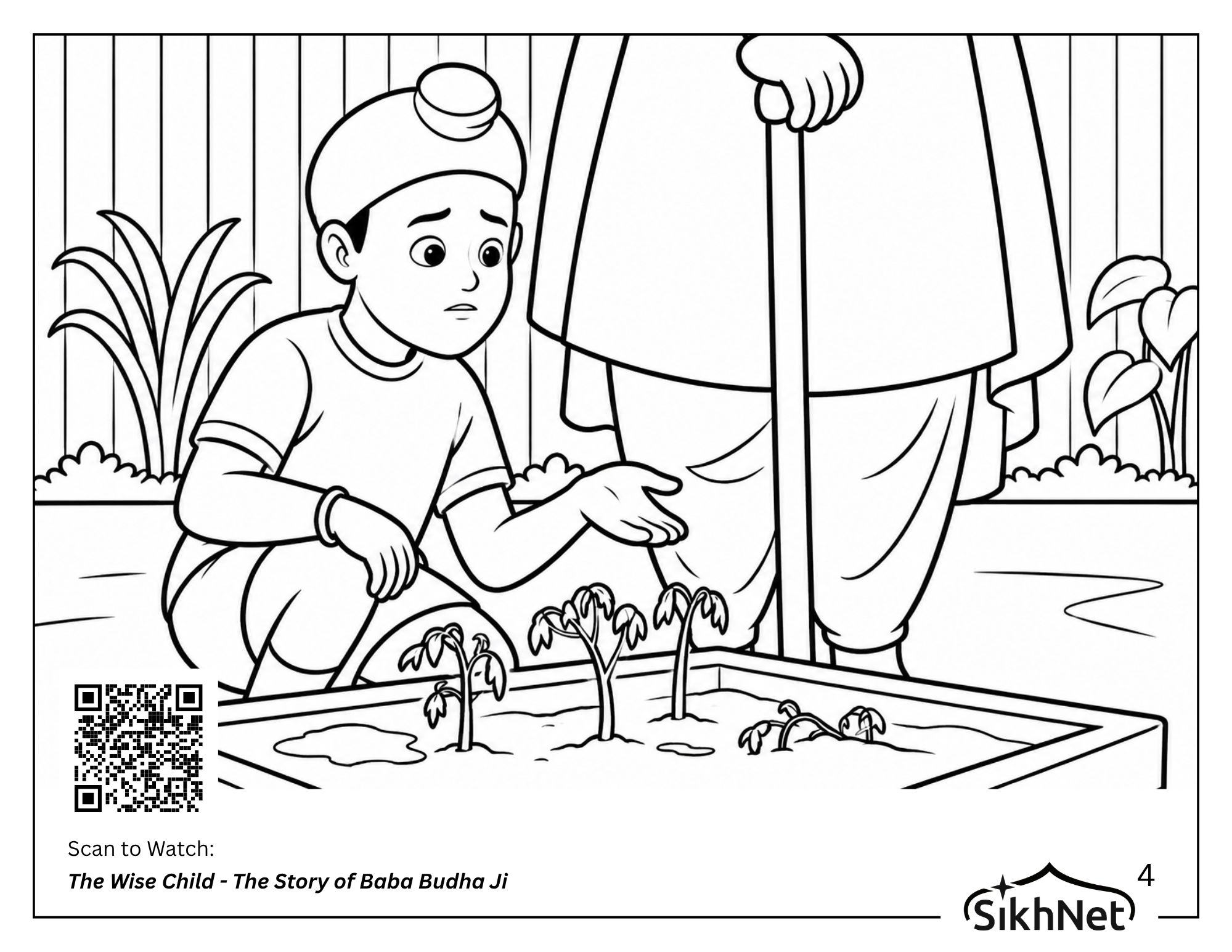
The storm had passed, but it had left its mark. Aarav stood looking at the plants the wind had knocked down.
"They were doing so well," he said quietly. "And then… one storm. It hadn't even grown up yet. It wasn't finished."
Nani spoke gently. "No. It wasn't."
"The older plants are still standing," Aarav said. "Why did the small ones have to fall?"
"The wind does not look at the age of a plant before it blows."
Aarav frowned. "That's supposed to make me feel better?"
"No," said Nani. "But a boy once felt exactly what you are feeling right now, and it changed the entire course of his life."
"What boy?"
"His name was Bura. He was twelve years old. The same as you."
The Soldiers and the Seedlings
More than five hundred years ago, in the village of Kathunangal in Punjab, a boy named Bura grew up close to the earth. His family were farmers. He knew good soil from poor soil before he could read. He knew when rain was coming. And he believed, as all farming children do, that if you planted something and cared for it, it would grow.
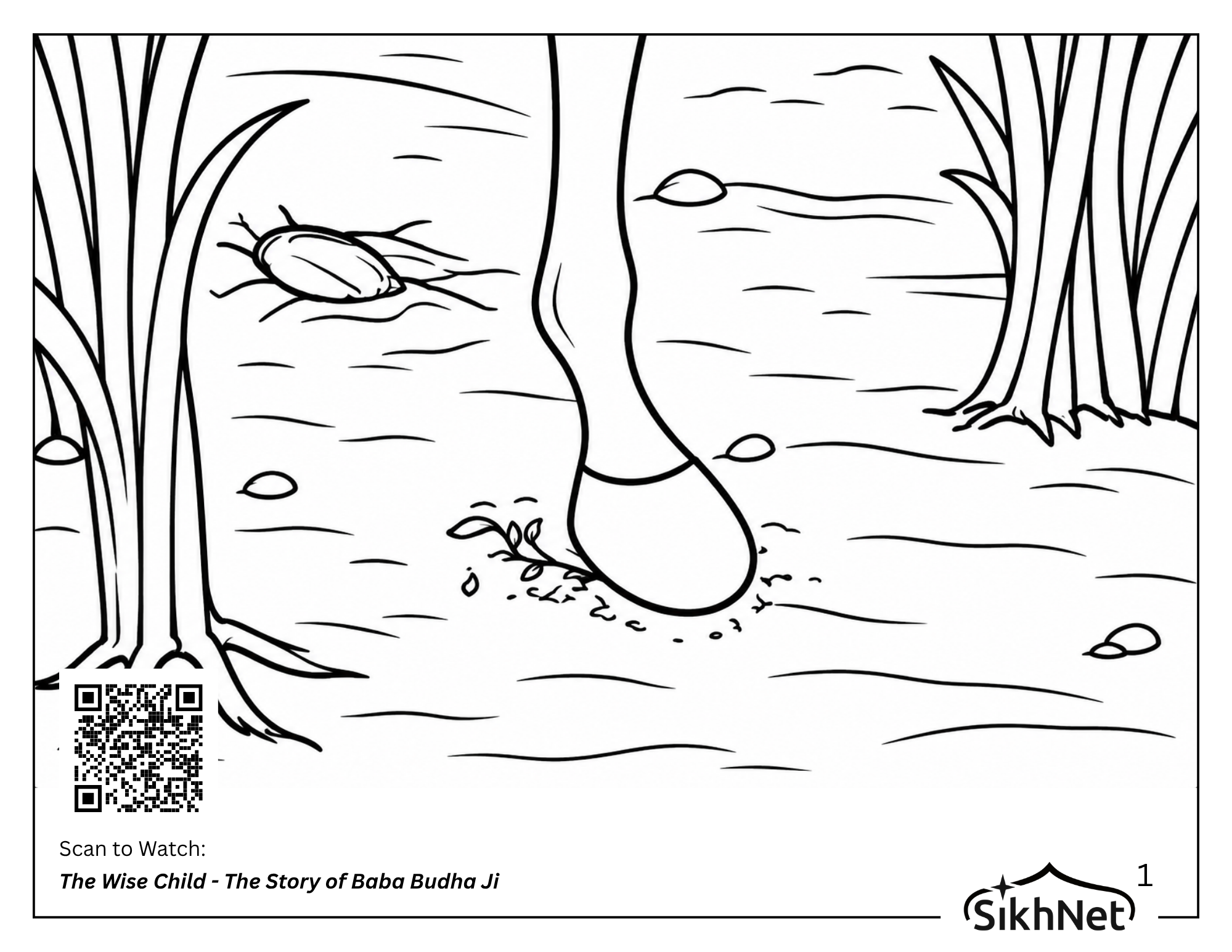
One day, government soldiers rode through the fields on horseback. They did not stop for anything. Not the ripe crops. Not the half-grown ones. Not even the tiny sprouts just coming out of the soil. Bura watched from the edge of the field as everything was crushed beneath their hooves.
And standing there, Bura understood something that most people spend their whole lives avoiding. If the crops do not all grow old before they perish, will we? If Death is like those soldiers, it will not wait for him to grow old either.
He was twelve years old, and that question changed everything.
The Meeting on the Road
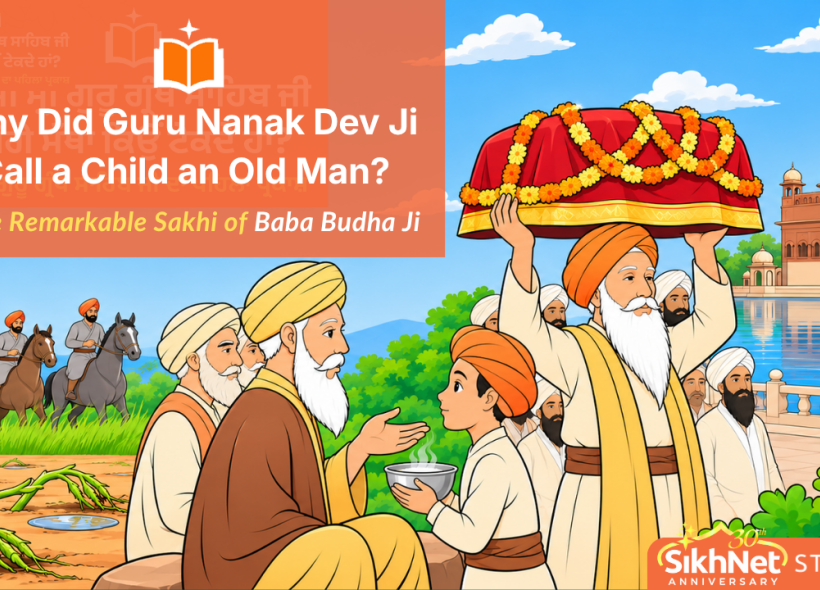
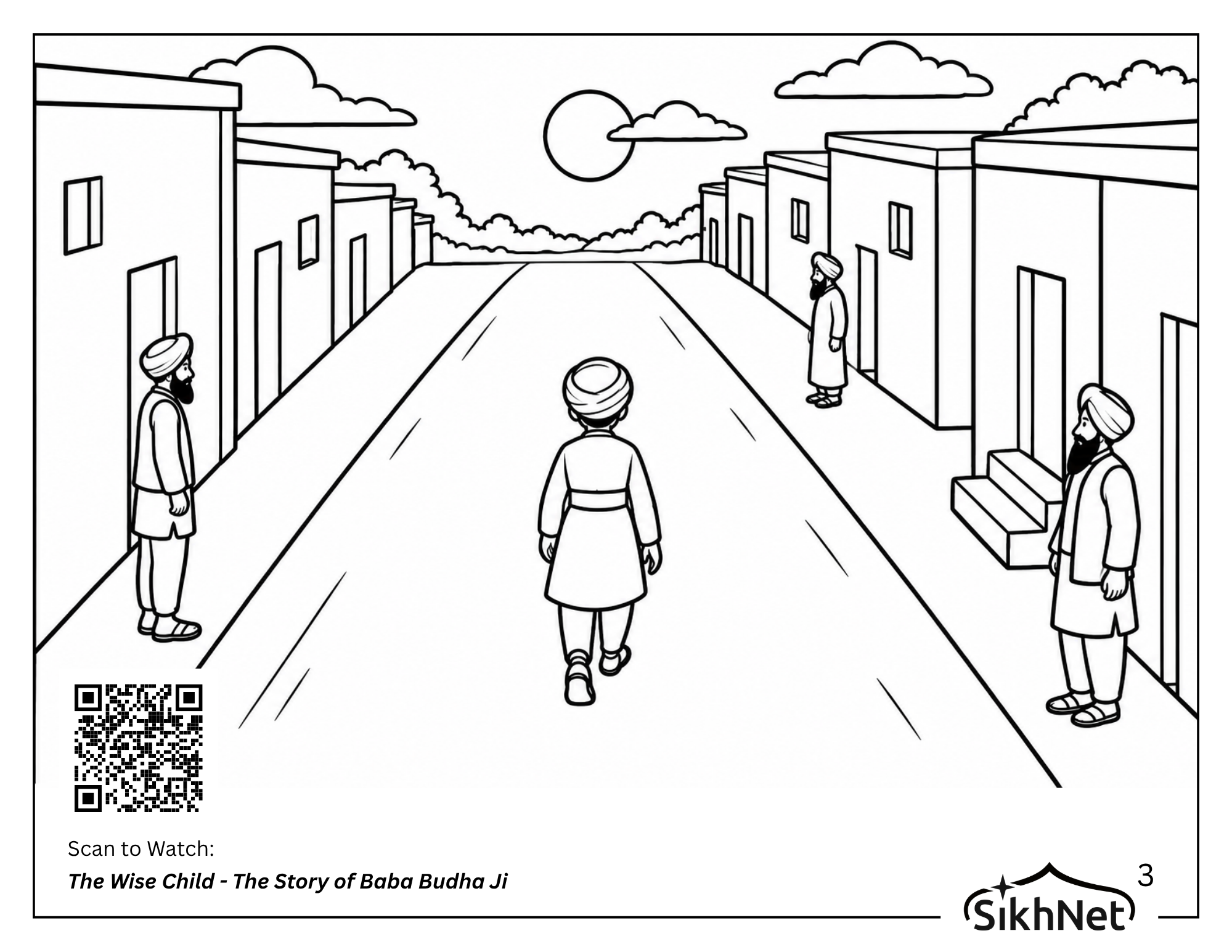
That same afternoon, Bura heard something on the road outside the village. It was the sound of a rabab. He had heard people speak of Guru Nanak Dev Ji, the holy man who travelled everywhere, singing the praises of the Akal Purakh. Bura ran home, took a bowl of warm milk his mother had just boiled, and rushed back to the road.
Guru Ji looked at Bura and saw something in his eyes. Not fear. Something heavier. Guru Ji asked him what had happened, and Bura told him everything: the soldiers, the crops, the sprouts that never had a chance to grow.
Guru Ji asked how old he was. Bura told him: twelve.
"You are twelve years old in age," Guru Ji said. "But the question you just asked is the question of a wise elder. A person who has already understood what truly matters. And so from this day, your name is not Bura. Your name is Budha, the Wise Elder."
Young Budha asked what he should do. If time does not wait, what should a twelve-year-old do with the time he has?
Guru Ji smiled. "Begin. Whatever you can offer, offer it now. Not when you are older. Not when you are ready. Now."
Bura walked home that evening with a new name and a new understanding. He had gone to the road carrying a bowl of milk. He came home carrying a direction for his whole life.
The Test at Kartarpur
Baba Budha Ji did not wait until he was important, or experienced, or ready. He served from the very first day, and he kept serving.
Years passed. And then came the day of the great test. It was 1539, and Guru Nanak Dev Ji was preparing to appoint his successor. He appeared before his Sikhs in a way no one expected, disheveled, wearing a long robe, carrying a thick stick called a sota, and accompanied by hunting dogs. He walked like a madman. He wanted to see who would stay.
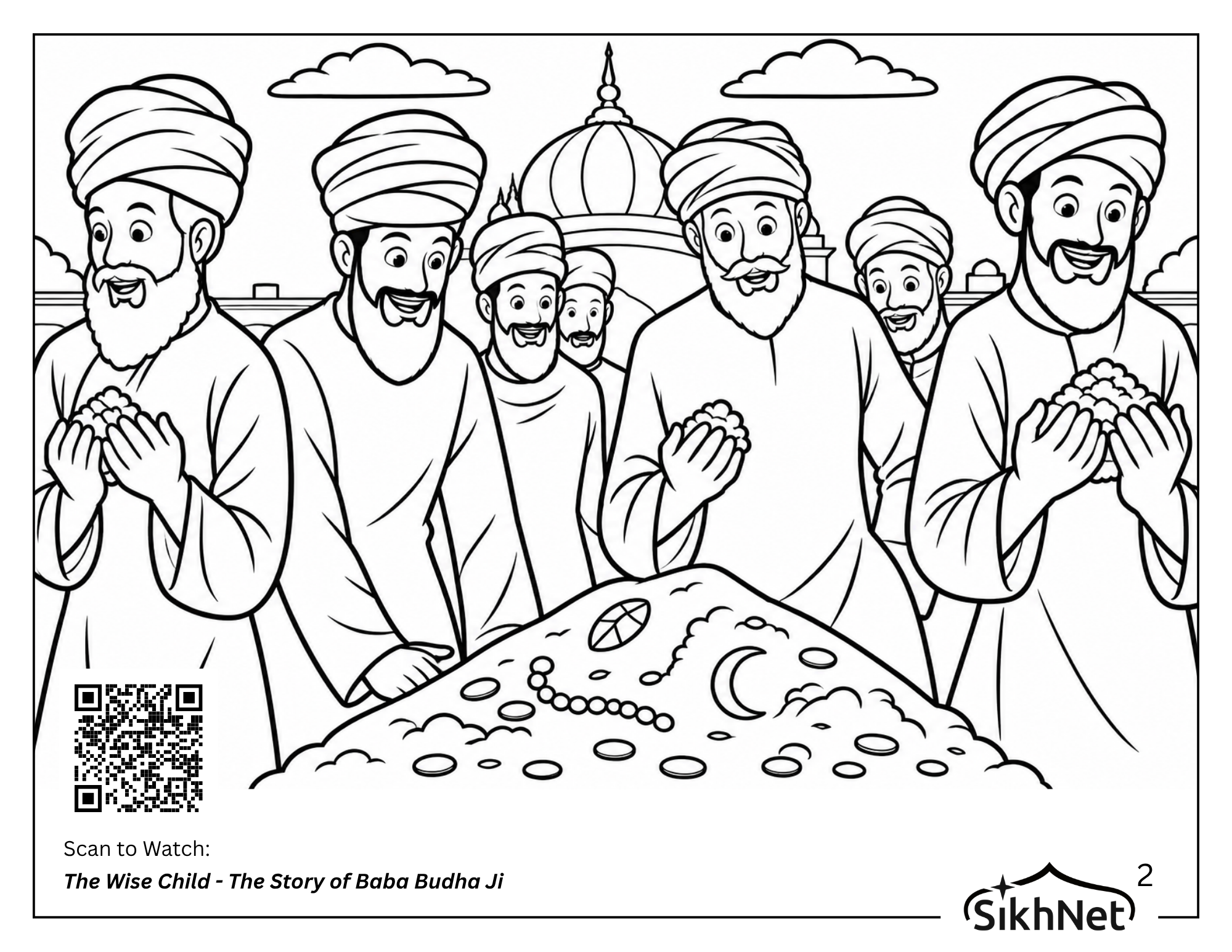
Then Guru Ji did something that shocked everyone. He pointed to great piles of gold, silver, diamonds, and pearls laid out before the Sangat, and told them to take whatever they wanted and go home. One by one, the followers filled their pockets with the treasure and left. Until only two remained: Bhai Lehna Ji and Baba Budha Ji.
Guru Ji turned toward them. He raised his stick. He struck Baba Budha Ji. He threw stones to drive him away. He offered him even more gold, even more jewels, if he would just leave.
Baba Budha Ji did not flinch. He did not reach for a single coin. He folded his hands.
"Maharaj," he said, "a child may run from its mother, but it will always run back. Even if the mother raises her hand to strike, the child does not go to a stranger. Where else would I go? I only want You."
Guru Ji dropped the stick. He pulled Baba Budha Ji close and embraced him. And he made him a promise.
"Budhiya, I shall never be hidden from you. No matter what form the Guru's light takes in the future, you will always have the eyes to recognize it."
It was a promise that never broke. Years later, when Guru Angad Dev Ji entered deep meditation and could not be found, it was Baba Budha Ji who walked quietly into the forest of Khadur Sahib and found him, guided by the Guru's blessing, steady and sure as ever.
The First Prakash, August 30, 1604
Baba Budha Ji was ninety-eight years old when the greatest honour of his life arrived. Guru Arjan Dev Ji had spent years compiling the Adi Granth, gathering the sacred Bani of the Gurus and the Bhagats. When it was carried, Guru Ji walked behind it. Not in front. Behind. Guru Sahib wanted the whole world to see that the Shabad, the Divine Word, held the highest place. Higher than any person, any title, any worldly power.
Baba Budha Ji carried the Adi Granth into the Golden Temple and placed it on the high seat. He opened it. And he read the first Hukamnama:
"Santa Ke Karaj Aap Khaloya, Har Kaam Karavan Aaya Ram."
"God Himself has stood up to resolve the affairs of the Saints."
The boy who had once asked whether Death waited for anyone now stood at ninety-eight years old, in the Golden Temple, reading the first words of the living Guru to the world.
The Wise Child
Aarav was quiet for a while. Then he said, "He was my age. When he understood all of that."
"Twelve years old," said Nani. "In a field. With a clay pot of milk and a question that changed everything."
"And then he just… started. He didn't wait."
"He began with what he had, right where he was. And he kept going for one hundred and twenty-five years."
Aarav looked down at the plants again. "These ones aren't dead, are they? They're just… down."
"The roots are still holding."
"I don't know if it'll work," Aarav said. "But Bura didn't know either. He just started."
"A child does not wait to be a grown-up before doing good, Aarav," Nani said. "That was Baba Budha Ji's whole life. He showed us that wisdom and service are not about how old you are. They are about whether your heart is ready."
"Nani, will I remember all of this?"
"You don't need to remember every detail. You just need to remember the question he asked."
Aarav said it slowly. "If the crops do not grow old before they perish… will we?"
"And the answer he chose."
"He chose to start now."
"He chose to start now," Nani said quietly.
Waheguru's Garden
Later, Aarav straightened up and looked at what he had done. "I couldn't get them all."
"You got most of them," said Nani.
"I'll come back tomorrow. For the rest."
Nani smiled. "Do you know what the word Budha means?"
"Wise Elder."
"And yet Guru Ji gave it to a child."
Aarav thought about it. "Maybe wise children are just children who decide to begin."
In the quiet, the sound of "Waheguru… Waheguru…" continued softly.
Maybe wise children are just children who decide to begin.