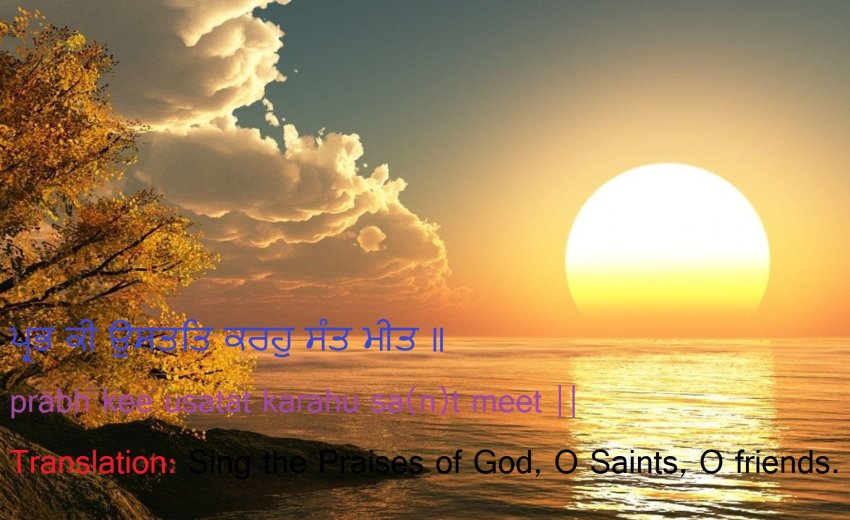

Salvation through Singing Praises of the creator is the unique and trailblazing path created by Guru Nanak Dev Ji (1469 – 1539). Guru Ji, through his poetry, singing, and his compilation of his own poetry, put the stamp on this unique path.
He calls himself a “Shayar” – The word means a writer of poetry.
He even calls himself a “Dhadi” – The singer who sings praises.
He composed his poetry in “Ragas” – The music scale, along with the tunes in which these poems are to be sung.
When he first met Mardana, he told him, “You play Rabab very well, plus you have knowledge of Ragas. 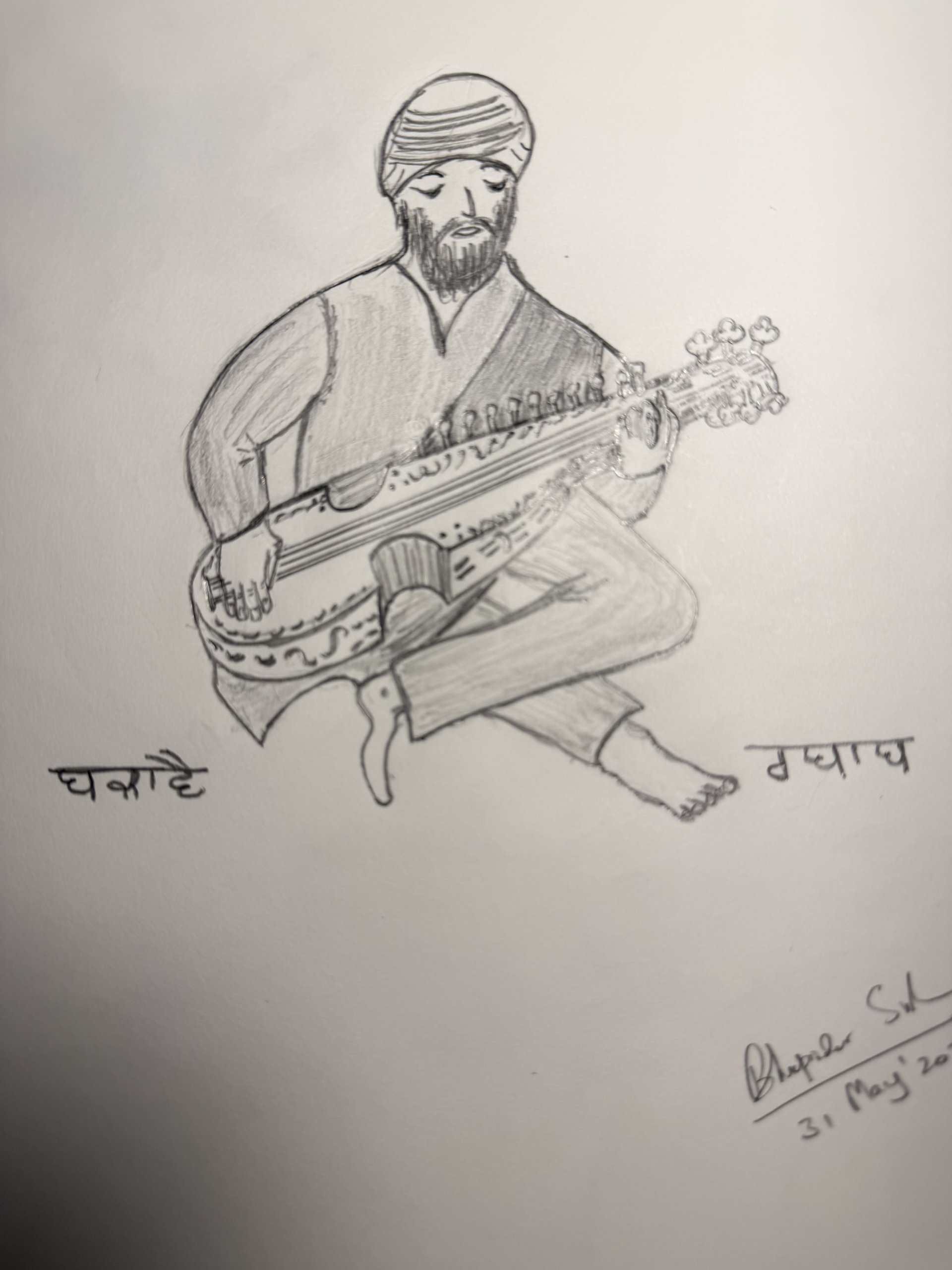 If you blend singing praises of the Divine with the music, it will open the doors of salvation.” Mardana became his lifelong companion, and together they made four long journeys lasting twenty years, singing praises of the Divine to spread their message. Guru Ji called his approach “Sifat Saalaah” which means singing praises. Guru Ji said that those blessed with singing praises are:
ਜਿਸ ਨੋ ਬਖਸੇ ਸਿਫਤਿ ਸਾਲਾਹ ॥ ਨਾਨਕ ਪਾਤਿਸਾਹੀ ਪਾਤਿਸਾਹੁ ॥੨੫॥
Jis no bakhshe sifat saalaah. Nanak paatsaahee paatisaahu. ||25|| (SGGS, Pg. No. 3)
Translation: One who is blessed to sing the Praises of the God, O Nanak! Is the king of kings. ||25||
We can see that Guru Ji places those who are engaged in singing praises on the highest pedastal. He even transformed Sajjan, Bhoomiya, and Kauda by his singing of praises. In Gurbani, there are other terms used for it such as “Keertan,” “Ustatt” and “Gunn Gaavaa.” Guru Ji has shared with us how to plead with God to bless us with this boon of singing praises. 
ਤੇਰੇ ਗੁਣ ਗਾਵਾ ਦੇਹਿ ਬੁਝਾਈ ॥ ਜੈਸੇ ਸਚ ਮਹਿ ਰਹਉ ਰਜਾਈ ॥੧॥ ਰਹਾਉ ॥
Taere gunn gaavaa dheh bujhaiee. Jaise sach meh rahau rajaiee ||1|| Rahaau ||
(SGGS, Pg. No. 795)
Translation: Please bless me with such understanding that I may sing Your Glorious Praises. And through the blessing of praise, may I remain at your (feet). ||1||Pause||
Let us ask Guru Ji what can be achieved with it? Guru Ji’s reply:
ਸਿਫਤੀ ਗੰਢੁ ਪਵੈ ਦਰਬਾਰਿ ॥੨॥
Siftee gandh pavae darbaar. ||2|| (SGGS, Pg. No. 143)
Translation: Through (singing) the God’s Praise, we establish a bond with His Court. ||2||
Guru Ji has shared about the lofty achievement through singing praises in these words:
ਨਾਨਕ ਸਚੁ ਸਾਲਾਹਿ ਪੂਰਾ ਪਾਇਆ ॥੨੭॥ ਸੁਧੁ
Nanak sach saalaeh pooraa paiaa ||27|| Sudh. (SGGS, Pg. No. 150)
Translation: O Nanak! By singing the praises of the eternal Divine, the perfect Divine is realized. ||27|| Sudh.
In fact, Guru Ji sees that entire creation is engaged in singing praises by saying:
ਗਾਵਨਿ ਤੁਧਨੋ ਪਵਣੁ ਪਾਣੀ ਬੈਸੰਤਰੁ ਗਾਵੈ ਰਾਜਾ ਧਰਮੁ ਦੁਆਰੇ ॥
Gaavan tudhano pavan paanee baisa(n)tar gaavai raajaa dharam dhuaare.(SGGS, Pg. No. 8)
Translation: Wind, water, and fire are singing of You. The Righteous Judge of Dharma sings at Your Door.
Not only the mentioned above, Guru Ji lists many more and finally concludes that not only the above mentioned are singing, but there are also more and beyond mind’s reach:
ਹੋਰਿ ਕੇਤੇ ਤੁਧਨੋ ਗਾਵਨਿ ਸੇ ਮੈ ਚਿਤਿ ਨ ਆਵਨਿ ਨਾਨਕੁ ਕਿਆ ਬੀਚਾਰੇ ॥
Horr kete tudhano gaavan se mai chit na aavan naanak kiaa beechaare. ||
(SGGS, Pg. No. 9)
Translation: So many others sing of You, they do not come to mind. O Nanak! How can I think of them all?
This tradition of singing praises was furthered, reinforced by the subsequent Gurus. Guru Angad Ji, who succeeded him, continued this tradition and declared:
ਦੀਖਿਆ ਆਖਿ ਬੁਝਾਇਆ ਸਿਫਤੀ ਸਚਿ ਸਮੇਉ ॥ ਤਿਨ ਕਉ ਕਿਆ ਉਪਦੇਸੀਐ ਜਿਨ ਗੁਰੁ ਨਾਨਕ ਦੇਉ ॥੧॥
Dheekhiaa aakh bujhaiaa sifatee sach sameau || Tin kau kiaa upadheseeaai jin gur naanak dheau ||1|| (SGGS, Pg. No. 150)
Translation: Those who have accepted the Guru's Teachings, and who have found the path, whom the Guru has united with the Divine through praise, need no other instruction.
Later, when Guru Arjan Dev Ji compiled the Sikh Scripture “Sri Guru Granth Sahib” he arranged it uniquely, according to the musical scales instead of traditional approach of topic/theme. It is not surprising that the focal religious service at the Sikh place of worship is centered on singing praises.
Benefits of Singing
The benefit of singing praises has been shared by Guru Ji as:
ਗਾਵੀਐ ਸੁਣੀਐ ਮਨਿ ਰਖੀਐ ਭਾਉ ॥ ਦੁਖੁ ਪਰਹਰਿ ਸੁਖੁ ਘਰਿ ਲੈ ਜਾਇ ॥
Gaaveeaai suneeaai mun rakheeaai bhau. Dhukh parahar sukh ghar lai jai.
(SGGS, Pg. No. 2)
Translation: By singing of Him, listen (to what is sung), and let your mind be filled with reverence. Your pain shall be sent far away, and inner peace shall come to your home (within).
And:
ਹਰਿ ਕੀਰਤਨੁ ਸੁਣੈ ਹਰਿ ਕੀਰਤਨੁ ਗਾਵੈ ॥ ਤਿਸੁ ਜਨ ਦੂਖੁ ਨਿਕਟਿ ਨਹੀ ਆਵੈ ॥੨॥
Har keertan suṇnae har keertan gaavae. Tis jan dookh nikat nahee aavae. ||2||(SGGS, Pg. No. 190)
Translation: Listening to the Kirtan of the God’s Praises, and singing the God’s Kirtan, suffering, misfortune shall not even come near you. ||2||
Besides this the other benefits according to Guru Granth Sahib are:
ਏ ਮਨ ਮੇਰਿਆ ਗੁਣ ਗਾਵਹਿ ਸਹਜਿ ਸਮਾਵਹੀ ਰਾਮ ॥
Eh mun meriaa gunṇ gaavahi sahaj samaavahee raam. (SGGS, Pg. No. 1113)
Translation: O my mind! Singing the Glorious Praises of the God, then you will remain absorbed in spiritual equipoise.
In life we all are full of doubts, and by singing praises we become not only free from it, but confident in life:
ਭ੍ਰਮ ਬਿਨਸੇ ਗਾਏ ਗੁਣ ਨੀਤ ॥੧॥
Bhram binase gaae gunn neet ||1|| (SGGS, Pg. No. 196)
Translation: Doubts and consequent wandering are dispelled by continually singing the God's Glorious Praises. ||1||
Further instead of doubts, we shall become rejuvenated and alive:
ਗੁਣ ਗਾਵਤ ਮਨੁ ਹਰਿਆ ਹੋਵੈ ॥
Gunn gaavat mun hariaa hovai || (SGGS, Pg. No. 104)
Translation: Singing Your Glorious Praises, my mind is rejuvenated.
Why Singing Praises
We humans are wired for music. Early humans heard music from birds and started mimicking those sounds. As the understanding of music increased, appreciation developed, singing further evolved. So far-reaching was the influence of music that it was equated with God. While poetry speaks to our hearts in a way like nothing else does. The verse is also better registered in the mind and remembered. Now, if we combine a melodious tune and package it with spiritual poetry, it can elevate the soul. It was for this reason that Guru Nanak said:
ਧੁਨਿ ਮਹਿ ਧਿਆਨੁ ਧਿਆਨ ਮਹਿ ਜਾਨਿਆ ਗੁਰਮੁਖਿ ਅਕਥ ਕਹਾਨੀ ॥੩॥
Dhun meh dhiaan dhiaan meh jaaniaa gurmukh akath kahaanee ||3|| (SGGS, Pg. No. 879)
Translation: However, the person who walks on the path shown by the Guru unites their consciousness with the Shabad of praise and, through that consciousness, becomes acquainted with the Divine.
Guru Ji says finally, they completely merge in True One, which Guru Ji has called Ik Onkar:
ਨਾਨਕ ਸਚੁ ਕਹੈ ਬੇਨੰਤੀ ਸਚੁ ਮਿਲੈ ਗੁਣ ਗਾਵਣਿਆ ॥੮॥੧॥
Nanak sach kahai bena(n)tee sach milai gunn gaavaniaa ||8||1|| (SGGS, Pg. No. 109)
Translation: Nanak offers this true prayer: singing His Glorious Praises, I merge with the True One. ||8||1||
Conclusion
Thus, Guru Ji lifted music from the level of entertainment to make it a ladder for spiritual upliftment. Even in other spiritual traditions music plays a significant role. The Bible is in prose, yet hymns are regularly sung in churches. In Islam, singing is prohibited, yet in the call for Namaz (Adan) and reading from the Koran the musicality can be observed. Hindus have Bhajans that are sung in temples to the accompaniment of musical instruments.
When Guru Ji was asked why singing? Guru Ji’s reply was that the music in nature was already going on, so I just joined and participated in this universal singing, as we saw above. His rationale was I am not separate from nature, but part of it. Because when one can focus on the sound, one can start hearing the universal sound within and thus connect with the divine. Guru Arjan Dev Ji put a stamp on the significance of singing with these words:
ਨਾਨਕ ਹਰਿ ਕੀਰਤਨੁ ਕਰਿ ਅਟਲ ਏਹੁ ਧਰਮ ॥੧੧॥
Nanak har keeratan kar aTal eh dharam ||11|| (SGGS, Pg. No. 299)
Translation: O Nanak, sing the Kirtan of the God's Praises; this alone is the eternal faith of Dharma. ||11||
Guru Ji is telling us that it is a religious duty. Because the religious journey only starts with the cultivation of faith, and its apex is the flowering of spirituality. Guru Nanak Ji experienced this reality, so he said:
ਪੰਚ ਪਰਵਾਣ ਪੰਚ ਪਰਧਾਨੁ ॥ ਪੰਚੇ ਪਾਵਹਿ ਦਰਗਹਿ ਮਾਨੁ ॥
Pa(n)ch paravaan pa(n)ch paradhaan. Pa(n)che paaveh dharageh maan ||
(SGGS, Pg. No. 3)
Translation: The elite (exalted, chosen ones), whose hearts are filled with devotion to the Divine are accepted and honored in God’s Court.
Guru Ji wants us to ask for this boon alone:
ਇਕ ਨਾਨਕ ਕੀ ਅਰਦਾਸਿ ਜੇ ਤੁਧੁ ਭਾਵਸੀ ॥ ਮੈ ਦੀਜੈ ਨਾਮ ਨਿਵਾਸੁ ਹਰਿ ਗੁਣ ਗਾਵਸੀ ॥੮॥੧॥੩॥
Ik Nanak kee ardaas jae ṫudh bhavsee. Mai deejae naam nivaas hur gunṇ gaavsee. ||8||1||3||(SGGS, Pg. No. 752)
Translation: Nanak makes this one prayer to You God: “If such be Your Will, bless me, so that I may be attuned to Your Naam, and ever sing Your Glorious Praises. ||8||1||3||
Let us make singing part of our life, by carefully listening to the words being sung, understanding it, and then incorporating its message in our lives. Let Guru Nanak Ji’s these words become our call:
ਤੁਝ ਬਿਨੁ ਅਵਰੁ ਨ ਜਾਣਾ ਮੇਰੇ ਸਾਹਿਬਾ ਗੁਣ ਗਾਵਾ ਨਿਤ ਤੇਰੇ ॥੩॥
Tujh bin avar na jaanaa mere saahibaa gunn gaavaa nitt tere ||3|| (SGGS, Pg. No. 795)
Translation: Besides You, I know no other, O my Master (God); I only sing Your Glorious Praises. ||3||
Related Article: https://sikhnet.com/news/praise-praiseworthy