
Abstract
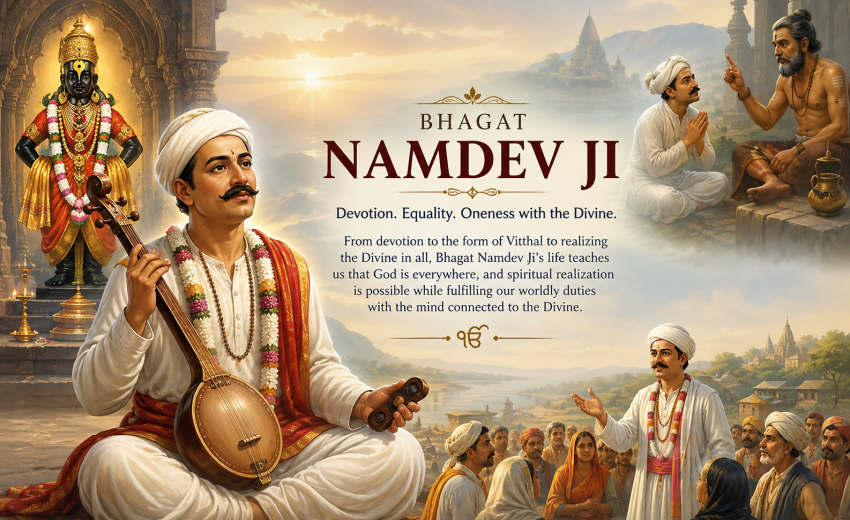
Bhagat Namdev Ji was a prominent saint of the Bhakti tradition whose life reflects a profound journey from devotion centred on the physical form of Vitthal to an understanding of the omnipresence of the Divine. Emerging in 13th-century India, he challenged caste distinctions, ritualism, and social inequality through devotion, equality, and remembrance of God. His meeting with Vishoba Khechar played an important role in transforming his spiritual outlook and deepening his understanding of God beyond temples and images. His missionary journeys further spread these teachings across India. His bani in Sri Guru Granth Sahib Ji emphasizes that spiritual realization can be attained while fulfilling worldly responsibilities with the mind connected to the Divine.
ਨਾਮਦੇਉ ਪ੍ਰੀਤਿ ਲਗੀ ਹਰਿ ਸੇਤੀ ਲੋਕੁ ਛੀਪਾ ਕਹੈ ਬੁਲਾਇ ॥
Naam Dayv loved the Lord; the people called him a fabric dyer.
ਖਤ੍ਰੀ ਬ੍ਰਾਹਮਣ ਪਿਠਿ ਦੇ ਛੋੜੇ ਹਰਿ ਨਾਮਦੇਉ ਲੀਆ ਮੁਖਿ ਲਾਇ ॥
The Lord turned His back on the high-class Kh'shaatriyas and Brahmins, and showed His face to Naam Dayv. ||3||
Whenever one hears the hymns of the Bhagats or thinks about the path of bhakti, it is often associated with renunciation—the abandonment of worldly desires, relationships, and responsibilities. However, Sri Guru Granth Sahib Ji presents a different vision of bhakti. According to this vision, one does not need to abandon family life or worldly responsibilities to attain salvation or union with the Divine. Instead, one can experience God while fulfilling one's duties in everyday life. The hymn of Guru Tegh Bahadur Ji beautifully expresses this idea on Ang 684:
“ਕਾਹੇ ਰੇ ਬਨ ਖੋਜਨ ਜਾਈ…”
Why do you go looking for Him in the forest?
Sri Guru Granth Sahib Ji contains the banis of the Gurus, Bhagats, and Bhatts who experienced the Divine within creation and ordinary life. The spiritual journeys of these Bhagats demonstrate different ways of experiencing God while remaining engaged with the world. The compositions of fifteen Bhagats from medieval India were incorporated into Sri Guru Granth Sahib Ji by Guru Arjan Sahib Ji because their teachings were consistent with the fundamental principles of Guru Nanak Sahib Ji. Their inclusion also carried a profound social message. Many of these Bhagats belonged to communities that experienced caste-based discrimination and social marginalization. By preserving their spiritual voices within the eternal Guru, the Gurus challenged the idea that spiritual wisdom or closeness to God not determined by birth or social status.
India's situation Before the Birth of Bhagat Namdev Ji :
Bhagat Namdev Ji emerged in 13th-century India, a period marked by social inequality, caste distinctions, religious rigidity, and political unrest. The caste system had become deeply established, while religious life was often dominated by rituals and external practices. Access to religious knowledge was also largely restricted to particular sections of society.
At the same time, the Bhakti movement was gaining strength. It emphasized personal devotion and a direct relationship with God beyond boundaries of caste, creed, and social status. It was within this social and spiritual environment that Bhagat Namdev Ji emerged as an important voice of devotion and equality.
Early Life of Bhagat Namdev Ji
Bhagat Namdev Ji is traditionally believed to have been born on 26 October 1270 in Narsi Vamani in Maharashtra, near Aundha Nagnath in present-day Hingoli district. The village is now known as Narsi Namdev.
Tradition holds that his ancestry can be traced to Yadushet, who belonged to the tailor community. His father's name was Damashet, and his mother's name was Gonabai. The family belonged to the Chhimba community and was associated with the Vardvaj family lineage. They were devotees of Vithoba, whose temple was located in Pandharpur. Tradition further holds that this devotion had been maintained within the family for several generations, beginning with his great-great-grandfather, Yadushet.
Namdev Ji's family was traditionally associated with textile-related occupations. His father was a calico painter and tailor, while the terms Chhimba, Chhipa, and Chhipro have historically been associated with communities involved in printing, decorating, and tailoring textiles. Despite their modest social and economic circumstances, the family maintained strong devotional values.
From childhood, Namdev Ji displayed an extraordinary spiritual inclination. At around two years of age, he is traditionally believed to have begun reciting the name of Vitthal. As he grew older, he would strike two stones together like cymbals and spend much of his time singing the praises of Vitthal. His unusual devotion sometimes led villagers to think that something was wrong with him, whereas traditional accounts portray his behaviour as an expression of exceptional spiritual absorption.
In his bani, Namdev Ji referred to the Lord as Vitthal, a name particularly associated with the devotional tradition of Maharashtra centred on Pandharpur. His early devotion was primarily focused on the physical form of Vitthal and the deity's idol at the Pandharpur temple.
Namdev Ji was reportedly married at an early age to Rajabai, the daughter of Gobind Shet of Purva Nagan. They had four sons—Mahadev, Gobind, Vitthal, and Narayan—and one daughter, Limbabai.
Education and Early Devotion
Historical information about Namdev Ji's formal education is limited. In those days, education was generally provided by religious teachers such as Pandhas and Mullahs. His father sent him to a Pandha for education.
The teacher initially wrote the sacred syllable “Om” and asked Namdev Ji to continue writing it while reciting it aloud. Instead, Namdev Ji drew circles on his writing instrument and continued chanting, “Vitthal, Vitthal.” The teacher expected that he would eventually begin taking his studies seriously, but several days passed with Namdev Ji continuing to chant the name of Vitthal.
When the teacher attempted once again to teach him, Namdev Ji expressed that he did not wish to learn anything except how to worship the Almighty. He expressed a deep desire to meet God and attain salvation. These accounts illustrate the intensity of his spiritual inclination from a very young age.
Meeting with Vishoba Khechar
Bhai Jodh Singh Ji writes that Namdev Ji had a small group of devotees and saints with whom he engaged in spiritual discussions. Among them were Jnanadeva (Dnyaneshwar) and Gora Kumbhar, both important figures of the Varkari Bhakti tradition of Maharashtra.
According to traditional accounts, the saints once asked Gora Kumbhar to determine who among them was spiritually mature. Gora Kumbhar tapped each person's forehead, but Namdev Ji was the only one who objected. Gora Kumbhar consequently remarked that Namdev Ji was still spiritually immature and needed the guidance of a Guru.
Following this advice, Namdev Ji travelled in search of a spiritual teacher and eventually met Vishoba Khechar, a saint associated with the Nath tradition.
A famous traditional episode describes their meeting. Namdev Ji saw Vishoba Khechar lying inside a temple with his feet pointing towards a sacred object, traditionally described as a Shiva lingam. Considering this disrespectful, Namdev Ji asked him to move his feet. Vishoba calmly replied, “Turn my feet in the direction where God does not exist.”
Namdev Ji attempted to move Vishoba's feet in different directions, but wherever he placed them, he found the Shiva lingam appearing there as well. Through this experience, Namdev Ji realised that the Divine could not be confined to one particular image, temple, or place. God was present everywhere.
This experience transformed Namdev Ji's spiritual understanding and led him to accept Vishoba Khechar as his Guru. Earlier, his devotion had been primarily centred on the physical form of Vitthal; after receiving his Guru's guidance, he understood the omnipresence of the Divine.
Devotion Alongside Worldly Responsibilities
Namdev Ji's spiritual transformation is beautifully reflected in the well-known conversation between Bhagat Trilochan Ji and Bhagat Namdev Ji recorded in Sri Guru Granth Sahib Ji:
ਨਾਮਾ ਮਾਇਆ ਮੋਹਿਆ ਕਹੈ ਤਿਲੋਚਨੁ ਮੀਤ ॥
Trilochan says, O Naam Dayv, Maya has enticed you, my friend.
ਕਾਹੇ ਛੀਪਹੁ ਛਾਇਲੈ ਰਾਮ ਨ ਲਾਵਹੁ ਚੀਤੁ ॥
Why are you printing designs on these sheets, and not focusing your consciousness on the Lord? ||212||
Namdev Ji replied:
ਨਾਮਾ ਕਹੈ ਤਿਲੋਚਨਾ ਮੁਖ ਤੇ ਰਾਮੁ ਸੰਮ੍ਹਾਲਿ ॥
Naam Dayv answers, O Trilochan, chant the Lord's Name with your mouth.
ਹਾਥ ਪਾਉ ਕਰਿ ਕਾਮੁ ਸਭੁ ਚੀਤੁ ਨਿਰੰਜਨ ਨਾਲਿ ॥
With your hands and feet, do all your work, but let your consciousness remain with the Immaculate Lord. ||213||
The essence of this teaching is that a person does not need to abandon worldly responsibilities to remember God. One can perform one's duties with the hands and feet while keeping the mind connected with the Divine. This represents an important principle of Bhakti: spiritual realization is possible while living an active worldly life.
Missionary Journeys
According to traditional accounts, Bhagat Namdev Ji undertook several Missionary journeys during his lifetime. His first major journey was associated with Jnanadeva (Dnyaneshwar), who invited him to accompany him on pilgrimage.
During these journeys, Namdev Ji was encouraged to recognise the presence of the Almighty throughout creation and to understand the Divine beyond a merely physical form. He and other saints travelled through different parts of India, including southern, western, and northern regions.
The purpose of these journeys was to communicate the essence of devotion, encourage remembrance of God, challenge meaningless rituals, promote human unity, and oppose discrimination based on caste and social status.
One important traditional episode is associated with Aundha Nagnath. Namdev Ji's teachings reportedly attracted many people, which caused some orthodox priests to become hostile towards him. In an attempt to challenge restrictions placed upon people of lower castes regarding temple entry, Namdev Ji carried devotees on his shoulders into the temple.
The priests objected and pushed him out while insulting him. This episode is referred to in the following lines:
ਹਸਤ ਖੇਲਤ ਤੇਰੇ ਦੇਹੁਰੇ ਆਇਆ ॥
Laughing and playing, I came to Your Temple, O Lord.
ਭਗਤ ਕਰਤ ਨਾਮਾ ਪਕਰਿ ਉਠਾਇਆ ॥
While Naam Dayv was worshipping, he was grabbed and driven out. ||1||
Namdev Ji continued his travels despite such opposition. During his journeys, he visited numerous important religious and historical places, including Paithan, Devagiri, Grishneshwar, Panchavati, Trimbakeshwar, Junagadh, and Delhi. From Delhi, he travelled towards Kashi (Banaras), Prayag, Gaya, Ayodhya, Mathura, Gokul, Vrindavan, Jagannath Puri, Dwarka, and other pilgrimage centres. According to M. A. Macauliffe, he also passed through Marwar, visited Kameshwar and Aundha Nagnath, and then proceeded towards Pandharpur.
The King Summons Bhagat Namdev Ji
Sri Guru Granth Sahib Ji contains a Shabad in Raag Bhairavi on Ang 1164 that refers to a famous episode involving Namdev Ji:
ਸੁਲਤਾਨੁ ਪੂਛੈ ਸੁਨੁ ਵੇ ਨਾਮਾ ॥
The Sultan said, “Listen, Naam Dayv:
ਦੇਖਉ ਰਾਮੁ ਤੁਮ੍ਹਾਰੇ ਕਾਮਾ ॥
Let me see the actions of your Lord.”||1||
According to traditional accounts, Muhammad bin Tughlaq succeeded his father, Ghiyas-ud-din Tughlaq, and ruled the Delhi Sultanate during the 14th century. During his reign, difficulties including famine affected Delhi, and he moved his capital to Devagiri in Maharashtra, renaming it Daulatabad.
Tradition states that some priests approached the king and complained about Namdev Ji. The king subsequently ordered him to appear before him. He accused Namdev Ji of speaking against Islam and challenged him to demonstrate his spiritual power. According to the traditional narrative, one of the king's cows had died, and the king demanded that Namdev Ji bring it back to life. He threatened him with conversion if he failed.
Namdev Ji responded fearlessly that he had never spoken against any religion. His purpose was to convey the message of the Almighty to everyone and remind people that all human beings are equal before God. He explained that life and death ultimately remain in the hands of the Almighty and refused to accept conditions that compromised his faith.
According to the traditional account, the king ordered Namdev Ji's hands and feet to be tied and placed him in an open field. An elephant was released towards him, but as it approached, it suddenly stopped. When the mahout struck the elephant, it bowed before Namdev Ji and turned away.
The king and those present were astonished. Namdev Ji nevertheless maintained that life and death could not be controlled by human beings. According to the traditional narrative, through the grace of the Almighty, the dead cow eventually became alive again.
Namdev Ji's Later Life and Demise
After spending many years in Maharashtra and travelling extensively, Namdev Ji is traditionally believed to have eventually come to Punjab. He is said to have spent approximately the last twenty years of his life in Ghuman, in present-day Gurdaspur district.
Namdev Ji continued spreading the message of devotion, equality, remembrance of God, and spiritual freedom. Eventually, he returned to Pandharpur, where his family and devotees welcomed him after a long absence. He continued his devotion to Vitthal while advancing in age and gradually became physically weaker.
According to traditional accounts, Bhagat Namdev Ji passed away on 3 July 1350 CE, at approximately 80 years of age. A memorial associated with him was established on the eastern side of the temple at Pandharpur, whose entrance is traditionally known as Namdev Dwar.
Bhagat Namdev Ji's life represents a journey from devotion centred on the physical form of Vitthal to a deeper understanding of the omnipresence of the Divine. His teachings demonstrate that spirituality does not require withdrawal from society. Instead, one can fulfil worldly responsibilities while keeping the mind connected with God. His inclusion in Sri Guru Granth Sahib Ji further reflects the Gurus' rejection of caste-based distinctions and their recognition of spiritual wisdom irrespective of social background. Through his bani and traditional life narrative, Namdev Ji continues to convey the message of devotion, equality, fearlessness, and remembrance of the Divine while living an engaged worldly life.