
In the latest episode of Let's Talk About Sikhi, filmmaker Harleen Singh explores how the stories we share can challenge perceptions, strengthen Sikh identity and inspire future generations.
At a film festival in Calgary, a woman approached filmmaker Harleen Singh after a screening of her documentary Drawn Together: Comics, Diversity and Stereotypes. She embraced her and began to cry.
The woman admitted that she had initially judged Harleen before seeing her film or hearing her speak. The experience made her question her own assumptions and recognize the humanity they shared.
For Harleen, it was a powerful reminder of what storytelling can achieve.
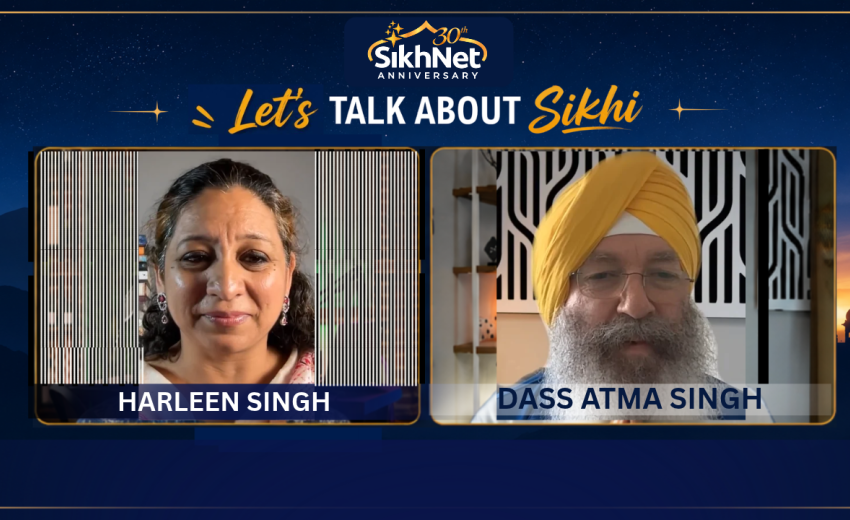
In Episode 4 of SikhNet's Let's Talk About Sikhi, host Dass Atma Singh sits down with the award-winning filmmaker and founder of Kaur Films to explore the relationship between storytelling, Sikh identity and living Sikhi.
Telling our stories through our own lens
Having started her career with National Geographic and the History Channel, Harleen noticed how rarely Sikh lives and perspectives appeared in the films she encountered.
Her journey into documentary filmmaking grew from a desire to bring inspirational Sikh stories to wider audiences, while exploring universal human experiences.
Her documentary Harmony of Healing, for example, follows an oncologist who experienced profound personal loss through cancer, yet continued to serve others and found strength through Shabad Kirtan.
For Harleen, witnessing his resilience brought a deeper personal understanding of Chardi Kala.
These are stories that do more than explain Sikh values. They allow audiences to see those values being lived.
Are we meeting the next generation where they are?
One of the most compelling parts of the conversation centres on how young people experience Sikhi today.
Harleen recalls watching her father become emotional as her two daughters performed traditional Shabad Kirtan at historic gurdwaras in India, playing the rabab and sitar.
For her father, the moment carried immense significance. For her daughters, it was simply something they had learned to do and enjoyed doing.
The experience highlighted how differently generations can connect with the same tradition.
Today's young people encounter stories through short films, podcasts, social media and digital platforms. Harleen believes the opportunity lies in embracing these formats without losing the depth of the Guru's wisdom.
Equally important is giving young people opportunities to participate in creating and telling those stories themselves.
From inheriting Sikhi to living it
Harleen also reflects on how becoming a mother transformed her own relationship with Sikhi.
Growing up, she was the one asking her parents questions. Now, faced with her daughters' questions, she finds herself seeking a deeper understanding of Gurbani and reflecting more closely on how its teachings inform her everyday actions.
She shares a childhood memory of watching her grandmother quietly remove her gold bangles and place them, along with the contents of her purse, into the golak at Sri Harmandir Sahib.
That simple act of generosity has stayed with her throughout her life.
It is a reminder that some of the most influential stories we pass on are not found on a screen. They are the moments our children witness in the way we live, give and serve others.
A conversation worth sharing
How can we tell Sikh stories authentically? Can storytelling itself become a form of seva? And how can we help the next generation discover a connection with Sikhi that is truly their own?
Join Dass Atma Singh and Harleen Singh for a meaningful conversation about representation, compassion, identity and the power of sharing our lived experiences.
Watch Episode 4 of Let's Talk About Sikhi on SikhNet.