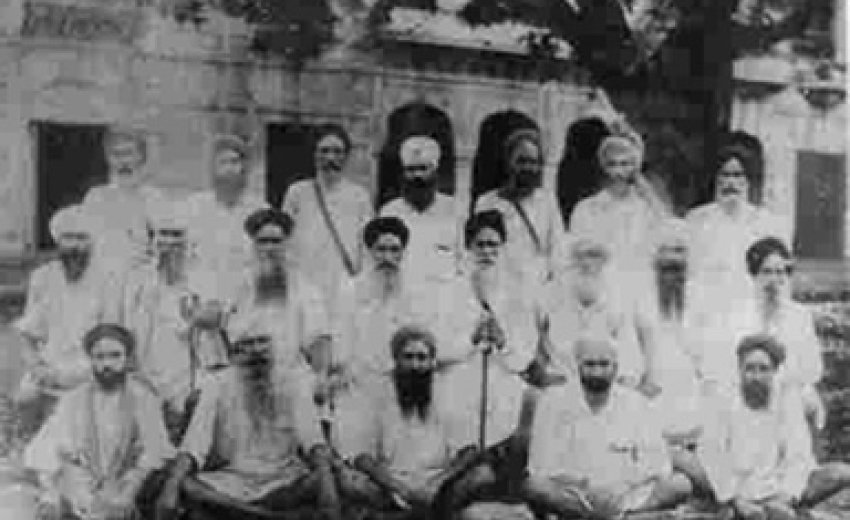

The movement drew much of its strength from Punjabi immigrants, particularly Sikhs, who had traveled to the United States and Canada.
The Ghadar movement was one of the earliest organized revolutionary efforts to challenge British rule outside India. Founded in 1913 on the Pacific coast of North America, it brought together Indian migrants who sought to end British rule through revolutionary action. The term ghadar comes from the Hindustani word for “revolt” or “mutiny,” a name that reflected the movement’s commitment to armed resistance against colonial authority.
The movement drew much of its strength from Punjabi immigrants, particularly Sikhs, who had traveled to the United States and Canada in search of economic opportunities. Many worked in lumber camps, farms, and railway projects under difficult conditions. At the same time, they faced racial discrimination, restrictive immigration policies, and social exclusion. These experiences shaped a political outlook that linked the hardships of migrant life with opposition to British colonial rule in India.
The story of the Ghadar Party extends far beyond India. It connects migration, racial discrimination, diasporic institutions, print culture, and international politics during the First World War. It also demonstrates how ordinary workers and immigrants built a revolutionary network that operated across continents and contributed to the wider struggle for independence.
From Punjab to North America: Migration and political consciousness
During the late nineteenth and early twentieth centuries, thousands of Punjabis migrated to the Pacific coast of North America. Most came from rural backgrounds and sought employment in industries that required hard physical labor. They found jobs in timber towns, agricultural fields, and railway construction projects across the United States and Canada.
Life abroad presented many challenges. Employers often relegated Indian workers to low-paying jobs, while immigration authorities introduced measures designed to limit Asian migration. Many migrants encountered racial hostility in their daily lives and found themselves excluded from broader social and political participation.
These conditions encouraged political discussion within immigrant communities. Migrants compared their experiences abroad with the economic and political realities they had left behind in India. Many concluded that British colonial rule contributed to the conditions that forced them to migrate in the first place. Shared experiences of discrimination and exclusion helped create a sense of solidarity among Indian workers. In places such as the logging towns of Oregon and settlements near the Fraser River in British Columbia, these networks gradually developed into platforms for political activism.
Formation of the Ghadar party
In November 1913, Indian expatriates established the Hindustan Ghadar Party in San Francisco. The organization quickly expanded its activities across the West Coast, including cities such as Vancouver and Astoria. Although the party welcomed Sikhs, Hindus, and Muslims, Punjabi Sikhs formed the largest section of its membership because they constituted the majority of Indian migrants in North America.
The movement relied on several key tools to spread its message. The newspaper Hindustan Ghadar served as its principal publication and carried articles, poems, political commentary, and appeals for revolutionary action. Party members organized public meetings, raised funds within immigrant communities, and conducted political education programs in gurudwaras and community halls.
The organization built an extensive communication network that connected migrants in North America with supporters in India and other parts of the world. Through newspapers, pamphlets, and personal contacts, the Ghadar Party reached a wide audience and encouraged Indians to participate in the struggle against colonial rule.
Revolutionary ideology and objectives
The Ghadar Party rejected constitutional methods and advocated armed resistance against British rule. Its leaders believed that only a revolutionary uprising could secure India’s independence. They called upon workers, peasants, and soldiers to participate in a coordinated effort to overthrow colonial authority.
The movement promoted a form of secular nationalism that transcended religious divisions. Its members emphasized a shared Indian identity and encouraged cooperation among people of different faiths. This approach helped the organization attract support from Sikhs, Hindus, and Muslims living abroad.
Ghadar activists relied heavily on print culture to spread their ideas. They published poems, pamphlets, speeches, and personal accounts that appealed to patriotism and sacrifice. These materials urged readers to return to India, join the struggle, and challenge British rule through direct action.
The party’s leadership reflected the diversity of the diaspora itself. Intellectuals, political exiles, students, and laborers worked together to shape a program that combined revolutionary politics with popular mobilization.
Revolutionary plans
The outbreak of the First World War in 1914 created new possibilities for the Ghadar movement. Many leaders believed that Britain’s involvement in a global conflict presented an opportunity to launch an uprising in India. They expected that wartime pressures would weaken imperial control and create favorable conditions for rebellion.
The party encouraged members and supporters to return to India and organize resistance within both civilian society and the military. Activists attempted to influence Indian soldiers serving in the British Indian Army and hoped to trigger mutinies that would spread across the country.
The movement also explored international alliances. Some Ghadar leaders sought assistance from Germany, which was at war with Britain. They viewed German support as a means of obtaining resources and logistical assistance for revolutionary activities. These efforts reflected the movement’s global outlook and its willingness to engage with international politics to achieve its objectives.
British authorities viewed these plans as a serious threat. Intelligence agencies monitored activists, intercepted communications, and tracked the movement of returning migrants. Governments in both North America and India cooperated to disrupt Ghadar activities and prevent revolutionary operations.
The faces of the Ghadar movement
Several individuals played important roles in shaping the Ghadar movement and its legacy. Lala Har Dayal provided much of the early intellectual direction for the organization. His speeches and writings inspired students, workers, and political activists to join the cause.
Sohan Singh Bhakna served as the party’s first president and helped organize its activities among immigrant communities. His leadership contributed significantly to the growth of the movement during its formative years.
Kartar Singh Sarabha became one of the most celebrated figures associated with Ghadar. Despite his youth, he participated actively in revolutionary efforts and worked to mobilize support in India. British authorities arrested him for his involvement in anti-colonial activities and later executed him. His sacrifice made him a lasting symbol of courage and commitment.
In Canada, Mewa Singh Lopoke became another prominent figure linked to the movement. He assassinated immigration inspector W. C. Hopkinson, whom many Indian activists accused of targeting and persecuting members of their community. Authorities subsequently executed Mewa Singh, and many Sikh communities came to regard him as a martyr. These individuals illustrate the commitment, risks, and sacrifices that defined the Ghadar movement.
Gurudwaras and community networks behind the movement
The success of the Ghadar Party depended heavily on institutions created by immigrant communities. Gurudwaras served not only as places of worship but also as important centers for political discussion and organization. Community leaders used these spaces to distribute newspapers, raise funds, recruit supporters, and coordinate activities.
Punjabi mutual aid societies and meeting halls performed similar functions. They connected migrants across different regions and helped maintain communication within the wider revolutionary network.
The Komagata Maru incident of 1914 further strengthened anti-colonial sentiment. Canadian authorities denied entry to passengers aboard the ship and forced it to return to India. Many Indians viewed the episode as a clear example of racial discrimination. The incident deepened resentment among migrant communities and encouraged greater support for revolutionary politics. These institutions and events transformed everyday community spaces into platforms for political mobilization.
Limitations faced during the movement
British authorities responded aggressively to the Ghadar challenge. Intelligence networks monitored activists across several countries, while colonial courts prosecuted individuals suspected of involvement in revolutionary activities.
The movement's plans for coordinated uprisings in India encountered serious obstacles. Authorities intercepted many operations before they could achieve their objectives. Arrests, surveillance, and legal prosecutions weakened organizational networks and disrupted communication among activists.
Several major trials followed, including cases commonly known as the Hindu Conspiracy trials and the Ghadar trials. Courts in both North America and India prosecuted numerous participants for their involvement in anti-colonial activities.
Although some uprisings and mutinies took place, authorities suppressed them before they could develop into a broader rebellion. As a result, the movement failed to achieve its immediate goal of overthrowing British rule. Nevertheless, its ideas continued to influence later generations of anti-colonial activists.
A global anti-colonial network
The Ghadar Party demonstrated that India’s freedom struggle extended far beyond the subcontinent. Activists operated across North America, Southeast Asia, Europe, and the Middle East. They relied on networks of migrants, political exiles, students, and sympathizers to sustain their activities.
The organization’s efforts to secure German support during the First World War reveal how anti-colonial movements sometimes sought assistance from rival powers. These international connections challenge interpretations that view the independence movement solely through events within India.
The Ghadar experience highlights the global character of anti-colonial politics during the early twentieth century. Migrants used their positions abroad to challenge imperial authority and connect local grievances with broader political struggles.
Contemporary relevance
The memory of the Ghadar movement continues to hold significance in India and across the diaspora. Memorials in Punjab honor Ghadar martyrs, while local histories and commemorative markers in San Francisco, Oregon, and British Columbia recall the movement’s origins.
For many years, mainstream accounts of India’s freedom struggle focused largely on constitutional politics and mass movements. Recent scholarship has given greater attention to diasporic activism and revolutionary organizations such as the Ghadar Party. Archival projects, community initiatives, and digital collections have also made newspapers, letters, and trial records more accessible to researchers and the public.
The movement remains relevant because it broadens our understanding of how independence struggles develop. It shows that the fight against colonial rule took place not only in India but also within migrant communities across the world. It highlights the political agency of immigrants who responded to discrimination with organized action. It also demonstrates how migration, citizenship, and international politics can intersect in powerful and unexpected ways.
An important aspect of the movement’s history lies in the composition of its membership. Although its leadership included Hindus, Sikhs, and Muslims, nearly ninety percent of its members were Punjabi Sikh men. Almost half had previously served in the British Indian Army. British officials often assumed that these veterans would remain loyal to the Empire. The Ghadar movement challenged that assumption and revealed how experiences of migration and exclusion could reshape political loyalties.
Legacy
The Ghadar movement represents one of the most important transnational chapters in India’s freedom struggle. It brought together migrant workers, intellectuals, students, and political activists who shared a determination to end British rule. Through newspapers, community networks, fundraising campaigns, and revolutionary planning, the movement built connections that stretched across continents.
Although colonial authorities suppressed many of its initiatives and prevented large-scale uprisings, the movement left a lasting mark on anti-colonial politics. The sacrifices of figures such as Kartar Singh Sarabha, Sohan Singh Bhakna, Mewa Singh Lopoke, and many others ensured that the ideals of resistance and self-determination continued to inspire future generations.
The Ghadar story reminds us that India’s struggle for independence was not confined to its borders. Migrant communities thousands of miles away played an active role in challenging colonial rule and expanding the reach of the freedom movement. Their efforts remain an essential part of the broader history of India’s journey to independence.
Reference links:
Sikh Ghadarites: The Revolutionary Heroes You Never Learned About - Enroute Indian History
https://enrouteindianhistory.com/sikh-ghadarites-the-revolutionary-heroes-you-never-learned-about/
It explores how Sikh immigrants in North America built a global revolutionary movement to challenge British rule in India.
The Ghadar Party - Saada
https://www.saada.org/tides/article/the-ghadar-party
The article highlights how members of the Ghadar Party mobilized overseas Indian communities in support of India’s struggle for freedom.