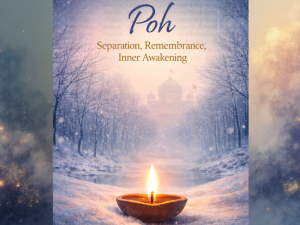

Very few changes in the Indian subcontinent evoke as much anticipation as the arrival of Sawan, the monsoon month. The era before weather maps and satellite forecasts, its onset was felt in the scent of parched earth, the frenzied dance of peacocks, the surge of rivers, and the heavy, dark clouds gathering along the horizon. Yet, in the Indian context, the monsoon has never been a simple atmospheric shift, it is a spiritual, poetic, and deeply musical season.
Long before the first cloud breaks over the plains and the air changes its grammar. The wind grows fragrant with wet earth, and somewhere in the distance, a musician reaches instinctively for Raag Malhar as it profoundly captures the true essence of the monsoon season.
As per Sikh traditions, these seasonal shifts take on an even grander meaning like monsoon becomes a metaphor for divine longing and Malhar transforms into a melody into a soulful cry for union with the Eternal.
Monsoon rains have inspired centuries of literature ranging from classical Sanskrit verse to Bhakti and Sufi poetry. It bridges a gap between the nature and human showing connection of external storm with quiet awakening within.
The Sikh tradition offers perhaps the most remarkable example of scripture organized according to musical principles. Sri Guru Granth Sahib Ji is not arranged by chronology or subject alone but according to thirty-one principal ragas and their musical variants. This extraordinary structure reflects a profound theological insight.
In Sikh thought, music is not decoration added to spirituality; it is itself a vehicle of revelation. The Gurus did not merely compose poetry to be read. They composed Gurbani to be sung, allowing melody and meaning to illuminate one another. Within this sacred musical architecture appears Raag Malar (Malhar). The inclusion of Malhar in the Sri Guru Granth Sahib Ji is deeply meaningful. The Gurus selected each raga because of its emotional capacity to carry a particular spiritual mood (rasa). Malar naturally embodies longing, surrender, renewal, and the cooling of inner suffering, all the qualities central to Sikh spirituality.
As the scorching heat of summer yields to refreshing rain, Gurbani repeatedly reminds the seeker that the human heart, scorched by ego (haumai), finds relief only through remembrance of the Divine Name.
The Gurus consistently transformed natural imagery into spiritual teaching, as clouds become symbols of 'divine grace,' rain becomes the shower of 'Naam,' dry earth becomes the restless human heart, and the peacock's joyful cry becomes the soul's celebration upon receiving the Beloved Lord.
Sri Guru Arjan Dev Ji beautifully expresses this inward monsoon as
ਸਾਵਣਿ ਸਰ ਸੀ ਕਾਮਣੀ ਚਰਨ ਕਮਲ ਸਿਉ ਪਿਆਰੁ॥
"Blessed is the bride-soul in the season of Sawan, for she has fallen in love with the divine lotus feet."
In this Sawan is no longer described merely as a calendar month, but it becomes the condition of spiritual awakening because as rain nourishes fields, divine remembrance nourishes consciousness.
Without this inner rain, life remains spiritually barren regardless of material abundance.
Since modern deliberations on climate often emphasize environmental degradation, unpredictable monsoons, and ecological imbalance. Although these concerns are urgent, Sikh philosophy invites another dimension of reflection, i.e., nature is not merely a resource. It is revelation.
As Sri Guru Nanak Dev Ji declares,
ਪਵਣੁ ਗੁਰੂ ਪਾਣੀ ਪਿਤਾ ਮਾਤਾ ਧਰਤਿ ਮਹਤੁ॥
"Air is the guru, water the father, and earth the great mother."
The monsoon, therefore, is not simply weather to be endured or enjoyed. It is part of the sacred order (Hukam) through which creation continually renews itself.
Listening to Malhar during the rains becomes an act of ecological humility. The musician does not command nature; rather, both musician and listener submit themselves to its divine rhythm.
As per a popular legend, it is claimed that Miyan Tansen could summon rain by singing Raag Malhar. While classical musicians view this story as cultural myth rather than historical truth. Yet, the lore endures because it speaks to something deeper, the idea that music can connect us to the natural world. In performance, a skilled vocalist uses Malhar to evoke the entire cycle of a storm, swirling phrases mimic gusty winds, descending notes trace falling raindrops, and quiet, sustained tones restore calm after the deluge. In Sikh tradition, genuine listening is itself a spiritual discipline. Sri Guru Nanak Dev Ji repeatedly employs the word "Suniai," i.e., to truly hear. It is to allow wisdom to reshape consciousness.
Think of Malhar not as a melody, but as a quiet companion sitting beside you in the dark. He speaks in intentional pauses, knowing that silence is often the purest form of conversation. Through him, the boundary between the world outside and the world within dissolves, the falling rain and your own inner quiet begin to sing in unison.
Malhar is an old soul who has walked through centuries of human longing. He knows every generation’s drought, and he arrives with Sawan not to offer quick relief, but to teach the art of surrender. He gently breaks our illusion of control, whispering that life's true riches arrive only as unearned grace.
When he takes the form of Gurbani, he transcends art altogether. He becomes devotion embodied, sound turned into sanctuary. Sky-born monsoon clouds may drift away with time, but the spiritual rain Malhar pours into the soul stays forever.
The Sikh Gurus truly understood that the task of the seeker is not to force nature to respond rather cultivate a heart capable enough to hear the eternal song of the creation.
Every rendering of Malhar becomes an invitation to return to the One from whom all melodies arise as each drop of rain becomes a verse & every cloud becomes a hymn.