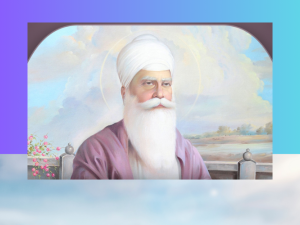

ABSTRACT
This paper builds on my previous paper, in which I have added a discussion on who Nanak is. From his Bani, it becomes evident that he was neither a Prophet nor a Messenger of God. It is his nature that led him to promulgate natural philosophy. He used to observe nature and phenomena, where every action and reaction occurs automatically in the cosmos. Thereafter, this paper compares the natural philosophies of ancient Greek and Renaissance natural philosophers with Nanak’s. The comparison of the natural philosophies of Bruno and Spinoza of the Renaissance with that of Nanak was added. The comparison of the natural philosophies of ancient Greek and Renaissance philosophers with Nanak’s clearly leads us to believe that Nanak is a Natural Philosopher at the top of the list of the Natural Philosophers of ancient Greece and the Renaissance.
1. Introduction
1.1. Background of the Study
This paper is an advanced study of my previous paper, in which I have added a detailed discussion on who Nanak is. (Chahal, 2020) Many biographies describe Nanak’s life with several miraculous stories. Some have presented Nanak as a Revolutionary, a Sufi (a mystic in Islam), a follower of the Bhakti Movement, and a Reformer, but mostly as a Guru. At the same time, some Sikh and non-Sikh writers have misunderstood his philosophy and labeled him as the founder of Sikhism. However, he neither accepted any religion nor founded any religion.
1.2 Research Problem and Purpose of the Study
The philosophical identity of Nanak (1469–1539) has been interpreted in diverse ways by historians, theologians, and scholars of religion. Various writers have described him as a Guru, a religious reformer, a revolutionary thinker, a mystic associated with Sufi traditions, a participant in the Bhakti movement, or the founder of Sikhism. While these interpretations have contributed significantly to the understanding of Nanak’s life and teachings, they have often emphasized his religious role without adequately examining the philosophical foundations of his thought.
A careful study of Nanak’s Bani reveals a worldview grounded in observation, reason, and reflection on nature and human behavior. His compositions repeatedly focus on the orderly functioning of the universe, the operation of natural laws, and the ethical conduct of human beings. Such observations raise an important scholarly question: should Nanak be understood primarily as a religious figure, or should his intellectual contribution be understood as placing him within the broader tradition of natural philosophy?
The problem addressed in this study arises from the limited attention given to Nanakian Philosophy in comparison with the traditions of natural philosophy that emerged in ancient Greece and later flourished during the European Renaissance. Although numerous studies have examined the contributions of Greek philosophers such as Thales, Xenophanes, Anaxagoras, and Parmenides, as well as Renaissance thinkers including Copernicus, Galileo, Bruno, Spinoza, and Newton, few attempts have systematically compared their ideas with those of Nanak.
The purpose of this study is therefore to examine Nanak’s philosophical thought through the lens of natural philosophy and to compare his ideas with those of selected ancient Greek and Renaissance philosophers. By analyzing their respective views on nature, the cosmos, ultimate reality, natural laws, and human existence, this study seeks to evaluate Nanak’s place within the broader history of philosophical thought. In doing so, it aims to contribute to a deeper understanding of Nanak not merely as a religious teacher but as a thinker whose observations of nature and humanity reflect many of the characteristics traditionally associated with natural philosophy.
1.3 Objectives of the Study
The present study builds upon previous investigations of Nanakian Philosophy and its relationship to scientific and philosophical thought. (Chahal, 2020, 2021) (Chahal, 2023a). At the same time, it seeks to extend the comparative examination of Nanak’s ideas by situating them alongside selected ancient Greek and Renaissance natural philosophers whose contributions have significantly shaped the history of philosophical inquiry into nature, reality, and the cosmos (Anaxagoras, 2015; Anonymous, 2019; Westfall, n.d.).
Accordingly, the study is guided by the following objectives:
1. To examine Nanak’s philosophical worldview as expressed in the Aad Guru Granth Sahib (AGGS), with particular attention to his understanding of nature, the universe, natural laws, and human existence (Chahal, 2018, 2023a).
2. To analyze the philosophical characteristics of Nanak’s thought within the broader framework of natural philosophy and to evaluate the extent to which his teachings reflect reasoned observation and interpretation of the natural world (Chahal, 2020, 2021).
3. To compare Nanak’s ideas with those of selected ancient Greek natural philosophers, including Thales, Xenophanes, Anaxagoras, and Parmenides, particularly regarding concepts of ultimate reality, nature, and the relationship between humanity and the cosmos (Anaxagoras, 2015; Anonymous, 2019; Parmenides of Elea, n.d.; Thales of Miletus, n.d.).
4. To compare Nanak’s philosophical perspectives with those of selected Renaissance natural philosophers, including Copernicus, Galileo, Bruno, Spinoza, and Newton, focusing on their interpretations of nature, cosmic order, natural laws, and the pursuit of truth (Anonymous, n.d.-b; Galileo Biography: Astronomer, Scientist (1564–1642), n.d.; Spinozism, n.d.; Westfall, n.d.).
5. To evaluate Nanak’s place in the historical development of natural philosophy and to assess his contribution within the wider intellectual traditions of ancient Greece, the Renaissance, and South Asia (Chahal, 2020; Sidhu, 2025).
2. Methodology
2.1 Research Design
This study employs a qualitative research design grounded in historical-philosophical inquiry and comparative textual analysis. The research examines the philosophical thought of Nanak (1469–1539) and compares it with the ideas of selected natural philosophers from ancient Greece and the European Renaissance. The study does not seek to test hypotheses or establish causal relationships; rather, it aims to explore similarities and differences in philosophical perspectives concerning nature, the cosmos, ultimate reality, natural laws, and human existence.
The research is interpretive in nature and is based on the premise that philosophical ideas can be examined through a close reading of primary texts and their historical contexts. Particular attention is given to Nanak’s compositions preserved in the Aad Guru Granth Sahib (AGGS), which serve as the principal source for understanding his worldview and philosophical reflections on nature and humanity (Chahal, 2018, (Chahal, 2023a)). These ideas are then examined alongside the philosophical contributions of selected Greek thinkers, including Thales, Xenophanes, Anaxagoras, and Parmenides, as well as Renaissance figures such as Copernicus, Galileo, Bruno, Spinoza, and Newton (Anaxagoras, 2015; Anonymous, 2019; Parmenides of Elea, n.d.; Westfall, n.d.).
A comparative approach is adopted because it facilitates the identification of common themes and distinctive features across different intellectual traditions. By situating Nanak’s ideas parallel, anticipate, or differ from those articulated by prominent natural philosophers in other cultural and historical contexts (Chahal, 2020, 2021).
The study is therefore primarily descriptive, analytical, and comparative, focusing on the interpretation of philosophical concepts rather than theological doctrines. Through this approach, the research aims to contribute to a more nuanced understanding of Nanak’s intellectual legacy within the broader history of philosophical thought.
2.2 Sources of Data
The present study relies exclusively on documentary sources and utilizes both primary and secondary materials relevant to the philosophical thought of Nanak and the selected natural philosophers of ancient Greece and the Renaissance. The documentary sources were chosen based on their relevance to the study’s objective of examining and comparing philosophical perspectives on nature, the cosmos, ultimate reality, natural laws, and human existence.
The primary source for understanding Nanakian Philosophy is the Aad Guru Granth Sahib (AGGS), which contains Nanak’s compositions and serves as the foundational text for examining his worldview. Interpretations of selected passages are informed by previous scholarly analyses and translations, particularly those provided by Chahal (2018, 2020, 2021, (Chahal, 2023a)) and Singh (n.d.). Historical information concerning Nanak’s life, intellectual development, and philosophical contributions is further drawn from established Sikh historical and scholarly sources (Dawe, 1997; SGPC, n.d.; Sidhu, 2025).
For the comparative component of the study, documentary sources relating to ancient Greek natural philosophers were consulted. These include materials on Thales of Miletus, Xenophanes, Anaxagoras, and Parmenides, whose philosophical inquiries into nature, existence, and ultimate reality contributed significantly to the development of natural philosophy (Anaxagoras, 2015; Anonymous, 2019; Parmenides of Elea, n.d.; Thales of Miletus, n.d.). These sources provide the historical and philosophical context necessary for evaluating similarities and differences between Nanak’s thought and early philosophical traditions.
The study also draws upon historical and philosophical sources concerning major Renaissance thinkers, including Nicolaus Copernicus, Galileo Galilei, Giordano Bruno, Baruch Spinoza, and Isaac Newton. These sources were selected because of their influential contributions to cosmology, natural philosophy, scientific inquiry, and the conceptualization of nature and natural laws (Anonymous, n.d.-b; Galileo Biography: Astronomer, Scientist (1564–1642), n.d.; Livio, 2018; Spinozism, n.d.; Westfall, n.d.). In addition, references addressing the historical development of natural philosophy and its transition into modern science were consulted to contextualize the comparative analysis (Natural Philosophy, n.d.).
Secondary sources authored by Chahal (2020, 2021, 2023a) were particularly valuable in establishing the conceptual foundations of Nanakian Philosophy and its relationship to scientific and philosophical thought. These works provided interpretive insights that informed the comparative examination undertaken in this study while also helping to identify themes related to nature, the universe, natural order, and human conduct.
Collectively, these documentary sources provide the historical, philosophical, and textual foundation for the comparative analysis presented in this article.
2.3 Analytical Framework
This study adopts a comparative philosophical framework to examine Nanak’s thought in relation to selected ancient Greek and Renaissance natural philosophers. The framework is based on the assumption that philosophical ideas developed in different historical and cultural settings may be compared through common thematic categories, even when they emerge from distinct intellectual traditions (Chahal, 2020; Natural Philosophy, n.d.).
The analysis focuses on several core themes that have historically occupied a central position in natural philosophy. These themes include the nature of ultimate reality, the concept of God, the relationship between God and Nature, the origin and structure of the universe, the operation of natural laws, the movement and order of celestial bodies, human existence, and the pursuit of truth and knowledge (Anaxagoras, 2015; Anonymous, 2019; Parmenides of Elea, n.d.; Spinozism, n.d.; Westfall, n.d.). These thematic categories provide a common basis for comparing philosophical perspectives that developed across different civilizations and historical periods.
The analytical process begins with a close reading of selected passages from the Aad Guru Granth Sahib (AGGS) that articulate Nanak’s understanding of nature, the universe, human existence, and the Eternal Entity (Chahal, 2018, 2021, (Chahal, 2023a)). Attention is given to passages in which Nanak discusses concepts such as ਹੁਕਮ (Hukm – Laws of Nature), ਕੁਦਰਤ (Kudrat - Nature), the infiniteness of the universe, the relationship between humanity and nature, and the orderly functioning of cosmic processes. (Chahal, 2004)(Chahal, 2012) The original Gurmukhi text, its transliteration, and its interpretation are retained as primary evidence throughout the study to ensure fidelity to the source text ideas parallel, anticipate, or differ from those articulated by prominent natural philosophers in other cultural and historical contexts (Chahal, 2020, 2021).
The study is therefore primarily descriptive, analytical, and comparative, focusing on the interpretation of philosophical concepts rather than theological doctrines. Through this approach, the research aims to contribute to a more nuanced understanding of Nanak’s intellectual legacy within the broader history of philosophical thought.
The analytical process begins with a close reading of selected passages from the Aad Guru Granth Sahib (AGGS) that articulate Nanak’s understanding of nature, the universe, human existence, and the Eternal Entity (Chahal, 2018, 2021, (Chahal, 2023a)). Attention is given to passages in which Nanak discusses concepts such as ਹੁਕਮ (Hukm – Laws of Nature), ਕੁਦਰਤ (Kudrat - Nature), the infiniteness of the universe, the relationship between humanity and nature, and the orderly functioning of cosmic processes. (Chahal, 2004)(Chahal, 2012) The original Gurmukhi text, its transliteration, and its interpretation are retained as primary evidence throughout the study to ensure fidelity to the source text and to preserve the philosophical nuances expressed by Nanak.
The second stage of the analysis examines the philosophical positions of selected Greek natural philosophers, including Thales, Xenophanes, Anaxagoras, and Parmenides. Their ideas concerning nature, existence, cosmic order, and the foundations of reality are analyzed and compared with corresponding themes identified in Nanak’s compositions (Anaxagoras, 2015; Anonymous, 2019; Parmenides of Elea, n.d.; Thales of Miletus, n.d.). The objective is not to establish direct historical influence but rather to identify conceptual convergences and divergences among thinkers who sought rational explanations of the natural world.
The third stage of the analysis focuses on selected Renaissance natural philosophers, including Copernicus, Galileo, Bruno, Spinoza, and Newton. Their contributions to cosmology, natural law, scientific observation, and philosophical understandings of nature are examined in relation to Nanak’s observations concerning the universe and its governing principles (Anonymous, n.d.-b; Galileo Biography: Astronomer, Scientist (1564–1642), n.d.; Livio, 2018; Spinozism, n.d.; Westfall, n.d.). Emphasis is placed on discussions of heliocentrism, the infinitude of the universe, God and Nature, and the operation of universal laws.
The comparative analysis is guided by three principal questions: (1) What philosophical understanding of nature and reality is expressed in Nanak’s compositions? (2) To what extent do these ideas resemble or differ from those articulated by ancient Greek and Renaissance natural philosophers? and (3) What do these similarities and differences reveal about Nanak’s place within the broader history of natural philosophy? Through this analytical framework, the study seeks to provide a systematic and historically informed evaluation of Nanak’s intellectual contribution to philosophical thought. (Chahal, 2020, 2021, (Chahal, 2023a)
The framework does not assume the superiority of any particular philosophical tradition. Instead, it seeks to evaluate each thinker within his historical context while identifying shared concerns regarding nature, reality, knowledge, and the human condition. Such an approach facilitates a balanced comparative assessment and contributes to a deeper understanding of Nanak’s philosophical legacy within both South Asian and global intellectual history.
3. Results and Discussion
3.1 Nanak: Historical Background and Intellectual Formation
According to Dawe (1997), Nanak was born on Vaisakh Sudi 3, 1526 Vikrami (15 April 1469 CE), at Rai Bhoi Ki Talwandi, presently known as Nankana Sahib in Pakistan, approximately 65 kilometers southwest of Lahore. His father, Mehta Kalu, served as a Patwari in the land revenue administration, although Cunningham (1849) described him as a grain merchant. Nanak’s mother was Bibi Tripta, and he had an elder sister, Bibi Nanaki, who played a significant role in his early life.
There has been some historical disagreement regarding the date of Nanak’s birth. While many Sikhs traditionally celebrate his Parkash Divas on the full moon day of Kartik, Sikh historian Karam Singh argued that Nanak was born on 15 April 1469 (Dawe, 1997). Nanak was married to Bibi Sulakhani, daughter of Mulchand Chona of Batala, on Bhadon Sudi 7, 1544 Vikrami (24 September 1487 CE). The couple had two sons, Sri Chand and Lakhmi Das (Dawe, 1997).
The social and religious environment of the fifteenth-century Punjab was characterized by interactions among Hindus, Muslims, and various devotional traditions. Against this backdrop, Nanak developed a distinctive intellectual outlook that challenged established assumptions regarding religion, authority, ritual, and human existence. His later compositions reveal a thinker deeply concerned with understanding the universe, nature, truth, and human conduct. These concerns would eventually form the foundation of a philosophical system grounded in observation, reflection, and inquiry rather than unquestioned adherence to inherited traditions.
3.2 Nanak’s Philosophical Identity
Understanding Nanak’s philosophical identity requires attention not only to his historical
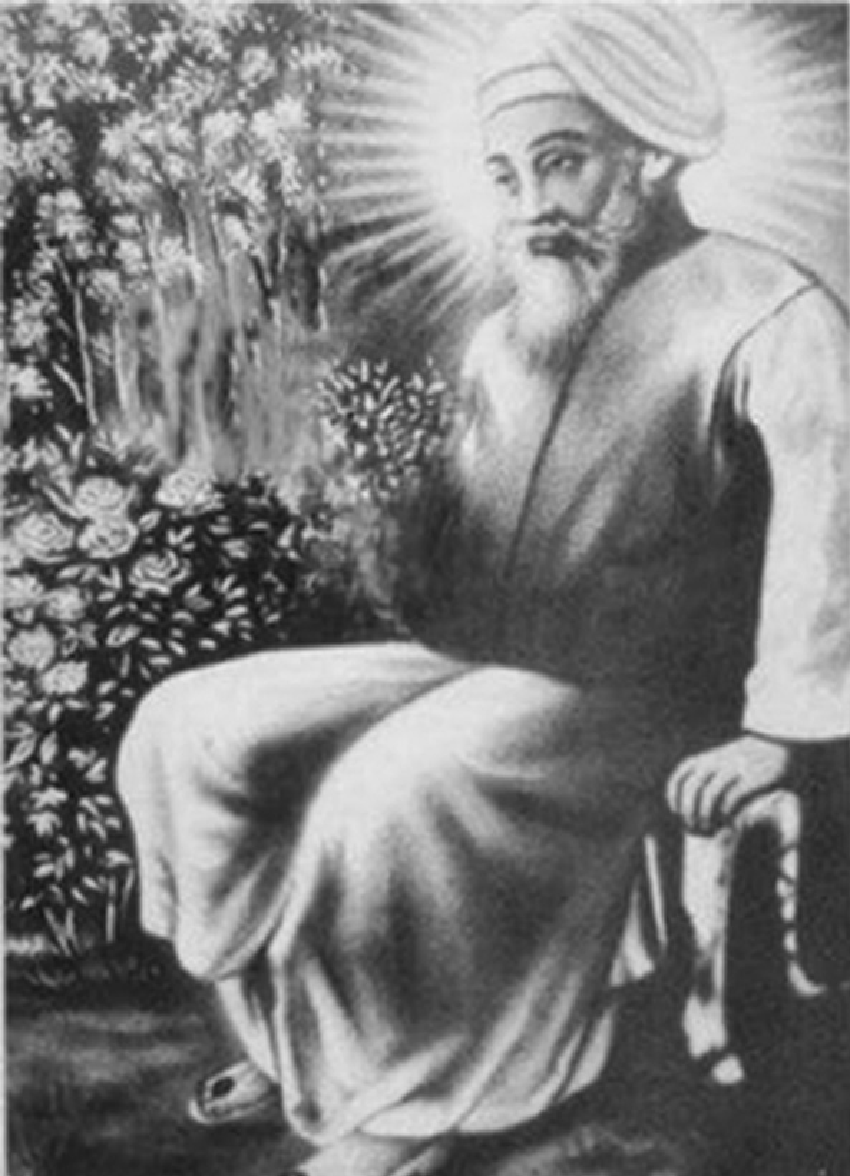
Figure 1. Guru Nanak (1469–1539)
Note. Modified by Rajam Chahal (June 2017). Reproduced from the author’s collection and used to illustrate the historical figure whose philosophical ideas form the basis of this study.
life but also to the characteristics that shaped his intellectual development. Human nature may be understood as the fundamental dispositions and characteristics that influence how people think, feel, and act (Anonymous, n.d.-a). Historical accounts consistently portray Nanak as an exceptionally inquisitive individual whose curiosity emerged at an early age.
According to Dawe (1997), Nanak frequently questioned both Hindu and Muslim teachers during his childhood education. Rather than accepting explanations solely on the basis of authority, he sought rational understanding and deeper meaning. His interests gradually extended beyond conventional religious instruction toward observation of natural phenomena, the orderly processes governing the universe, and the study of human behavior.
This disposition toward questioning, observation, and critical reflection became a defining feature of Nanak’s intellectual identity. Throughout his life, he demonstrated a willingness to examine prevailing beliefs and practices through reasoned inquiry. Such characteristics distinguish him from traditional religious authorities whose teachings often relied primarily upon inherited doctrines. Instead, Nanak’s thought reveals a consistent engagement with the natural world and with the principles governing human existence.
One of the earliest examples of this intellectual independence is found in the well-known Janeu episode.
The Janeu Ceremony and Independent Inquiry
Dawe (1997) describes Nanak as a precocious child who displayed remarkable intellectual maturity. At approximately eight or nine years of age, he refused to participate in the Hindu Janeu ceremony, a rite of initiation involving the wearing of the sacred thread. Nanak questioned the value of a ritual that, in his view, did not necessarily lead to moral improvement, wisdom, or genuine understanding.
His refusal carried broader implications than a simple rejection of a religious custom. Nanak realized that accepting the sacred thread and unquestioningly submitting to priestly authority would limit his ability to think independently. The decision marked an important stage in the development of his commitment to free inquiry and intellectual autonomy. Rather than accepting social conventions merely because they were widely practiced, he evaluated them critically and sought to understand their underlying purpose.
According to traditional accounts, Nanak’s refusal caused concern among family members, who believed that something might be wrong with him. A physician was summoned but reportedly concluded that Nanak was not ill and was instead destined to guide others. Subsequently, Nanak moved to Sultanpur Lodhi, where he worked as the keeper of the government storehouse under Nawab Daulat Khan Lodhi. Although he discharged his responsibilities diligently and earned widespread respect, his interests increasingly centered on understanding the world around him rather than pursuing a conventional career (Dawe, 1997).
The Janeu episode, therefore, illustrates a defining characteristic of Nanak’s philosophical identity: a commitment to understanding through inquiry rather than acceptance through authority.
3.3 Nanak and the Rejection of Prophethood
A central question in Nanak studies concerns whether he should be understood as a prophet commissioned by God to establish a new religion. Numerous traditional narratives describe a mystical experience associated with the River Bein near Sultanpur Lodhi. According to Dawe (1997), Nanak disappeared for three days and was believed to have drowned. Upon his return, it was said that he had received a divine commission to preach God’s message. Similar accounts appear in the Puratan Janam Sakhi tradition and in the writings of Bhai Gurdas (Singh, n.d.), who describes Nanak as having been invested with authority in Sach Khand.
The same interpretation is reflected in accounts published by the Shiromani Gurdwara Parbandhak Committee (SGPC), which state that Nanak heard God’s call to dedicate himself to the service of humanity and subsequently declared, “There is no Hindu, there is no Musselman” (SGPC, n.d.). More recently, Sidhu (2025) has advanced a similar argument, portraying Nanak as a prophet commissioned by God.
However, a critical examination of the textual evidence raises important questions regarding this interpretation. Nanak himself never explicitly states in his recorded Bani that “There is no Hindu, there is no Musselman.” The statement more commonly associated with the Guru tradition is, in fact, the composition of Guru Arjun:
ਨਾ ਹਮ ਹਿੰਦੂ ਨ ਮੁਸਲਮਾਨ ॥
Nā ham hinḏū na musalmān.
I am neither a Hindu nor a Muslim.
ਅਲਹ ਰਾਮ ਕੇ ਪਿੰਡੁ ਪਰਾਨ ॥੪॥
Alah rām ke pind parān. ||4||
My body and breath belong to Allah and to Rama. ||4||
AGGS, M. 5, p. 1135.
The story of Nanak drowning in the Vein Rivulet and being summoned by God to His mansion is a fictitious account based on the following pauri (stanza) under Mahla 1 (Nanak). It is interpreted for easy understanding by the author as follows:
ਪਉੜੀ ॥ ਹਉ ਢਾਢੀ ਵੇਕਾਰੁ ਕਾਰੈ ਲਾਇਆ ॥
ਰਾਤਿ ਦਿਹੈ ਕੈ ਵਾਰ ਧੁਰਹੁ ਫੁਰਮਾਇਆ ॥
Pa▫oṛee. Ha▫o dʰaadʰee vékaar kaaræ laa▫i▫aa.
Raaṫ ḋihæ kæ vaar ḋʰarahu furmaa▫i▫aa.
I was an unemployed bard when God took me into His service and ordered me to sing His praises day and night right at the beginning.
ਢਾਢੀ ਸਚੈ ਮਹਲਿ ਖਸਮਿ ਬੁਲਾਇਆ ॥
ਸਚੀ ਸਿਫਤਿ ਸਾਲਾਹ ਕਪੜਾ ਪਾਇਆ ॥
Dʰaadʰee sachæ mahal kʰasam bulaa▫i▫aa. Sachee sifaṫ saalaah kapṛaa paa▫i▫aa.
The God, my master, summoned me, the bard, to his presence in his mansion.
Then, God dressed me in the robe of His praises and glory.
ਸਚਾ ਅੰਮ੍ਰਿਤ ਨਾਮੁ ਭੋਜਨੁ ਆਇਆ ॥
ਗੁਰਮਤੀ ਖਾਧਾ ਰਜਿ ਤਿਨਿ ਸੁਖੁ ਪਾਇਆ ॥
Sachaa amriṫ naam bʰojan aa▫i▫aa. Gurmaṫee kʰaaḋʰaa raj ṫin sukʰ paa▫i▫aa.
Since then, the life-giving Naam (Laws of Nature) became my ambrosial food.
Those who, under the Guru’s instruction, eat this food to their satisfaction, obtain peace
ਢਾਢੀ ਕਰੇ ਪਸਾਉ ਸਬਦੁ ਵਜਾਇਆ ॥
ਨਾਨਕ ਸਚੁ ਸਾਲਾਹਿ ਪੂਰਾ ਪਾਇਆ ॥੨੭॥ ਸੁਧੁ
Dʰaadʰee karé pasaa▫o sabaḋ vajaa▫i▫aa. Naanak sach saalaahi pooraa paa▫i▫aa. ||27|| suḋʰu
Now, the bard is disseminating His message/ philosophy by singing His hymns.
Nanak* says: By praising truly, I understood the perfect God. 27. Corrected
1. Comments: In this pauri, ਨਾਾਨਕ (Nanak) is without onkar, meaning Nanak is a pen name of some writer of this pauri (stanza). Therefore, this Pauri is not a composition of Guru Nanak himself. Moreover, there is no mention of Nanak’s drowning in the Vein Rivulet for three days in this pauri. This pauri suggests that Nanak, by praising God, found Him in an anthropomorphic form (human fovand that He lives in a mansion somewhere in this Universe. This pauri tells us that Nanak was summoned to disseminate Sabd, but there is nothing about “Na koi Hindu na Musselman” (There is neither a Hindu nor a Musselman). However, Guru Nanak’s God is quite different, as explained by Nanak himself in his following phrase:
ਅਗਮ ਅਗੋਚਰੁ ਰੂਪੁ ਨ ਰੇਖਿ ਆ ॥
Agam agocẖar rūp na rekẖ▫i▫ā.
It is Inaccessible, Unfathomable, and without any
form or features.
AGGS, M. 1, p. 839.
This single phrase nullifies the whole pauri because this type of God cannot summon Nanak to His mansion, who does not exist in an anthropomorphic form and is inaccessible.
The above discussion proves that Nanak was neither a Prophet nor a Messenger of God.
3.4 Natural Philosophy as a Framework for Understanding Nanak
The preceding discussion suggests that Nanak’s intellectual project is better understood within the framework of Natural Philosophy than through the categories of prophecy or religious revelation. Throughout his compositions, Nanak consistently directs attention toward the observation of nature, the functioning of the universe, and the patterns governing human behavior.
Many scholars have described Nanak as the founder of Sikhism. However, Chahal (2023b) distinguishes between Sikhi and Sikhism, arguing that Nanak originally articulated an enlightening philosophy rather than an institutionalized religion. Nanak expressed this understanding in the following verse:
ਸਿਖੀ ਸਿਖਿਆ ਗੁਰ ਵੀਚਾਰਿ ॥
Sikẖī sikẖiā gur vīcẖār.
Sikhi is the teaching based on enlightened philosophy.
AGGS, M. 1, p. 465.
According to this interpretation, Sikhism emerged later through the historical development of institutions, practices, and community structures under successive Sikh Gurus, whereas Nanak’s primary concern was the pursuit of understanding grounded in reflection and experience.
Natural Philosophy has been defined as the study of nature and the physical universe before the emergence of modern science. Prior to the development of specialized scientific disciplines, philosophers sought explanations for natural phenomena through observation, reasoning, and reflection. Their objective was to understand the principles governing the cosmos and humanity’s place within it.
Nanak’s approach exhibits many of these characteristics. He repeatedly emphasizes the orderly functioning of the universe, the operation of Hukm (universal order or natural law), and the importance of understanding the relationships among reality, nature, and human existence. His observations were not directed toward establishing a new religion but toward understanding how the universe functions and how human beings should live within it. (Chahal, 2023c)
For this reason, the present study interprets Nanak as a Natural Philosopher whose intellectual concerns better or parallel those of major thinkers from both ancient Greece and the Renaissance. The following sections examine intellectual concerns in greater detail through a comparative analysis of Nanakian Philosophy alongside selected Natural Philosophers from both traditions.
3.5 Natural Philosophy as a Framework for Understanding Nanak
To understand Nanak’s intellectual contribution, it is necessary to situate his thought within the broader historical tradition of Natural Philosophy. Before the emergence of modern science during the nineteenth century, investigations into nature, reality, and the universe were generally classified under Natural Philosophy. Individuals engaged in such inquiries were known as Natural Philosophers rather than scientists (Natural Philosophy, n.d.; Westfall, n.d.).
Natural Philosophy originated in ancient Greece during the sixth and fifth centuries BCE when thinkers such as Thales, Xenophanes, Anaxagoras, and Parmenides began seeking rational explanations for natural phenomena. Instead of attributing events solely to mythological or supernatural causes, these philosophers attempted to understand the world through observation, reflection, and reasoned inquiry (Anaxagoras, 2015; Anonymous, 2019; Parmenides of Elea, n.d.; Thales of Miletus, n.d.). Their efforts laid the intellectual foundations for later developments in philosophy and science.
The tradition of Natural Philosophy continued through various historical periods and experienced renewed vitality during the European Renaissance. During the fourteenth to seventeenth centuries, several scholars challenged long-established religious doctrines and sought explanations grounded in observation and reason. Among the most influential figures were Nicolaus Copernicus, Galileo Galilei, Giordano Bruno, Baruch Spinoza, and Isaac Newton. Their investigations transformed humanity’s understanding of the universe and contributed significantly to the development of modern scientific thought (Anonymous, n.d.-b; Galileo Biography: Astronomer, Scientist (1564–1642), n.d.; Spinozism, n.d.; Westfall, n.d.).
During this same historical period, Nanak (1469– 1539) emerged in South Asia. Although geographically and culturally distant from the Renaissance thinkers of Europe, Nanak addressed many of the same fundamental questions that concerned Natural Philosophers. His compositions reflect sustained inquiry into the nature of reality, the structure of the universe, the relationship between humanity and nature, the existence of natural order, and the pursuit of truth. Rather than relying upon dogmatic assertions, Nanak frequently encouraged reflection, observation, and understanding as means of comprehending the world and one’s place within it (Chahal, 2018, 2020, 2021, (Chahal, 2023b, (Chahal, 2023a).
A distinguishing characteristic of Nanak’s thought is his emphasis on the orderly functioning of Nature and the Universe. Throughout his compositions, he describes a reality governed by principles that operate consistently and universally. These principles are expressed through concepts such as ਕੁਦਰਤ (Kudrat—Nature) and ਹੁਕਮ (Hukm—Laws of Nature/Universe), which together provide a framework for understanding both natural phenomena and human conduct (Chahal, 2018, 2021, 2023b).
Unlike many religious traditions that explain natural events primarily through supernatural intervention, Nanak repeatedly directs attention toward the observable order of existence. His reflections on the infiniteness of the universe, the movement of celestial bodies, the interconnectedness of life, and humanity’s responsibility toward the natural environment demonstrate an intellectual orientation closely aligned with the objectives of Natural Philosophy. These observations form the basis for examining Nanak not merely as a religious teacher but also as a thinker engaged in philosophical inquiry concerning nature and reality.
The present study, therefore, employs Natural Philosophy as the principal analytical framework for interpreting Nanak’s teachings. This framework facilitates a systematic comparison between Nanak and selected Natural Philosophers of ancient Greece and the Renaissance. Through this comparison, it becomes possible to evaluate the extent to which Nanak’s ideas correspond with, differ from, or anticipate concepts that later became associated with the development of philosophical and scientific thought.
The following sections examine these comparisons in greater detail, beginning with the Natural Philosophers of Ancient Greece and proceeding to the major figures of the Renaissance.
3.6 Comparison with Ancient Greek Natural Philosophers
The development of Natural Philosophy began in ancient Greece, when philosophers sought to explain the origin, structure, and functioning of the cosmos through observation and reason rather than through mythology. Among the most influential early thinkers were Thales of Miletus, Xenophanes, Anaxagoras, and Parmenides. Their ideas concerning nature, reality, and existence laid important foundations for later philosophical inquiry. In this section, Nanakian Philosophy is compared with that of these ancient Greek Natural Philosophers to identify similarities, differences, and the extent to which Nanak advanced comparable philosophical ideas through his own observations of Nature and the Universe (Thales of Miletus, n.d.; Anonymous, 2019; Anaxagoras, 2015; Parmenides of Elea, n.d.).
3.6.1 Thales of Miletus and Cosmological Origins
Thales of Miletus (c. 624 – c. 546 BCE). Many, most notably Aristotle (384–322 BCE), regarded Thales as the first philosopher in the Greek tradition. Historically, he is recognized as the first individual in Western civilization to have entertained and engaged in scientific philosophy. He predicted the solar eclipse of May 28, 585 BCE. Thales is recognized for breaking with the use of mythology to explain the world and the Universe, instead of explaining natural objects and phenomena through theories and hypotheses, a precursor to modern science. Aristotle reported Thales’ belief that the originating principle of nature and the nature of matter was a single material substance: water. (Thales of Miletus, n.d.)
This is very similar to Eastern Philosophy, which holds that the three mythical worlds were created from water. Nanak debunked both Eastern Philosophy and that of Miletus:
ਸਾਚੇ ਤੇ ਪਵਨਾ ਭਇਆ ਪਵਨੈ ਤੇ ਜਲੁ ਹੋਇ ॥
Saaché ṫé pavnaa bʰa▫i▫aa pavnæ ṫé jal ho▫é.
ਜਲ ਤੇ ਤ੍ਰਿਭਵਣੁ ਸਾਜਿਆ ਘਟਿ ਘਟਿ ਜੋਤਿ ਸਮੋਇ ॥
Jal ṫé ṫaribʰavaṇ saaji▫aa gʰat gʰat joṫ samo▫é.
ਨਿਰਮਲੁ1 ਮੈਲਾ2 ਨਾ ਥੀਐ ਸਬਦਿ3 ਰਤੇ4 ਪਤਿ5 ਹੋਇ ॥੩॥
Nirmal mælaa naa ṫʰee▫æ sabaḋ raṫé paṫ ho▫é. ||3||
It is invariably interpreted/translated by the Sikh scientists and theologians as done by Sant Singh Khalsa as follows: (Chahal, 2006)
From the True Lord came the air, and from the air came water.
From the water, He created the three worlds; in each heart, He has infused His Light.
The Immaculate Lord does not become polluted. Attuned to the Shabad, honor is obtained..3.
AGGS, M. 1, p. 19.
However, scientifically, water is not an element but rather a compound of Hydrogen and Oxygen. It never formed other elements to create the mythical three worlds (ਤ੍ਰਿਭਵਣੁ - tribhavens): Upper, the sky where God and the gods live; middle, where the Earth exists; and the lower (nether world), where the dead live. Water and planet Earth formed simultaneously, and the water escaped from Earth as vapor when it was still hot, falling as rain when it cooled. (Origin of Water on Earth, n.d.) Therefore, there is no question of creating three Bhavans with water.
After a critical study of the above sabd of Guru Nanak, it becomes evident that Nanak explains the ancient philosophy of Thales and Eastern philosophy in the first two lines. In the third line, interpreted by the author, Nanak is saying, according to his philosophy:
Those who have achieved a clean mind1 and maintain their honor5 by understanding4 sabd3 are not polluted2 with the above type of Greek and ancient philosophy in India.
It is evident from the above discussion that Nanak has gone beyond Thales of Miletus’s philosophy by breaking away from the ancient Greek mythology and from the Eastern philosophy in the Vedas and Vedanta.
3.6.2 Xenophanes and the Critique of Anthropomorphic God
Xénophane (c. 570 BCE - c. 480 BCE): Xenophanes of Colophon is best remembered for a novel critique of anthropomorphism in religion, a partial advance toward monotheism, and some pioneering reflections on the conditions of knowledge. He is identified as the founder of Eleatic Philosophy, which is the view that, despite appearances, there is a changeless, motionless, and eternal ‘One.’ Homer and Hesiod imagined the gods in human form. But Xenophanes’ positive characterizations of the divine, made in B23–26, perhaps the most fundamental, is B23 is as follows:
One god, greatest among gods and men, not at all like mortals in body or in thought.” (Anonymous, 2019) (Chahal, 2021)
Nanak (1469-1539): The God, , of Nanak is explained in detail later under Parmenides of Elea.
This observation represents a major departure from anthropomorphic religious traditions and marks an important step toward a more abstract conception of ultimate reality. Nanakian Philosophy particularly rejects anthropomorphic representations of God (Chahal, 2021).
The concept of God in Nanakian Philosophy, however, is developed more fully and systematically and will be examined in greater detail in the discussion of Parmenides. There, Nanak’s conceptualization of the Eternal Entity through the logo (ਇਕੁ ਓ ਬੇਅੰ - Ek Oh Beant) in Punjabi and ‘That the One and Only is Infinite’ in English) is compared with Greek philosophical understandings of ultimate reality. (Chahal, 2021; Chahal, 2023a).
3.6.3 Anaxagoras and the Unity of Existence
Anaxagoras (born ca. 500–480): Anaxagoras, a Greek philosopher, was the first pre-Socratic philosopher to live in Athens. He propounded a physical theory of “everything-in-everything.” He claimed that nous (intellect or mind) was the motive cause of the cosmos, meaning he denied the divinity of all other gods but his principle, the mind. He was the first to explain eclipses correctly and was both famous and notorious for his scientific theories, including the claims that the Sun is a mass of red-hot metal, that the Moon is earthy, and that the stars are fiery stones. Anaxagoras maintained that the original state of the cosmos was a mixture of all its ingredients (the fundamental realities of his system). Anaxagoras was indicted for impiety. (Anaxagoras, 2015).
Despite the incomplete statement, “everything-in-everything” of Anaxagoras, Nanak expresses it as, “One is in everything and everything in One,” which is easily understood:
ਏਕੱ1 ਮਹਿ ਸਰਬ2ਸਰਬ3 ਮਹਿ ਏਕਾ4 ਏਹ ਸਤਿ5 ਗੁਰਿ6 ਦੇਖਿ7 ਦਿਖਾਈ8 ॥੫॥
Ék mėh sarab sarab mėh ékaa éh saṫgur ḋékʰ ḋikʰaa▫ee. ||5||
Ėk mėh sarab sarab mėh ekā eh saṯgur ḏekẖ ḏikẖā▫ī. ||5||
AGGS, M. 1, p. 907.
True5 Enlightenment5 has given8 (me) the vision7 that everything2 is in One1 and that One3 is in everything3.
Note: This “One” is, as in, the God of Nanak. (Chahal, 2023a)(Chahal, 2021)
Parmenides and the Concept of Ultimate Reality
Parmenides of Elea (Late 6th - Mid. 5th century BCE): A Pre-Socratic Greek philosopher. As the first philosopher to inquire into the nature of existence, he is incontrovertibly credited as the “Father of Metaphysics.” Parmenides’ only written work is a poem entitled, supposedly, but likely erroneously, On Nature. Only a limited number of “fragments” (more precisely, quotations by later authors) of his poem are still in existence, which have traditionally been assigned to three main sections—Poem, Reality (Alétheia), and Opinion (Doxa).
Despite making valid claims (for example, the Moon gets its light from the Sun), the account offered in Opinion is supposed to represent the mistaken “Opinions of mortals.” It is thus to be rejected to some extent. (“Parmenides of Elea (Late 6th Cn.—Mid 5th Cn. B.C.E.),” n.d.)
His meaningful quotes are as follows:
“We can speak and think only of what exists. And what exists is uncreated and imperishable, for it is whole, unchanging, and complete. It was not or shall be different since it is now, all at once, one and continuous.”
The same philosophy is repeated in different words as follows:
“There is one story left, one road: that it is. And on this road, there are many signs that being is uncreated and imperishable, whole, unique, unwavering, and complete.”
Nanak (1469-1539): However, Nanak conceptualized God as a logo, , surely exists, uncreated, and imperishable. To understand this logo, , for God, it has to be disassembled into its three elements:
= ੧ + ਓ +
੧ = (One). It is from Numerals, but in science, it is a Physical ONE like SINGULARITY of Albert Einstein or NOTHINGNESS of some scientists. But for Nanak, Nothingness is (ਸੁੰਨ - SUNN) and ਨਰਗੁਨੁ (NIRGUN) state
ਓ = (open Oora). It is from the Gurmukhi alphabet, but here it is an abbreviation of ਓਹ (Oh – That).
- = The extended end of ਓ (open Oora) is from geometry, representing INFINITE (amount of Energy).
ਓ = (open Oora) and ( ) are qualifier words for ੧ (One) in indicating that One is Infinite (amount of energy, as in Singularity)
The logo cannot be pronounced; it means ਇਕੁ ਓ ਬੇਅੰਤ (Ek Oh Beant) in Punjabi and ‘That the One and Only is Infinite (amount of energy)’ in English. This God of Nanak does not appear in anthropomorphic form (human form), it burst and expanded into the vast Nature/Universe of today after about 13.8 billion years. For example,
ਕੀਤਾ1 ਪਸਾਾਉ2 ਏਕੋ3 ਕਵਾਉ4 ॥
Kīṯā pasāo eko kavā o.
ਤਿਸ5 ਤੇ ਹਏ ਲਖ6 ਦਰੀਆਉ7 ॥
Ŧis ṯe ho e lakẖ ḏarī ā o.
The Universe exploded from one3 source of energy (Singularity3, that started1 to expand2, and from that5, many6thing7 appeared.
AGGS, Jap # 16, p.3.
The above phrase of Nanak indicates that the One (Singularity, Nothingness- ਸੁੰਨ (sunn), the ਨਰਗੁਨੁ Nirgun state) has given rise to everything, meaning the ਸਰਗੁਨ (Sargun) state, the Nature/Universe. Nanak has further explained that the ਸਰਗੁਨ (Sargun) state of  is recognized as Nature/Universe in the following phrase:
ਨਾਨਕ1 ਸਚ2 ਦਾਤਾਾਰੁ3 ਸਿਨਾਖਤੁ4 ਕੁਦਰਤੀ5 ॥੮॥
Nānak sacẖ ḏāṯār sinākẖaṯ kuḏraṯī. ||8||
Nanak1 says: The ever-giving3 Eternal Entity2 (
AGGS, M. 1, p. 141.
Moreover, the God ( ) is as follows:
ਅਗਮ ਅਗੋਚਰੁ ਰੂਪੁ ਨ ਰੇਖਿਆ ॥
Agam agocẖar rūp na rekẖ▫i▫ā.
It is Inaccessible, Unfathomable, and without any form or features.
AGGS, M. 1, p. 838.
Therefore, the God () of Nanak is pantheistic, impersonal, and does not interfere in human affairs. (Chahal, 2021) (Chahal, 2023a)
3.6.4 Human Equality and the Image of God
One of the most significant implications of Nanak’s concept of the Eternal Entity is the equality of all human beings. If the same Divine Light permeates all existence, then distinctions based on caste, race, gender, religion, social status, or nationality lose their philosophical justification. Nanak repeatedly emphasizes that all human beings originate from the same source and therefore share a common dignity and value.
The idea that humans are created in the image of God is found in several religious traditions. However, interpretations of this concept have often been accompanied by social divisions and hierarchical structures that distinguish one group from another. In contrast, Nanakian Philosophy consistently affirms the unity of humanity and rejects all forms of discrimination.
The following Sabd expresses this principle:
ਏਕਾ1 ਸੁਰਤਿ2 ਜੇਤੇ3 ਹੈ ਜੀਅ ॥
Ėkā suraṯ jeṯe hai jī▫a.
There is one¹ consciousness² in all living beings³.
AGGS, M. 1, p. 24.
According to the author’s interpretation, this verse emphasizes the common spiritual and existential foundation shared by all human beings. Differences in language, culture, religion, ethnicity, and social status do not alter the fundamental unity of human existence. The same underlying consciousness is present in all.
Nanak further reinforces this idea in one of his most frequently cited compositions:
ਸਭੁ ਕੋ ਊਚਾ ਆਖੀਐ ਨੀਚੁ ਨ ਦੀਸੈ ਕੋਇ ॥
Sabẖ ko ūcẖā ākẖī▫ai nīcẖ na ḏīsai ko▫e.
ਇਕਨੈ ਭਾਂਡੇ ਸਾਜਿਐ ਇਕੁ ਚਾਨਣੁ ਤਿਹੁ ਲੋਇ ॥
Iknai bẖāʼnde sāji▫ai ik cẖānaṇ ṯihu lo▫e.
AGGS, M 1, p 62.
Guru Nanak says:
Everybody has been created equal from the same matter and same source of energy (light)
Therefore, call everyone the highest (of high class) and do not look at others as if they belong to a lower class.
This is one of Nanak’s most powerful statements on human equality. If all people emerge from the same Divine Light, no individual or community can claim inherent superiority over another. Consequently, social divisions based on caste, lineage, ethnicity, or religious affiliation are incompatible with the philosophical principles articulated by Nanak.
This position contrasts sharply with many social systems that prevailed during Nanak’s lifetime. South Asian society was characterized by rigid caste distinctions, while various religious communities frequently emphasized their own exclusivity. Nanak challenged such divisions by emphasizing the common origin and shared humanity of all people.
Nanak’s understanding of human equality extends beyond theological considerations and possesses broader philosophical significance. The recognition that all human beings are interconnected by a common origin aligns with a universalistic worldview that transcends sectarian boundaries. In this respect, Nanakian Philosophy anticipates modern concepts of human dignity, equality, and universal human rights.
When compared with Greek philosophy, Nanak’s position represents a notable development. Although Greek philosophers such as Xenophanes and Parmenides advanced important ideas concerning unity and ultimate reality, they did not explicitly formulate a comprehensive doctrine of universal human equality. Nanak, by contrast, connects metaphysical unity directly to social ethics. The same principle that unifies the cosmos also unifies humanity.
Another important passage illustrates this interconnectedness:
ਸਭ ਮਹਿ ਜੋਤਿ ਜੋਤਿ ਹੈ ਸੋਇ ॥
The Light (Eternal Entity) is present in all; that Light (Eternal Entity) is the same everywhere.
AGGS, M. 1. p. 13 and 663.
and the ideas of Copernicus, Galileo, Bruno, Spinoza, and Newton.
3.7.2 Copernicus and the Challenge to Religious Cosmology
Nicolaus Copernicus (1473–1543) is widely recognized as one of the most influential figures in the history of Natural Philosophy. His heliocentric model of the solar system challenged the long-established geocentric worldview that had dominated European thought for centuries. According to the traditional understanding endorsed by religious authorities of the period, the Earth occupied the center of the universe, and all celestial bodies revolved around it. Copernicus questioned this assumption and proposed instead that the Earth and other planets revolved around the Sun (Anonymous, n.d.-b; Livio, 2018).
The significance This statement serves as the philosophical foundation for Nanak’s rejection of discrimination and his advocacy of social harmony. Because the same Divine Light is present in all individuals, every person deserves respect and compassion regardless of external differences.
Thus, Nanak’s concept of human equality is not merely a social or ethical teaching but a logical consequence of his broader philosophical understanding of reality. The unity expressed through (ਇਕੁ ਓ ਬੇਅੰਤ - Ek Oh Beant) extends beyond the cosmos and Nature to encompass all humanity. This integration of metaphysics, ethics, and social philosophy represents one of the distinctive features of Nanak’s thought and further supports the argument that he should be understood within the broader tradition of Natural Philosophy.
3.7 Comparison with Renaissance Natural Philosophers
3.7.1 Nanak and the Renaissance Context
The Renaissance was a period of profound intellectual transformation in Europe, generally spanning the fourteenth to seventeenth centuries. It witnessed the revival of classical learning, the growth of humanism, and the emergence of new approaches to understanding nature and the universe. During this period, many scholars began to question long-established religious doctrines and sought explanations grounded in observation, reason, and critical inquiry. These developments contributed significantly to the growth of Natural Philosophy and eventually to the emergence of modern science (Westfall, n.d.; Natural Philosophy, n.d.).
Several of the most influential Renaissance Natural Philosophers lived during or shortly after the lifetime of Nanak. Nicolaus Copernicus (1473–1543), Galileo Galilei (1564–1642), Giordano Bruno (1548–1600), Baruch Spinoza (1632–1677), and Isaac Newton (1642–1727) each contributed to transforming humanity’s understanding of the cosmos, nature, and the laws governing the universe (Anonymous, n.d.-b; Galileo Biography: Astronomer, Scientist (1564–1642), n.d.; Spinozism, n.d.; Westfall, n.d.).
Nanak (1469–1539) lived during the early Renaissance period and was almost exactly contemporary with Copernicus. Although there is no evidence of direct contact or intellectual influence between them, both sought to understand reality beyond inherited dogma and conventional religious explanations. Each, in his own cultural setting, challenged prevailing assumptions and encouraged deeper reflection on the nature of existence.
The intellectual environment in which Nanak lived differed considerably from that of Renaissance Europe. South Asia was characterized by complex religious traditions, ritual practices, social hierarchies, and theological debates. Nevertheless, many of the questions that occupied Renaissance thinkers also appear in Nanak’s compositions: What is the nature of the universe? How does cosmic order operate? What is the relationship between humanity and nature? What constitutes truth? How should human beings understand their place within the cosmos?
Unlike many religious leaders of his time, Nanak repeatedly encouraged inquiry, reflection, and understanding. His compositions reveal a sustained interest in the workings of Nature (ਕੁਦਰਤ, Kudrat), the operation of universal laws (ਹੁਕਮ, Hukm), the movement of celestial bodies, and the interconnectedness of all existence (Chahal, 2018)(Chahal, 2004) (Chahal, 2012). These concerns closely parallel the intellectual pursuits of Renaissance Natural Philosophers, even though they emerged within different cultural and philosophical traditions.
Some important distinctions exist between Nanak and many of his contemporaries. Whereas numerous religious authorities relied upon scriptural authority and established doctrines, Nanak frequently directed attention toward the observable order of the natural world. He encouraged individuals to seek understanding through contemplation and experience rather than through unquestioning acceptance of inherited beliefs.
This orientation is reflected in the following Sabd:
ਅਕਲੀ¹ ਸਾਹਿਬੁ² ਸੇਵੀਐ ਅਕਲੀ³ ਪਾਈਐ ਮਾਨੁ॥
Aklī sāhib sevī▫ai aklī pā▫ī▫ai mān.
ਅਕਲੀ ਪੜ੍ਹਿ ਕੈ ਬੁਝੀਐ ਅਕਲੀ ਕੀਚੈ ਦਾਨੁ ॥
Aklī paṛẖ kai bujhī▫ai aklī kīcẖai ḏān.
AGGS, M. 1, p. 1245.
Serve² the Sovereign through wisdom¹; through wisdom³ one attains honor. Through wisdom, one learns and understands; through wisdom, one practices generosity.
This passage highlights the importance of intellect, understanding, and rational reflection. Rather than discouraging inquiry, Nanak places wisdom at the center of human development. Such an approach resonates strongly with the intellectual spirit that later characterized the Renaissance and the Scientific Revolution.
The comparison between Nanak and Renaissance Natural Philosophers is therefore not based upon historical influence but upon shared intellectual concerns. Both sought to understand the universe through observation and reflection, challenged established assumptions, and pursued explanations grounded in reason. The following sections examine these parallels through a comparative analysis of Nanakian Philosophy and the ideas of Copernicus, Galileo, Bruno, Spinoza, and Newton.
3.7.2 Copernicus and the Challenge to Religious Cosmology
Nicolaus Copernicus (1473–1543) is widely recognized as one of the most influential figures in the history of Natural Philosophy. His heliocentric model of the solar system challenged the long-established geocentric worldview that had dominated European thought for centuries. According to the traditional understanding endorsed by religious authorities of the period, the Earth occupied the center of the universe, and all celestial bodies revolved around it. Copernicus questioned this assumption and proposed instead that the Earth and other planets revolved around the Sun (Anonymous, n.d.-b; Livio, 2018).
The significance of Copernicus’ contribution extends beyond astronomy. His work demonstrated that accepted beliefs could be challenged through careful observation, reasoning, and mathematical analysis. In doing so, he initiated a transformation in humanity’s understanding of the cosmos and laid the foundation for later developments in science and Natural Philosophy.
Although Nanak and Copernicus lived in different cultural environments and addressed different audiences, there is an important similarity between them. Both thinkers displayed a willingness to question prevailing assumptions and encouraged a search for truth that transcended conventional dogma. Neither accepted inherited explanations merely because they were widely believed or institutionally sanctioned.
During Nanak’s lifetime, many cosmological ideas in South Asia were rooted in traditional interpretations concerning the structure of the universe and the existence of mythical realms. Nanak frequently approached such beliefs with a spirit of inquiry and reflection. Rather than providing detailed astronomical theories, he emphasized the vastness, complexity, and orderly functioning of the universe.
One of Nanak’s most frequently cited observations concerning the limits of human knowledge is found in the following Sabd:
ਅੰਤੁ¹ ਨ ਸਿ�ਫਤੀ² ਕਹਣਿ³ ਨ ਅੰਤੁ ॥
Anṯ na sifṯī kahaṇ na anṯ.
ਅੰਤੁ ਨ ਕਰਣੈ ਦੇਣਿ ਨ ਅੰਤੁ ॥
Anṯ na karṇai ḏeṇ na anṯ.
ਅੰਤੁ ਨ ਵੇਖਣਿ ਸੁਣਣਿ ਨ ਅੰਤੁ ॥
Anṯ na vekẖaṇ suṇaṇ na anṯ.
ਅੰਤੁ ਨ ਜਾਪੈ ਕਿਆ ਮਨਿ ਮੰਤੁ ॥
Anṯ na jāpai ki▫ā man manṯ.
AGGS, Jap, p. 5.
There is no end¹ to describing His praises².
There is no end to His creation and His gifts.
There is no end to seeing and hearing.
No one knows the limits of the cosmic mystery.
This passage reflects Nanak’s recognition of the immensity and complexity of the universe. Rather than presenting a closed cosmological system, Nanak emphasizes the limitations of human knowledge and the vastness of reality. Such a perspective contrasts with rigid cosmological models that claim complete certainty regarding the structure of the cosmos (Chahal, 2021, 2023a) (Chahal, 2018)
Nanak’s view of the universe is notable for its openness and expansiveness. Whereas medieval cosmological systems often envisioned a finite and hierarchically ordered universe, Nanak repeatedly speaks of creation as immeasurable and beyond complete human comprehension. This intellectual humility is consistent with the spirit of inquiry that later characterized Renaissance Natural Philosophy.
Another relevant passage states:
ਪਾਤਾਲਾ ਪਾਤਾਲ ਲਖ ਆਗਾਸ ਆਗਾਸ ॥
Paaṫaalaa paaṫaal lakʰ aagaasaa aagaas
ਓੜਕ ਓੜਕ ਭਾਲਿਥਕੇ ਵੇਦ ਕਹਨਿ ਇਕ ਵਾਤ ॥
Oṛak oṛak bʰaal ṫʰaké véḋ kahan ik vaaṫ.
ਸਹਸ ਅਠਾਰਹ ਕਹਨਿ ਕਤੇਬਾ ਅਸੁਲੂ ਇਕੁ ਧਾਤੁ ॥
Sahas atʰaarah kahan kaṫébaa asuloo ik ḋʰaaṫ.
ਲੇਖਾ ਹੋਇ ਤ ਲਿਖੀਐ ਲੇਖੈ ਹੋਇ ਵਿਣਾਸੁ ॥
Lékʰaa ho▫é ṫa likee▫æ lékʰæ ho▫é viṇaas.
ਨਾਨਕ ਵਡਾ ਆਖੀਐ ਆਪੇ ਜਾਾਣੈ ਆਪੁ ॥੨੨॥
Naanak vadaa aakʰee▫æ aapé jaaṇæ aap. ||22||
AGGS, Jap 5, p. 5.
There are hundreds of thousands of netherworlds, and hundreds of thousands of skies.
After great research, the Vedas have said it definitely!
The Semitic books say that there are eighteen thousand worlds and that is the fact.
However, Nanak says:
It cannot be possible to count (number of the celestial bodies in the Universe) because the counting person may reach the end of his life while counting, but it will still be incomplete.
He further says That (Eternal Entity) is the Great who knows the account (of the celestial bodies in the Universe). 22.
In this stanza, Guru Nanak notes that the Vedas say there are hundreds of thousands of Patal (nether worlds) and hundreds of thousands of skies, whereas Semitic books say there are 18,000 worlds. This is information from the Vedas and Semitic books, not the views of Guru Nanak. However, some scholars and preachers erroneously interpret it as Guru Nanak saying that there are lacs (hundreds of thousands) of Patal (nether worlds) and lacs of skies.
Scientifically, there is no nether world. It is an ancient myth. Similarly, there is no sky. The blue color we see in a clear, cloudless daytime sky is due to air molecules scattering blue light from the Sun more than red light. In fact, what we call the sky is space.
Guru Nanak offers his own observations after quoting the information available or the accepted concept of the time. He says that the Universe contains countless celestial bodies. The real number would be only known to God, the Eternal Entity.
According to the currently available scientific information, there are billions of galaxies, and each galaxy contains billions of stars, along with their planets and moons. Our Sun is one of the billions of stars in our galaxy, the Milky Way, with eight planets (Pluto is no longer a planet) orbiting it. (Chahal, 2018)
While Copernicus revolutionized astronomy by relocating the Earth from the center of the universe, Nanak challenged intellectual complacency by emphasizing the immeasurable scale of creation and the limitations of human certainty. Both thinkers contributed to a broader movement away from unquestioned acceptance of inherited cosmological doctrines and toward a more reflective understanding of reality.
It is, therefore, concluded that, although Copernicus and Nanak worked independently within different traditions, both exemplified the spirit of Natural Philosophy through their willingness to question established beliefs and pursue a deeper understanding of the universe. Their shared commitment to inquiry represents an important point of convergence between Renaissance thought and Nanak’s philosophical outlook.
3.7.3 Galileo and Empirical Verification
Galileo Galilei (born February 15, 1564, Pisa [Italy]— died January 8, 1642, Arcetri, near Florence), an Italian natural philosopher, astronomer, and mathematician, was the next influential Natural Philosopher of the Period of the Renaissance, born 25 years after the demise of Guru Nanak in 1539. (Galileo Biography: Astronomer, Scientist (1564–1642), n.d.)
Galileo built a telescope in 1609 and collected more evidence to support Copernicus’s discovery that the Earth and the other planets revolve around the Sun, challenging the Catholic Church and Aristotle’s view that the Sun revolves around the Earth. The Church Inquisition consultants pronounced the Copernican theory heretical. In 1616, Galileo was ordered not to “hold, teach, or defend in any manner” the Copernican view. Galileo obeyed the order for seven years, partly to make life easier and partly because he was a devoted Catholic.
In 1623 Cardinal Maffeo Barberini, Pope Urban VIII, a friend of Galileo, allowed him to carry on his research. Galileo published Dialogue Concerning the Two Chief World Systems in 1632. Galileo’s Inquisition proceedings lasted from September 1632 to July 1633. Finally, he was convicted of heresy.
The Church couldn’t deny the truth, and in 1758, the ban on most works supporting Copernican theory was lifted. The Vatican dropped its opposition to heliocentrism altogether in 1835, after about 193 years (1642-1835). Finally, in 1992, Pope John Paul II expressed regret for how the Galileo affair was handled, nearly 350 years after it occurred (1992-1642). Galileo died on January 8, 1642, in Arcetri, near Florence, Italy. He was bestowed with the title “The Father of Modern Science.” (Galileo Biography: Astronomer, Scientist (1564–1642), n.d.)
The author identifies a significant parallel between Galileo’s intellectual approach and Nanak’s emphasis on understanding through observation and reflection.
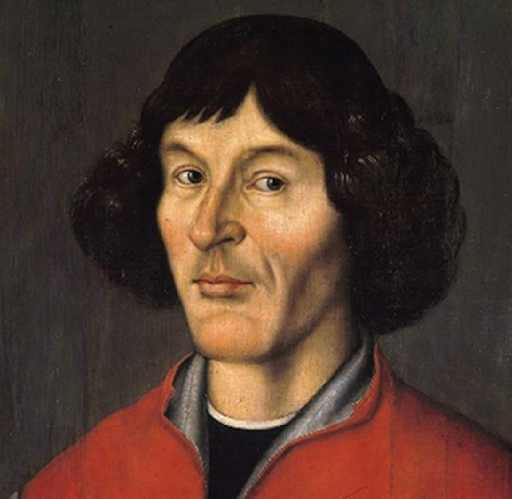
Note. Portrait from the Town Hall in Toruń (c. 1580). Included to illustrate the Renaissance natural philosopher whose heliocentric model transformed cosmological thought.
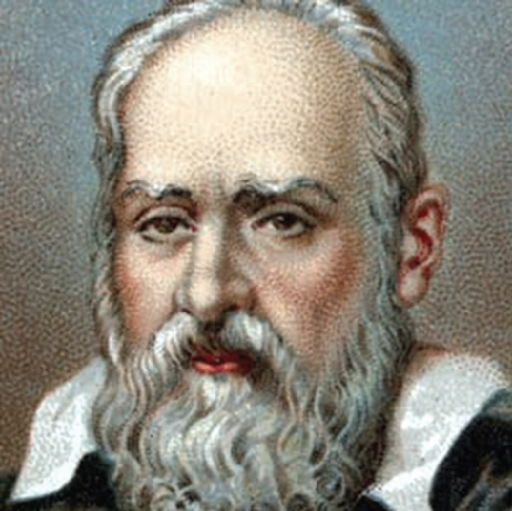
Figure 3. Galileo Galilei, (1564 - 1642)
Although Nanak did not employ scientific instruments or conduct experiments in the modern sense, he repeatedly encouraged individuals to observe, contemplate, and understand the realities of nature and human existence rather than blindly accept ideas (Chahal, 2018, 2020).
This emphasis is reflected in the following Sabd:
ਅਕਲੀ1 ਪੜ੍ਹਿ ਕੈ ਬੁਝੀਐ² ਅਕਲੀ ਕੀਚੈ ਦਾਨੁ ॥
Aklī paṛẖ kai bujhī▫ai aklī kīcẖai ḏān.
AGGS, M. 1, p. 1245.
Through wisdom1 and understanding one learns and comprehends²; through wisdom one acts generously.
This verse places understanding (bujhna) at the center of human development. Knowledge is not acquired through passive acceptance but through active engagement with reality. Such an orientation closely corresponds to Galileo’s insistence that conclusions should emerge from investigation rather than from unquestioned tradition.
Nanak also repeatedly emphasizes the importance of observation:
ਵੇਖੈ¹ ਵਿਗਸੈ² ਕਰਿ ਵੀਚਾਰੁ ॥
Vekẖai vigsai kar vīcẖār.
AGGS, M. 1, p. 8.
Observe¹, reflect, and rejoice² through thoughtful contemplation.
The author interprets this instruction as an encouragement to examine the world carefully and to employ critical reflection in the pursuit of understanding. Observation (vekhas) and contemplation (vichar) are presented as essential components of intellectual growth. This approach bears a notable resemblance to the observational spirit that guided Galileo’s investigations of the natural world.
However, important differences also exist between the two thinkers. Galileo focused primarily on empirical investigations of physical phenomena and sought mathematical explanations for natural processes. Nanak’s inquiries were broader in scope, encompassing not only the natural world but also ethical conduct, human existence, and the relationship between humanity and the universe. His observations therefore combined philosophical, ethical, and cosmological dimensions.
Despite these differences, both figures shared a commitment to intellectual honesty and the pursuit of truth. Galileo demonstrated that nature could be understood through systematic observation and evidence. Nanak emphasized that wisdom emerges through observation, understanding, and thoughtful reflection. Both rejected the notion that authority alone constitutes sufficient proof of truth.
The author therefore argues that Galileo and Nanak exemplify a common spirit of inquiry that lies at the heart of Natural Philosophy. While Galileo advanced observational science through empirical verification, Nanak promoted an intellectual framework grounded in observation, reflection, and understanding. Their shared emphasis on seeking truth through engagement with reality rather than through unquestioned acceptance of tradition represents an important convergence between Renaissance Natural Philosophy and Nanak’s philosophical worldview.
This comparison further supports the argument that Nanak should be understood not only as a spiritual teacher but also as a thinker whose approach to knowledge shares important characteristics with the Natural Philosophers who helped transform humanity’s understanding of the universe.
3.7.4 The Sun and Moon are Moving at High Speed.
Let us return to Copernicus’s discovery that the Earth revolves around the Sun, which challenged the Bible’s view that the Sun revolves around the Earth. On the other hand, Nanak has a great vision to observe that our Sun and Moon are moving (rotating) around our galaxy, the Milky Way, at a speed of hundreds of millions of miles, in his simple language of that time as follows:
ਭੈ1 ਵਿਚਿ ਸੂਰਜੁ2 ਭੈ1 ਵਿਚਿ ਚੰਦੁ3 ॥
Bẖai vicẖ sūraj bẖai vicẖ cẖanḏ.
ਕੋਹ4 ਕਰੋੜੀ5 ਚਲਤ6 ਨ ਅੰਤੁ7 ॥
Koh karoṛī cẖalaṯ na anṯ.
ਅਗਗਸ, ਮ: 1, ਪੰਨਾ 151.
The Sun2 and the *Moon3 are travelling6 (around the center of the Milky Way galaxy) about tens of millions5 of miles4 under the Laws of Nature/ Universe1 and are still traveling without any limit7.
AGGS, M. 1, p. 151.
Note: *The Moon has been considered a planet of the Sun by Nanak, although it is a satellite of the Earth, which is an actual planet.
Bhai (ਭੈ): The word Bhai (ਭੈ) in general is interpreted as “fear” by almost all theologians. But in the above phrase
Bhai (ਭੈ) appears to mean under specific laws now known as the “Laws of Nature/Universe.
Our Sun lies near a small, partial arm called the Orion Arm, or Orion Spur, located between the Sagittarius and Perseus arms. The Sun, with its planets, travels at an average speed of 720,000 km/h. (In Depth | Sun – NASA Solar System Exploration, n.d.) Even at this rapid speed, it would take about 230 million years to travel around the Milky Way. Our Sun (with its Earth and other planets) is about 23,483 to 28,700 light-years from the center of our Galaxy, the Milky Way. (Williams, 2017)
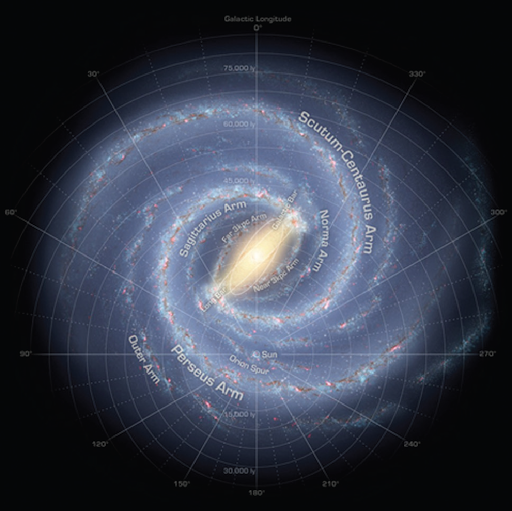
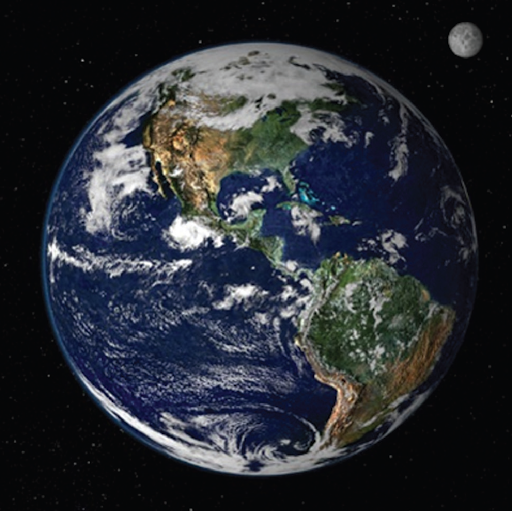
Figure 6. This true-color image shows North and South America as they would appear from space 35,000 km (22,000 miles) above the Earth. Image created by Reto Stöckli, Nazmi El Saleous, and Marit Jentoft-Nilsen, NASA GSFC (It also shows its satellite, the Moon.)
The following picture shows the Earth’s third position among the solar system’s eight planets.
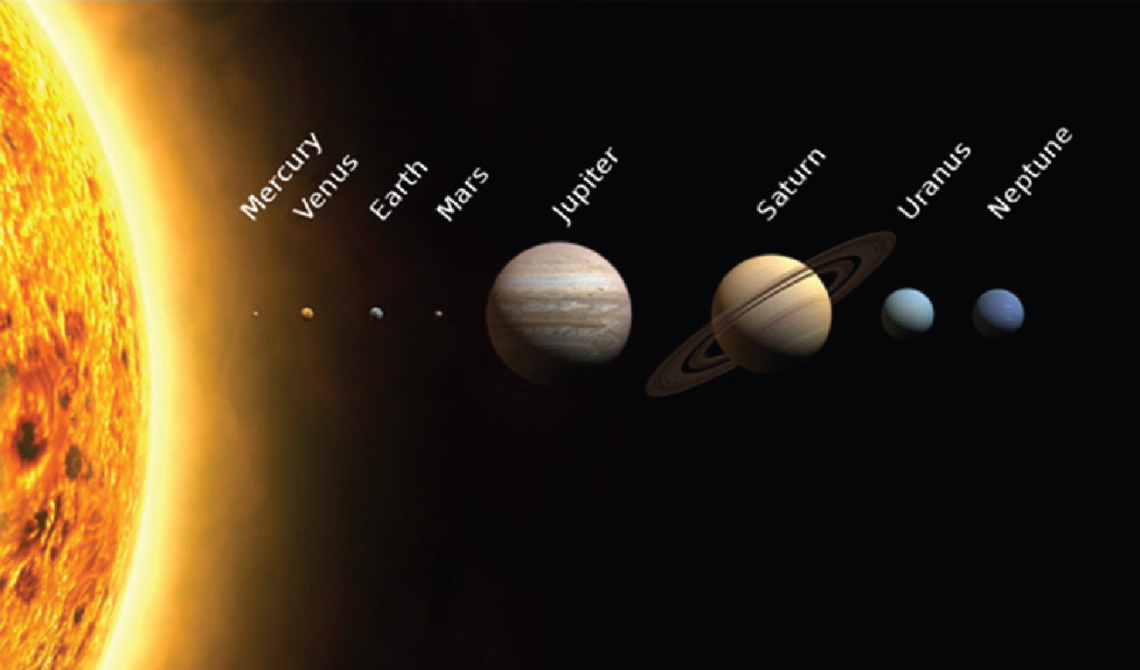
The Earth rotates once every 23 hours, 56 minutes, and 4.09053 seconds, called the sidereal period, and its circumference is roughly 40,075 kilometers. Thus, the surface of the Earth at the equator moves at a speed of 460 meters per second—or approximately 1,000 miles per hour. (How Fast Is the Earth Moving? n.d.)
In ancient philosophy, there was a concept that a white bull was carrying the Earth on its horns. Guru Nanak challenged this concept with logic and in simple language as follows: (Chahal, 2018)
ਧੌਲੁ1 ਧਰਮੁ2 ਦਇਆ3 ਕਾ ਪੂਤੁ4 ॥
ਸੰਤੋਖੁ5 ਥਾਪਿ6 ਰਖਿਆ7 ਜਿਨਿ ਸੂਤਿ8 ॥
ਜੇ ਕੋ9 ਬੁਝੈ10 ਹੋਵੈ ਸਚਿਆਰੁ11 ॥
ਧਵਲੈ12 ਉਪਰਿ13 ਕੇਤਾ ਭਾਰੁ14 ॥
ਧਰਤੀ15 ਹੋਰੁ ਪਰੈ ਹੋਰੁ ਹੋਰੁ16 ॥
ਤਿਸ17 ਤੇ ਭਾਰੁ ਤਲੈ ਕਵਣੁ ਜੋਰੁ18 ॥…
Ḏẖoul ḏẖaram ḏa▫i▫ā kā pūṯ.
Sanṯokẖ thāp rakẖi▫ā jin sūṯ.
Je ko bujẖai hovai sacẖiār.
Ḏẖavlai upar keṯā bẖār.
Ḏẖarṯī hor parai hor hor.
Ŧis ṯe bẖār ṯalai kavaṇ jor…
ਅਗਗਸ, ਜਪੁ # 16, ਪੰ ਨਾ 3.
The mythical white bull1 that supports the Earth is, in fact, the mutual gravitational attraction3,4 between the Sun and the Earth under the laws of the Universe2.
This gravitational attraction5 holds6,7 the Earth in place8.
The one9 who discovers10 this order (Laws of the Universe) becomes enlightened11 and understands that a mythical white bull12 could not carry that much13 load14 of the Earth.
This bull will need another Earth15 to stand on, and another bull is required to carry that Earth, and so on16.
AGGS Jap # 16, p. 3.
Note: In ancient philosophy, there was a concept that a white bull was carrying the Earth on its horns. Nanak challenged this concept with logic, as explained in the above phrases.
Note: ਸੰਤੋਖੁ (santokh): Santokh is usually interpreted as contentment or satisfaction; the one who is content and satisfied settles down in tranquility. Contentment (santokh) for the Earth signifies the mystic power that keeps the Earth in orbit. According to present-day science, this mystic power has been interpreted as gravitational attraction, which keeps the Earth in orbit around the Sun.
Guru Nanak further writes about the Earth and its environment as follows: (Chahal, 2018) (Singh, n.d.)
ਪਵਣੁ1 ਗੁਰੂ2 ਪਾਣੀੀ3 ਪਿਤਾ4 ਮਾਾਤਾ5 ਧਰਤਿ6 ਮਹਤੁ7 ॥
ਦਿਵਸੁ8 ਰਾਤਿ9 ਦੁਇ10 ਦਾਈ11 ਦਾਇਆ12 ਖੇਲੈ13 ਸਗਲ14 ਜਗਤੁ15 ॥
Pavaṇ gurū pāṇī piṯā māṯā ḏẖaraṯ mahaṯ.
Ḏivas rāṯ ḏu▫e ḏā▫ī ḏā▫i▫ā kẖelai sagal jagaṯ
Air1 is like a Guru2, water3 is like a father4 (both represent the environment), And Earth6 is like the great7 mother5.
(Which provides a wide range of resources and food).
Both10 day8 and night9 are like a female nurse11 and a male nurse12. respectively, And the whole14 of humanity15 plays13 in their laps.
AGGS, Jap Sloka # 2, p. 8.
This means humanity enjoys the natural environment and resources provided by the Eternal Entity. Therefore, it is the duty of humans to preserve the natural environment for future generations and to use its resources carefully, without waste.
Nanak continues to describe the Earth as follows:
ਰਾਤੀ ਰੁਤੀ ਥਿਤੀ ਵਾਾਰ1 ॥
ਪਵਣ2 ਪਾਣੀ3 ਅਗਨੀ4 ਪਾਤਾਲ5 ॥
ਤਿਸੁ ਵਿਚਿ ਧਰਤੀ6 ਥਾਪਿ7 ਰਖੀ ਧਰਮ ਸਾਲ8 ॥
Rāṯī ruṯī thiṯī vār.
Pavaṇ pāṇī agnī pāṯāl.
Ŧis vicẖ ḏẖarṯī thāp rakẖī ḏẖaram sāl.
The Earth6 having energy4 in its center5 is a place7, among air2 and water3 around it with day, nigh,t and different seasons, for humanity to practice righteousness8.
AGGS, JAP 34, p. 7.
And
ਧਰਤੀ1 ਦੇਗ2 ਮਿਲੈ ਇਕ3 ਵੇਰਾ ਭਾਗੁ4 ਤੇਰਾ5 ਭੰਡਾਰੀ6 ॥੨॥
Ḏẖarṯī ḏeg milai ik verā bẖāg ṯerā bẖandārī. ||2||
ਅਗਗਸ, ਮ:1, ਪੰ ਨਾ1190.
The Earth1 is a great storage6 of food2 (including various elements) and has appeared only once3 for your5 (humanity) use4.
AGGS, M. 1, p. 1190.
3.7.4 Giordano Bruno and Cosmic Infinity
Giordano Bruno (1548–1600) was among the most visionary Natural Philosophers of the Renaissance. Building upon the heliocentric model proposed by Copernicus, Bruno advanced the revolutionary idea that the universe was infinite and contained innumerable worlds beyond the Earth. He rejected the traditional conception of a finite cosmos enclosed by celestial spheres and argued instead that the universe extended without limit. For these views, along with his theological positions, Bruno faced persecution and was eventually executed in Rome in 1600 (Anonymous, n.d.-b).
Bruno’s conception of an infinite universe represented one of the most radical intellectual challenges of the Renaissance. At a time when many scholars still accepted a finite and hierarchical cosmos, Bruno envisioned a universe populated by countless stars, worlds, and systems extending beyond human comprehension. Although later astronomical discoveries would support aspects of his vision, his ideas were far ahead of the scientific knowledge available during his lifetime.
The author identifies a remarkable parallel between Bruno’s concept of cosmic infinity and Nanak’s descriptions of creation. Long before the development of modern astronomy, Nanak repeatedly emphasized the immeasurable extent of the universe and the limitations of human attempts to define its boundaries, as discussed earlier in Jap Bani of Nanak, in stanza 22 at page 5 of the AGGS under 3.7.2 Copernicus.
A similar theme appears elsewhere:
ਅਸੰਖ¹ ਨਾਵ ਅਸੰਖ ਥਾਵ॥
Asankẖ nāv asankẖ thāv.
AGGS, Jap 19, p. 4.
Countless¹ are the names, and countless are the places.
The repeated use of the term ਅਸੰਖ (asankh, countless) demonstrates Nanak’s awareness of the immense scale of existence. The universe is not presented as a closed system with clearly defined limits, but as an immeasurable reality that extends beyond ordinary human perception. (Chahal, 2018)
The comparison with Bruno becomes particularly significant because both thinkers challenged prevailing cosmological assumptions of their respective societies. Bruno opposed the traditional European conception of a finite universe, while Nanak questioned inherited cosmological frameworks that sought to describe creation through fixed and limited structures. In both cases, the universe is understood to be far larger and more complex than conventional doctrines suggest.
An important distinction, however, should be noted. Bruno arrived at his conclusions primarily through philosophical reasoning informed by Renaissance astronomy, whereas Nanak expressed his insights through poetic and philosophical reflections embedded within a broader discourse on nature, existence, and the Eternal Entity. Nevertheless, both emphasized the vastness of creation and the inadequacy of simplistic cosmological explanations.
The author further argues that Nanak’s descriptions of innumerable worlds, countless regions of existence, and limitless creation demonstrate a conceptual understanding that aligns closely with the spirit of Bruno’s cosmic vision. While neither thinker possessed access to modern astronomical data, both rejected narrow cosmological boundaries and embraced a universe of extraordinary magnitude.
Another important aspect of Nanakian Philosophy is his recognition of the limitations of human knowledge. Unlike dogmatic systems that claim complete certainty concerning the structure of the cosmos, Nanak repeatedly emphasizes intellectual humility:
ਅੰਤੁ¹ ਨ ਜਾਪੈ ਕਿਆ ਮਨਿ ਮੰਤੁ ॥
Anṯ na jāpai ki▫ā man manṯ.
AGGS, Jap 24, p. 5.
Its limit¹ cannot be known; what understanding can fully comprehend it?
This acknowledgment of the limits of human understanding complements Bruno’s challenge to intellectual orthodoxy. Both thinkers recognized that reality extends beyond the confines of established doctrines and conventional assumptions.
It is, therefore, concluded that among the Renaissance Natural Philosophers, Giordano Bruno exhibits one of the closest conceptual parallels to Nanak. Both envisioned a universe of immense scale, rejected restrictive cosmological models, and encouraged humanity to recognize its vastness and complexity. These similarities provide further support for examining Nanak within the broader tradition of Natural Philosophy and underscore the global relevance of his reflections on the nature of the cosmos.
3.7.5 Spinoza, Pantheism, and God as Nature
Baruch Spinoza (1632–1677) is widely regarded as one of the most influential philosophers of the seventeenth century. His philosophical system challenged conventional theological doctrines and proposed a radical understanding of the relationship between God and Nature. Spinoza’s most famous formulation, Deus sive Natura (“God or Nature”), asserts that God and Nature are not separate realities but different expressions of the same infinite substance (Spinozism, n.d.).
In Spinoza’s philosophy, God is not an anthropomorphic being who exists outside the universe and intervenes in worldly affairs. Rather, God is the infinite, eternal reality of which all things are manifestations. Everything that exists is part of this single substance and operates according to natural laws. Consequently, understanding Nature becomes a means of understanding God.
This conception bears a notable resemblance to Nanak’s understanding of the Eternal Entity. Throughout the Aad Guru Granth Sahib (AGGS), Nanak consistently rejects anthropomorphic descriptions of God and instead presents the Eternal Entity as all-pervading, formless, eternal, and manifested throughout creation (Chahal, 2021, 2023a).
The following verse expresses this concept:
ਏਕੋ¹ ਰਵਿ ਰਹਿਆ² ਸਭਥਾਈ³ ॥
Ėko rav rahiā sabẖ thā▫ī.
AGGS, M. 1, p. 223.
The One¹ permeates² all places³.
This statement reflects the omnipresence of the Eternal Entity throughout the universe. Reality is not divided into separate sacred and secular domains; rather, the same underlying presence permeates all existence. This understanding parallels Spinoza’s rejection of a separation between God and the natural world.
The concept is further elaborated through Nanak’s frequent use of the term ਕੁਦਰਤ (Kudrat), commonly translated as Nature. One of the most important passages states:
ਬਲਿਹਾਰੀ¹ ਕੁਦਰਤਿ² ਵਸਿਆ ॥
Balihārī kuḏraṯ vasi▫ā.
ਤੇਰਾ ਅੰਤੁ ਨ ਜਾਈ ਲਖਿਆ ॥
Ŧerā anṯ na jā▫ī lakẖi▫ā.
AGGS, Jap, p. 8.
I am devoted to Nature² in which You dwell.
Your limits cannot be known.
The author interprets this passage as indicating that the Eternal Entity is not external to Nature but is manifested through it. Nature becomes the observable expression of the Eternal Reality. Consequently, understanding Nature becomes an important pathway toward understanding the Eternal Entity (Chahal, 2018, 2021) (Chahal, 2023a).
A similar idea appears elsewhere:
ਸਭ ਮਹ ਜੋਤਿ ਜੋਤਿ ਹੈ ਸੋਇ ॥
Sabẖ meh joṯ joṯ hai so▫e.
AGGS, M. 1, p. 13 and 663.
The same Eternal Entity (Light) is present in all.
The concept that all forms of existence participate in the same underlying reality. The Eternal Entity (light) is not confined to specific locations, communities, or religious institutions but permeates the entirety of creation.
The comparison between Nanak and Spinoza becomes especially significant in relation to the rejection of anthropomorphic theology. Both thinkers challenge conceptions of God as a human-like being possessing physical form, emotions, or preferences. Instead, each presents a reality that transcends such limitations and is expressed through the natural order itself.
Nevertheless, important differences remain. Spinoza developed his philosophy through a systematic rationalist framework rooted in seventeenth-century European thought. Nanak, by contrast, expressed his insights through poetic, philosophical, and experiential reflections embedded within a broader discourse on nature, ethics, and human existence. Furthermore, Nanak’s concept of the Eternal Entity incorporates moral and existential dimensions that extend beyond the metaphysical concerns emphasized by Spinoza.
Another point of convergence concerns the operation of natural laws. Spinoza maintained that everything in the universe functions according to necessary and immutable principles. Similarly, Nanak repeatedly refers to ਹੁਕਮ (Hukm) as the universal order or law governing existence. The universe operates according to consistent principles that apply impartially to all. (Chahal, 2021, 2023a, (Chahal, 2018)(Chahal, 2004)(Chahal, 2012)
This idea is expressed in the well-known passage:
ਹੁਕਮੀ¹ ਹੋਵਨਿ ਆਕਾਰ ਹੁਕਮੁ ਨ ਕਹਿਆ ਜਾਈ ॥
Hukmī hovan ākār hukam na kahi▫ā jā▫ī.
ਹੁਕਮੀ ਹੋਵਨਿ ਜੀਅ ਹੁਕਮਿ ਮਿਲੈ ਵਡਿਆਈ ॥
Hukmī hovan jī▫a hukam milai vadi▫ā▫ī.
AGGS, Jap 2, p. 1.
By Hukm¹ all forms come into existence; Hukm cannot be fully described.
By Hukm all living beings exist; through Hukm greatness is attained.
Hukm (ਹੁਕਮ) is not merely a divine command but the universal order governing Nature and the Universe. This understanding further strengthens the comparison with Spinoza’s view that reality operates according to inherent, universal principles rather than through arbitrary supernatural interventions. (Chahal, 2018)
Among the Renaissance philosophers discussed in this study, Spinoza exhibits one of the closest philosophical affinities with Nanak. Both reject anthropomorphic conceptions of God, emphasize the unity of existence, recognize an underlying reality permeating Nature, and view the universe as governed by universal principles. Although their intellectual traditions differ significantly, these conceptual similarities provide compelling evidence for considering Nanak within a broader global discourse on Natural Philosophy.
The comparison also highlights the sophistication of Nanak’s philosophical thought. His reflections on the relationship between the Eternal Entity, Nature, and the Universe anticipate themes that would later become central to some of the most influential philosophical systems in Europe. Consequently, Nanak’s contribution deserves recognition not only within Sikh studies but also within the wider history of philosophical inquiry into Nature and ultimate reality.
3.7.6 Newton and Universal Natural Laws
Sir Isaac Newton (1642–1727) is widely regarded as one of the greatest Natural Philosophers in history. His formulation of the laws of motion and universal gravitation transformed humanity’s understanding of the physical universe and provided a coherent framework for explaining the movements of celestial and terrestrial bodies. Newton demonstrated that the same natural laws governing objects on Earth also govern the motions of planets, moons, and other celestial bodies throughout the cosmos (Westfall, n.d.).
One of Newton’s most significant achievements was recognizing that the universe operates according to universal and consistent principles. Natural phenomena are not arbitrary occurrences but are governed by laws that apply uniformly across space and time. This conception became a cornerstone of modern science and represented a major milestone in the development of Natural Philosophy.
There is an important parallel between Newton’s understanding of universal laws and Nanak’s concept of ਹੁਕਮ (Hukm). Throughout the Aad Guru Granth Sahib (AGGS), Nanak repeatedly refers to Hukm as the governing order through which all aspects of existence operate. Rather than depicting the universe as a collection of random events or supernatural interventions, Nanak describes a reality characterized by consistency, order, and lawful operation. (Chahal, 2018, 2021, 2023a) (Chahal, 2012) (Chahal, 2004)
The concept is introduced at the very beginning of Japji Sahib:
ਹੁਕਮੀ¹ ਹੋਵਨਿ ਆਕਾਰ ਹੁਕਮੁ ਨ ਕਹਿਆ ਜਾਈ ॥
Hukmī hovan ākār hukam na kahi▫ā jā▫ī.
ਹੁਕਮੀ ਹੋਵਨਿ ਜੀਅ ਹੁਕਮਿ ਮਿਲੈ ਵਡਿਆਈ ॥
Hukmī hovan jī▫a hukam milai vadi▫ā▫ī.
ਹੁਕਮੀ ਉਤਮੁ ਨੀਚੁ ਹੁਕਮਿ ਲਿਖਿ ਦੁਖ ਸੁਖ ਪਾਈਅਹਿ॥
Hukmī uṯam nīcẖ hukam likẖ ḏukẖ sukẖ pā▫ī▫ah.
AGGS, Jap 2, p. 1.
By Hukm¹ all forms come into existence; Hukm cannot be fully described.
By Hukm all living beings exist; through Hukm greatness is attained.
By Hukm some are high, and some are low; through Hukm experiences of pleasure and pain occur.
As discussed earlier, the Hukm (ਹੁਕਮ) should not be understood merely as a divine command in a theological sense. Rather, it refers to the universal laws and principles through which Nature and the Universe function. These laws operate impartially and consistently, governing both physical phenomena and the broader processes of existence (Chahal, 2021, 2023a).
Nanak elaborates further:
ਹੁਕਮੈ ਅੰਦਰਿ ਸਭੁ ਕੋ ਬਾਹਰਿ ਹੁਕਮ ਨ ਕੋਇ ॥
Hukmai anḏar sabẖ ko bāhar hukam na ko▫e.
AGGS, Jap 2, p. 1.
Everything exists within Hukm (Laws of Nature/ Universe); nothing exists outside Hukm.
This statement is one of Nanak’s most profound philosophical observations. It implies that all phenomena, whether natural or human, occur within an overarching order. Nothing is exempt from the operation of universal principles. This understanding bears a striking resemblance to Newton’s conception of a cosmos governed by universal laws that apply everywhere without exception.
Another important aspect of the comparison concerns predictability and consistency. Newton’s laws provided a framework through which the behavior of physical systems could be understood and predicted. Similarly, Nanak repeatedly emphasizes that the universe functions according to an orderly and dependable structure rather than arbitrary or capricious processes.
This order is reflected in Nature itself:
ਰਾਤੀ¹ ਰੁਤੀ² ਥਿਤੀ³ ਵਾਰ ॥
Rāṯī ruṯī thiṯī vār.
ਪਵਣ ਪਾਣੀ ਅਗਨੀ ਪਾਤਾਲ ॥
Pavaṇ pāṇī agnī pāṯāl.
AGGS, Jap 34, p. 7.
The nights¹, seasons², lunar cycles³, and days;
The air, water, and fire (hot melted matter) inside the Earth.
This passage reflects Nanak’s recognition of recurring patterns and regularities within Nature. The cyclical movements of time, the workings of natural elements, and the stability of cosmic processes all testify to an underlying order governing Nature/Universe.
Despite these similarities, important distinctions remain. Newton’s laws were formulated through mathematical analysis and empirical investigation, whereas Nanak’s concept of Hukm (Laws of Nature/ Universe) emerged through philosophical reflection on Nature, existence, and human experience. Newton sought to explain the mechanics of physical processes, while Nanak addressed both the physical and existential dimensions of reality.
Nevertheless, both thinkers share a commitment to the principle that the universe is intelligible because it operates according to consistent laws. Newton expressed this principle through mathematical formulations; Nanak expressed it through the concept of Hukm. In each case, the cosmos is understood as a coherent and ordered system rather than a realm governed by randomness or arbitrary intervention.
Newton’s universal laws and Nanak’s concept of Hukm represent parallel attempts to understand the underlying order of existence. Although developed within different intellectual traditions and for different purposes, both concepts affirm that the universe functions according to universal principles that transcend individual circumstances and human preferences.
This comparison provides an appropriate culmination to the discussion of Renaissance Natural Philosophers. From Copernicus’ challenge to geocentric cosmology, through Galileo’s emphasis on observation, Bruno’s vision of cosmic infinity, and Spinoza’s identification of God with Nature, the evolution of Natural Philosophy increasingly emphasized order, rationality, and the intelligibility of the universe. Nanakian Philosophy, as interpreted in this study, exhibits many of these same characteristics. His concepts of Hukm, Kudrat, and the Eternal Entity reveal a coherent philosophical framework that engages with questions concerning nature, reality, cosmic order, and human existence in ways that resonate with the broader tradition of Natural Philosophy.
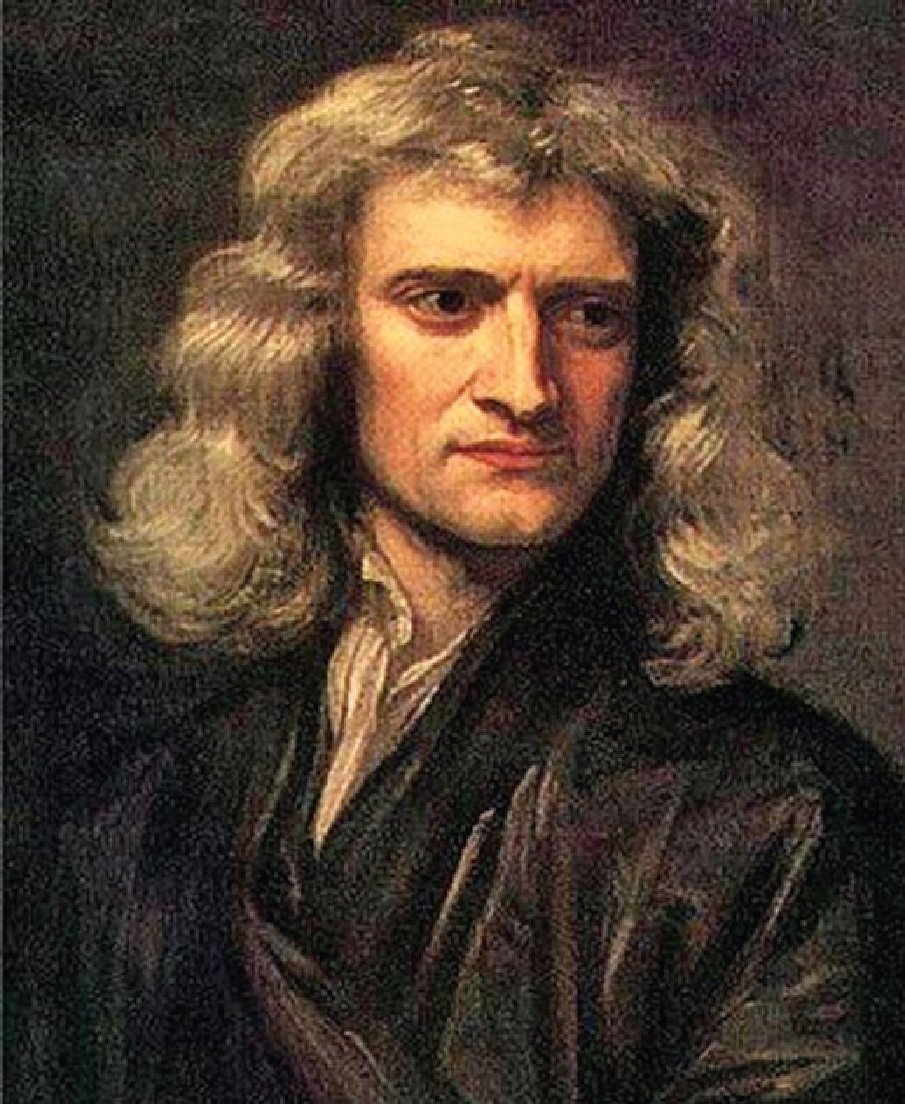
Note. Portrait attributed to Godfrey Kneller (1689). Included to illustrate the natural philosopher whose formulation of universal laws transformed scientific understanding of the cosmos.
3.8 Synthesis of Findings: Nanak’s Place in the Tradition of Natural Philosophy
The comparative analysis undertaken in this study reveals several significant parallels between Nanakian Philosophy and the traditions of Natural Philosophy represented by selected ancient Greek and Renaissance thinkers. Although these philosophers emerged in different historical periods, cultural settings, and intellectual traditions, they shared a common concern with understanding the nature of reality, the structure of the universe, the principles governing existence, and humanity’s place within the cosmos.
The comparison with the Greek Natural Philosophers demonstrates that Nanak addressed many of the same fundamental questions that occupied early philosophical inquiry. Like Thales, Xenophanes, Anaxagoras, and Parmenides, Nanak sought explanations for the nature of existence and the underlying principles governing reality. However, the analysis suggests that Nanak’s philosophical formulations often extend beyond those of the Greek philosophers. Whereas Thales focused on water as the primordial substance, Nanak critically examined such cosmological assumptions. While Xenophanes challenged anthropomorphic conceptions of God, Nanak developed a more comprehensive understanding of the Eternal Entity as all-pervading and inseparable from existence itself. Similarly, the concepts advanced by Anaxagoras and Parmenides concerning unity and ultimate reality find more elaborate expression in Nanak’s formulation of (Ik Oh Beant – One and Only, Infinite source of energy) and his emphasis on the interconnectedness of all existence (Chahal, 2021, 2023a).
The comparison with the Renaissance Natural Philosophers reveals equally important points of convergence. Copernicus challenged traditional cosmological doctrines through rational inquiry; Galileo emphasized observation and evidence; Bruno envisioned an infinite universe; Spinoza articulated a conception of God manifested through Nature; and Newton demonstrated that the cosmos operates according to universal laws. The present analysis indicates that comparable themes are evident throughout Nanak’s compositions. His descriptions of the vastness of creation, his emphasis on observation and understanding, his conception of Nature (ਕੁਦਰਤ, Kudrat), and his formulation of Hukm (ਹੁਕਮ – Laws of Nature/Universe) as the governing order of existence collectively reflect concerns that later became central to Renaissance Natural Philosophy and the Scientific Revolution (Chahal, 2018, 2020, 2021).
One of the most significant findings of this study concerns Nanak’s understanding of the universe. The repeated references in the Aad Guru Granth Sahib (AGGS) to countless worlds, innumerable regions of existence, and the immeasurable extent of creation suggest a cosmological perspective that transcends finite and closed models of the universe; in this respect, Nanak’s observations bear noteworthy similarities to Bruno’s conception of cosmic infinity. At the same time, Nanak consistently acknowledges the limitations of human knowledge and emphasizes intellectual humility when confronting the cosmos’s complexity.
Another major finding relates to the relationship between the Eternal Entity and Nature. The analysis demonstrates that Nanakian Philosophy rejects anthropomorphic representations of God and instead presents an all-pervading reality manifested through Nature and the Universe. This conception exhibits important philosophical affinities with Spinoza’s understanding of God and Nature while retaining distinctive characteristics rooted in Nanak’s own intellectual and cultural context. The concepts of (Ik Oh Beant – One and Only, Infinite source of energy), ਕੁਦਰਤ (Kudrat), and ਜੋਤਿ (Energy/Light) together form a coherent philosophical framework through which reality is understood as interconnected, unified, and governed by universal principles.
The study further identifies Hukm as one of the most important concepts linking Nanakian Philosophy to the broader tradition of Natural Philosophy. Rather than interpreting Hukm solely as divine command, the present analysis supports the author’s view that Hukm may be understood as the universal order or laws governing the operation of Nature and the Universe. This interpretation establishes an important conceptual parallel with Newton’s recognition that natural phenomena operate according to consistent and universal laws. Although expressed in different intellectual languages, both frameworks affirm the existence of an orderly and intelligible cosmos.
An equally important finding concerns Nanak’s method of inquiry. Throughout his compositions, Nanak repeatedly emphasizes observation, reflection, understanding, and wisdom. Knowledge is not presented as the exclusive possession of religious authorities or prophets but as something that can be pursued through thoughtful engagement with reality. This emphasis on inquiry and understanding aligns closely with the intellectual spirit that characterized both Greek Natural Philosophy and the Renaissance pursuit of knowledge.
Despite these similarities, the analysis also reveals important differences. Nanakian Philosophy integrates cosmological, ethical, social, and existential dimensions within a single conceptual framework. Unlike many Natural Philosophers whose primary concern was the physical universe, Nanak consistently links understanding of Nature with moral responsibility, human equality, compassion, and the pursuit of truthful living. Consequently, his philosophy cannot be reduced to a purely scientific or cosmological system. Rather, it represents a holistic worldview in which Nature, humanity, and ultimate reality are understood as interconnected aspects of a unified existence.
Taken collectively, these findings support the central argument of this study: Nanak may be understood not only as a spiritual teacher or religious figure but also as a Natural Philosopher whose reflections on Nature, the Universe, reality, and human existence warrant consideration within the broader history of philosophical thought. While there is no evidence of direct influence from Nanak on the Greek or Renaissance philosophers discussed in this study, the conceptual parallels identified here demonstrate that Nanak engaged with many of the same enduring questions that have occupied Natural Philosophers across cultures and historical periods.
The synthesis presented above, therefore, positions Nanak within a global intellectual tradition concerned with understanding the nature of reality through observation, reflection, and reasoned inquiry. Recognizing this dimension of his thought contributes to a more comprehensive appreciation of his philosophical legacy and opens new avenues for comparative studies involving South Asian intellectual traditions and the history of Natural Philosophy.
4. Conclusion
4.1 Summary of Findings
This study examined Nanakian Philosophy through the analytical framework of Natural Philosophy and compared his ideas with those of selected Natural Philosophers from ancient Greece and the Renaissance. The analysis focused on key themes including ultimate reality, the concept of God, Nature, cosmic order, the universe, natural laws, and human existence.
The findings indicate that Nanak addressed many of the same philosophical questions that occupied prominent Natural Philosophers such as Thales, Xenophanes, Anaxagoras, Parmenides, Copernicus, Galileo, Bruno, Spinoza, and Newton. His reflections on the nature of reality, the structure and vastness of the universe, the operation of universal laws, and the interconnectedness of all existence reveal a sophisticated philosophical system grounded in observation, contemplation, and reasoned inquiry.
The study further demonstrates that Nanak’s concepts of (Ik Oh Beant – One and Only, Infinite source of energy), ਕੁਦਰਤ (Kudrat), and ਹੁਕਮ (Hukm) constitute a coherent framework for understanding the relationship between the Eternal Entity, Nature, and the Universe. These concepts exhibit notable philosophical affinities with ideas advanced by several Greek and Renaissance thinkers while maintaining a distinctive intellectual identity rooted in Nanak’s own worldview.
A particularly significant finding is that Nanakian Philosophy transcends conventional religious categorization. Rather than presenting himself as a prophet or transmitter of divine commandments, Nanak consistently emphasized observation, understanding, wisdom, and reflection. His compositions encourage individuals to seek truth through engagement with Nature and the realities of human existence. Consequently, the study concludes that Nanak can be understood not only as a spiritual teacher but also as a Natural Philosopher whose ideas deserve recognition as such among the ancient Greeks and the European Renaissance within the broader history of philosophical thought.
4.2 Contributions of the Study
This study makes several contributions to the existing scholarship on Nanak and the history of philosophy.
First, it introduces a Natural Philosophy framework for interpreting Nanak’s thought, thereby expanding the scope of contemporary Nanak studies beyond traditional religious and theological approaches. While previous scholarship has frequently examined Nanak as a spiritual leader, social reformer, or founder of a religious tradition, the present study highlights his role as a thinker engaged in systematic reflection on Nature, reality, and the cosmos.
Second, the study contributes to comparative philosophy by bringing Nanak into dialogue with major thinkers from both ancient Greece and Renaissance intellectual traditions. This cross-cultural comparison demonstrates that important philosophical questions concerning reality, existence, Nature, and cosmic order have emerged independently in different civilizations and historical contexts.
Third, the study contributes to global intellectual history by situating Nanak within a broader tradition of inquiry concerned with understanding the universe through observation, reflection, and rational analysis. Such an approach broadens appreciation of South Asian intellectual contributions to philosophical thought and encourages greater integration of non-Western perspectives into discussions of the history of Natural Philosophy.
Finally, the study offers a conceptual interpretation of Hukm as universal order or natural law, providing a new perspective for understanding the relationship between Nanakian Philosophy and later developments in scientific and philosophical thought.
4.3 Limitations of the Study
The study acknowledges several limitations.
First, the analysis is based primarily on documentary sources and textual interpretation rather than empirical investigation. Consequently, the findings depend upon the accuracy of available translations, historical records, and secondary scholarly sources.
Second, the comparative framework focuses on selected Greek and Renaissance Natural Philosophers and does not encompass the full range of philosophical traditions that may be relevant to understanding Nanak’s thought. Comparisons with philosophers from other intellectual traditions, including Chinese, Islamic, Persian, and other South Asian schools of thought, fall outside the scope of the present study.
Third, the study relies primarily on thematic comparison rather than historical evidence of intellectual interaction or influence. The similarities identified between Nanak and the philosophers examined should therefore be understood as conceptual parallels rather than evidence of direct transmission of ideas.
Fourth, some interpretations of key concepts such as (Ik Oh Beant – One and Only, Infinite source of energy), ਕੁਦਰਤ (Kudrat), and ਹੁਕਮ (Hukm) remain subjects of scholarly debate. Alternative interpretations may yield different conclusions concerning the philosophical implications of Nanak’s teachings.
Despite these limitations, the study provides a useful foundation for further exploration of Nanak’s place within global philosophical discourse and the history of Natural Philosophy.
4.4 Directions for Future Research
The findings of this study suggest several avenues for future research.
Future studies may extend the comparative framework by examining Nanakian Philosophy alongside other philosophical traditions, including Islamic philosophy, Buddhist philosophy, Taoism, Confucianism, and indigenous systems of knowledge. Such investigations may contribute to a more comprehensive understanding of global intellectual history and cross-cultural philosophical inquiry.
Further research may also explore the relationship between Nanak’s concepts of Hukm and Kudrat and contemporary scientific perspectives concerning natural laws, ecology, cosmology, and environmental ethics. Given growing concerns regarding environmental sustainability, Nanak’s reflections on Nature may offer valuable insights for contemporary discussions of humanity’s relationship with the natural world.
Another promising area of inquiry involves the philosophical implications of Nanak’s concept of human equality and its relevance to modern debates concerning human rights, social justice, and intercultural understanding.
Finally, interdisciplinary studies involving philosophy, religious studies, history of science, environmental humanities, and Sikh studies may provide additional perspectives on Nanak’s intellectual legacy and further illuminate the relevance of his ideas in contemporary global discourse.
In conclusion, the present study argues that Nanak’s reflections on Nature, reality, cosmic order, and human existence place him within a broader tradition of Natural Philosophy that transcends cultural and geographical boundaries. Recognizing this dimension of his thought not only enriches our understanding of Nanak but also suggests that he ranks at the top of Natural Philosophers of ancient Greece and the Renaissance. His contributions also place him in a more inclusive and globally informed history of philosophical inquiry.
Acknowledgments
I am thankful to Dr. Kulbir Singh Thind for permitting me to reproduce the Unicode Bani in the Gurmukhi script and its transliteration into the Roman alphabet from srigranth.org. Interpretations of Bani are mine; otherwise, the name of the other author is mentioned. I am grateful to Dr. Karminder Singh Dhillon and Dr. Harbans Lal for the critical examination of the first version of this manuscript and for their suggestions to improve the presentation. The present version is much expanded, and its style has been changed to a more academic and philosophical one.
The author also gratefully acknowledges the academic guidance, editorial support, and constructive feedback received from the reviewers during the preparation and revision of this manuscript.
Funding
The author declares that he received no financial support for the research, authorship, and/or publication of this article.
Declaration of Conflicting Interests
The author declares that he had no competing interests.
Declaration of Generative AI and AI-assisted Technologies in the Writing Process
During the preparation of this manuscript, the author used Generative AI and AI-assisted technologies solely for editorial purposes, including language refinement, grammar correction, stylistic improvement, and the enhancement of clarity and coherence. These tools were not used to generate the research ideas, theoretical framework, analysis, interpretation, arguments, or conclusions presented in the manuscript. All intellectual content, conceptual development, methodological decisions, and scholarly interpretations remain the sole responsibility of the author.
*Reproduced with permission from Horizon J. Hum. Soc. Sci. Res. 8 (1), 42–65.
https://doi.org/10.37534/bp.jhssr.2026.v8.n1.id1365.p42
References
Anaxagoras. (2015). https://plato.stanford.edu/entries/ anaxagoras/
Anonymous. (2019). Xenophanes. https://plato.stanford.edu/ archives/win2019/entries/xenophanes/
Chahal, D. S. (2004). Meanings of Hukm According to Nanakian Philosophy. Understanding Sikhism Res, J, 6(1), 11–16. http://www.iuscanada.com/journal/archives/2004/ j0601p11.pdf
Chahal, D. S. (2006). SriGranth.org Still a Hidden High Tech Treasure of Aad Guru Granth Sahib. Institute for Understanding Sikhism, 8(2), 39–40. http://www.iuscanada. com/journal/archives/2006/j0802p39.pdf
Chahal, D. S. (2012). Hukm: (ਹੁੁਕਮ): The Laws of Nature. In H. S. Virk (Ed.), Harmony in Science and Sikh Religion (pp. 76–90). Hardev Singh Virk.
Chahal, D. S. (2018). JAP: The Essence of Nanakian Philosophy (a scientific and Logical Interpretation). https://www. iuscanada.com/static/books/2018/JAP2ndEdition2018.pdf
Chahal, D. S. (2020). Natural Philosophers: Nanak at the Top of the List. Understanding Sikhism - Res. J., 22(1), 29–40. https://www.iuscanada.com/static/articles/2020/j2201p29. pdf
Chahal, D. S. (2021). Sikhi and Science: The Eternal Entity (God) Conceptualized by Guru Nanak in a Logo, . Hor J. Hum. & Soc. Sci. Res., 3(2), 23–36. https://horizon-jhssr.com/view-issue.php?id=113
Chahal, D. S. (2023a). Concept of God. Unerstanding Sikhism Res. J., 25(1), 7–29. https://www.iuscanada.com/static/ articles/2023/j2501p07.pdf %0A
Chahal, D. S. (2023b). Nanak: The Natural Philosopher. In D. S. Chahal (Ed.), NANAK AND HIS PHILOSOPHY. Distributors, Singh Brothers, Amritsar.
Chahal, D. S. (2023c). Sikh, Sikhi, and Sikhism. Asia Samachar, November 20.
Galileo Biography: Astronomer, Scientist (1564–1642). (n.d.). http://www.biography.com/people/galileo-9305220
How fast is the earth moving? (n.d.). https://www. scientificamerican.com/article/how-fast-is-the-earth-mov/
In depth | Sun – NASA solar system exploration. (n.d.).
Origin of Water on Earth. (n.d.). https://en.wikipedia.org/wiki/ Origin_of_water_on_Earth
Parmenides of Elea (Late 6th cn.—Mid 5th cn. B.C.E.). (n.d.). In Internet Encyclopedia of Philosophy. https://www.iep.utm. edu/parmenid/
Singh, T. (n.d.). Japji Steek (Punjabi). Dharam Parchar Committee (SGPC).
Thales of Miletus. (n.d.). https://en.wikipedia.org/wiki/ Thales_of_Miletus
Williams, M. (2017). Distance & speed of sun’s orbit around galactic centre measured. Universe Today: Space and Astronomy News. https://www.universetoday.com/133414/ distance-speed-suns-orbit-around-galactic-centre-measured/