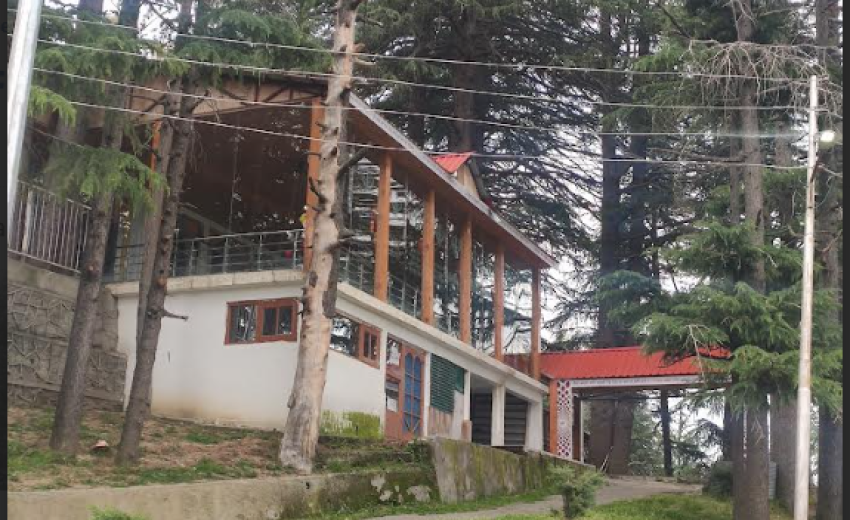

Among the many historic gurdwaras scattered across the mountains and valleys of Jammu and Kashmir, Gurdwara Tapiana Sahib of Shalkote occupies a unique place. Hidden amidst dense forests and overlooking the beautiful countryside of Rafiabad in Baramulla district, this sacred shrine marks the site where the great Sikh saint and missionary, Sant Bhai Rocha Singh Ji, performed years of intense meditation and spiritual austerities. For generations, Sikhs of Kashmir have revered this place as a centre of faith, devotion, and miraculous spiritual power.
The history of Tapiana Sahib is closely connected with the efforts of the Sikh missionaries who carried the message of Guru Gobind Singh Ji into the distant regions of Kashmir, Hazara, Poonch, Muzaffarabad, and the surrounding hill tracts.
After the creation of the Khalsa Panth in 1699, Guru Gobind Singh Ji entrusted several devoted Sikhs with the task of spreading Gurmat in the mountainous regions of the north-west. Among the foremost of these missionaries was Sant Bhai Pheru Singh Ji, who travelled extensively throughout Kashmir and the adjoining areas, administering ‘Khande di Pahul’ and bringing many people into the Khalsa fold. Alongside him, Sant Bhai Punjab Singh Ji also worked tirelessly in the service of the Panth.
The missionary tradition was later carried forward by Sant Bhai Rocha Singh Ji, one of the most celebrated Sikh saints of the region. Born in 1688 in the village of Kosian in Hazara, Bhai Rocha Singh Ji was blessed with the darshan of Guru Gobind Singh Ji and received Amrit from the Tenth Master. Tradition records that Guru Sahib personally directed him towards missionary service in the hill regions. Obeying the Guru's command, Bhai Rocha Singh Ji dedicated his life to spreading Sikh teachings among the people of Kashmir and the surrounding territories.
Bhai Rocha Singh Ji embodied both the saintly and martial ideals of the Khalsa. He always carried arms and encouraged Sikhs to remain prepared for the defence of righteousness. Historical traditions describe him as travelling with three to four hundred armed horsemen. Wherever he went, he established Sikh congregations, preached Gurmat, and inspired people to embrace the teachings of the Gurus.
Several episodes from his life survive in local tradition. One such event occurred near the Mahal River in the Poonch region. A local Muslim chief named Jabtu Jabiyal, having heard of the large number of Sikhs accompanying Bhai Rocha Singh Ji, gathered his men with the intention of attacking and looting them. As Bhai Sahib and his companions crossed the river, the attackers opened fire. A fierce battle followed. During the conflict, Bhai Rocha Singh Ji fired an arrow that struck Jabiyal in the chest, killing him instantly. Seeing their leader fall, the attackers fled the battlefield. News of this remarkable victory spread throughout the region and further enhanced his reputation.
On another occasion, while travelling towards Chakar, Bhai Rocha Singh Ji and his Sikhs clashed with hostile Khakha tribes near Sudna di Gali. Despite determined resistance, the opponents suffered heavy losses and were forced to retreat.
The most important chapter of Bhai Rocha Singh Ji's life, however, unfolded in the forests of Shalkote. Drawn by the solitude of the area, he settled on a hill above the village and entered a prolonged period of meditation and penance. According to local tradition, he sat within the hollow trunk of a massive deodar tree and remained absorbed in divine contemplation for approximately twelve years. It was because of this extraordinary ‘tap’ (penance) that the site came to be known as Tapiana Sahib.
Many miraculous accounts are associated with this period. The local Gujjar Muslims of the area witnessed strange and wondrous events around the saint. It is said that a lion stood guard over Bhai Rocha Singh Ji during his meditation, while a cow regularly served him. The sight of these natural enemies living peacefully in the presence of the saint astonished the local inhabitants and strengthened their belief in his spiritual greatness. These events became widely known throughout the region, and people began visiting the site to seek blessings.
The foundation of the shrine at Shalkote was later laid by Bhai Mela Singh Ji, a devoted disciple in the spiritual lineage of Bhai Rocha Singh Ji. Over time, the place developed into an important centre of Sikh devotion in Kashmir.
During the period of Sikh rule, the villages of Shalkote, Balhama, and Braman were attached to the shrine as jagirs for its maintenance. The gurdwara flourished and became a significant religious institution for Sikhs living throughout the region.
Like many historic religious sites in Jammu and Kashmir, Gurdwara Tapiana Sahib suffered greatly during the tragic events of 1947. The shrine sustained extensive damage during the violence and upheaval accompanying Partition. Nevertheless, the Sikh community remained determined to preserve this sacred heritage, and reconstruction efforts were undertaken in the decades that followed. The shrine was substantially rebuilt during 1964–65.
During this period, a devout Gursikh named Gurmukh Singh, affectionately known as Bhukha Sant, prepared a cave near the shrine for Bhajan and Bandgi. Renowned for his austere lifestyle, he subsisted mainly on bananas, honey, and milk, earning the title by which he is remembered to this day.
Following the implementation of the Gurdwara Act in 1975–76, Mahant Bachitar Singh Ji formally handed over the management of the shrine to the District Gurdwara Management Committee, Baramulla.
A major phase of reconstruction took place in 1998 under the supervision of Baba Harbans Singh Ji Kar Sewa Wale. The present marble structure, crowned with its beautiful white dome, was completed during this period. Today the complex includes a spacious divan hall, a Prakash Asthan for Sri Guru Granth Sahib Ji and langar facilities.
Even today, Gurdwara Tapiana Sahib remains one of the most revered Sikh shrines in the Kashmir Valley. Standing amidst forests and mountains, it serves as a living reminder of the missionary zeal, spiritual devotion, and saint-soldier tradition of Sant Bhai Rocha Singh Ji. Devotees continue to visit this sacred site, paying homage to the saint whose meditation transformed a secluded forest into one of Kashmir's most cherished Sikh pilgrimage centres.