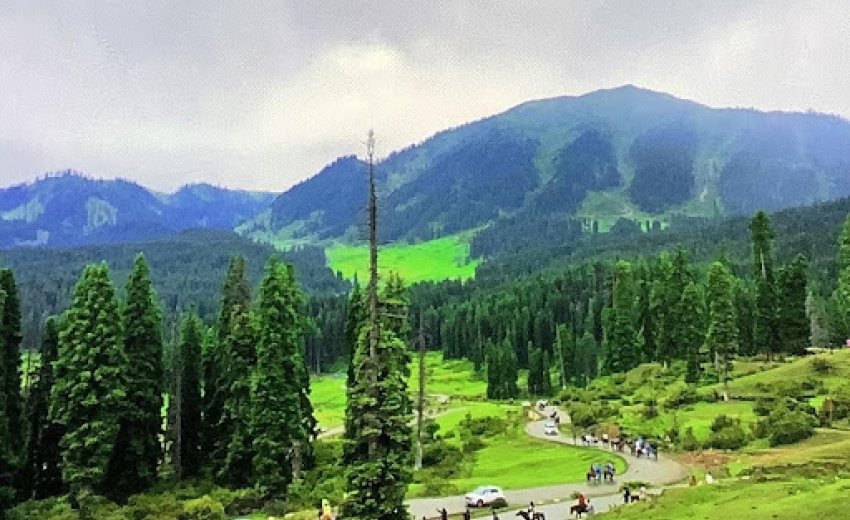

Nestled amidst the rolling hills of the Pir Panjal range in the Budgam district of Kashmir, Doodh Pathri (“Valley of Milk”) stands as one of the most enchanting hill resorts of the Kashmir Valley. Renowned for its lush meadows, crystal-clear streams, dense coniferous forests, and tranquil atmosphere, the region offers an idyllic retreat from the bustle of urban life. The landscape unfolds as a harmonious blend of natural beauty and ecological richness, reflecting the pristine charm for which Kashmir has long been celebrated.
Our journey to Doodh Pathri commenced from Bemina, Srinagar. Travelling through the picturesque countryside via Khan Sahib, we gradually ascended towards the highland meadows. The route itself served as an introduction to the rural beauty of Kashmir, with verdant fields, traditional villages, and distant mountain vistas accompanying us throughout the journey. As the road wound through the undulating terrain, the cool mountain breeze and increasingly panoramic scenery heightened our anticipation.
Upon reaching Doodh Pathri, we were greeted by a breathtaking expanse of emerald-green meadows stretching beneath majestic mountain slopes. The celebrated Shaliganga stream, flowing gracefully through the valley, shimmered under the sunlight, its sparkling waters adding vitality to the landscape. Local tradition associates the name “Doodh Pathri” with the milky appearance of the stream’s waters as they rush over limestone rocks, creating a frothy white effect reminiscent of flowing milk.
The meadows were adorned with a rich variety of alpine flora, while towering pine and fir forests framed the horizon. The serenity of the surroundings was interrupted only by the gentle murmur of flowing water and the occasional call of mountain birds. The harmonious coexistence of water, woodland, and meadow created an atmosphere of remarkable tranquillity, inviting reflection and contemplation.
Beyond its scenic appeal, Doodh Pathri possesses significant ecological value. The area serves as a seasonal grazing ground and supports diverse flora and fauna characteristic of the Himalayan ecosystem. The preservation of such landscapes remains essential not only for tourism but also for maintaining the environmental heritage of Kashmir.
As we explored the valley, the grandeur of nature evoked a profound sense of admiration. The vast meadows, framed by forested ridges and distant snow-clad peaks, appeared almost timeless in their beauty. The experience reaffirmed the enduring allure of Kashmir’s mountain landscapes and their capacity to inspire both travellers and scholars alike.
Our return journey from Doodh Pathri carried with it lasting memories of an extraordinary natural sanctuary. More than a scenic destination, Doodh Pathri emerged as a living testament to the ecological splendour and cultural landscape of Kashmir. The travel from Bemina via Khan Sahib to this magnificent hill resort offered not merely a journey through space but an immersion into the enduring beauty of the Himalayan world.
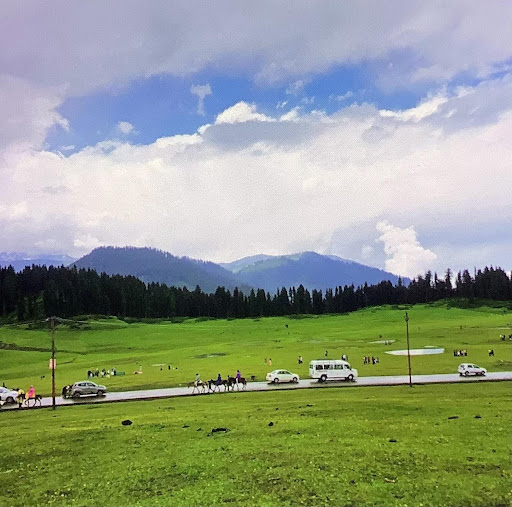
While Doodh Pathri remains one of the most picturesque and ecologically significant hill resorts of Kashmir, certain aspects of visitor management merit thoughtful attention. During our visit, horse dung was observed scattered across several sections of the meadow, detracting from the aesthetic appeal and environmental cleanliness of this otherwise pristine landscape. Given the increasing influx of tourists and the extensive use of horses for recreational rides, the issue requires systematic intervention.
The caretakers and tourism authorities of Doodh Pathri may consider developing a designated equestrian track along the periphery of the meadow, similar to the well-planned horse-riding circuit established at Khajjiar in Himachal Pradesh. Such an arrangement would allow equestrian activities to continue without disturbing the central grasslands that constitute the principal attraction of the resort. A separate track would not only enhance visitor comfort and safety but also help preserve the ecological integrity and visual charm of the meadow.
The lush green turf of Doodh Pathri is among its most valuable natural assets. Maintaining its cleanliness and preventing the accumulation of animal waste would significantly improve the visitor experience and reinforce the site’s reputation as a premier eco-tourism destination. Sustainable tourism demands a balance between recreational facilities and environmental stewardship. The introduction of dedicated horse tracks, coupled with regular sanitation measures, would represent a commendable step towards preserving the natural beauty of Doodh Pathri for future generations.
As custodians of this remarkable landscape, the concerned authorities have an opportunity to adopt best practices from other successful hill resorts and thereby ensure that Doodh Pathri continues to exemplify both natural splendour and responsible tourism management.