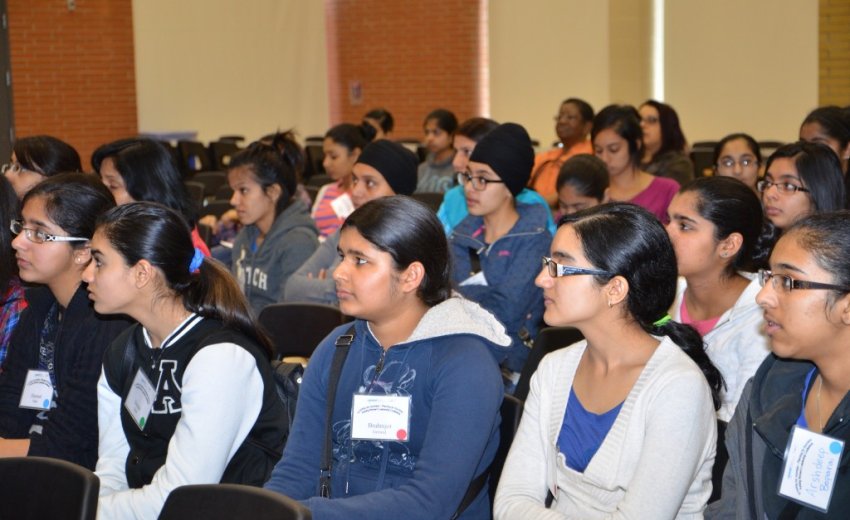
When I was an undergraduate, I had the opportunity to attend the World Sikh Council - North America Region's conference on Women in Sikhi. The conference hosted panelists and speakers to discuss three broad categories: the depiction of women in Scripture (SGGS Ji), the treatment of women in the Rehit Maryada, and future possibilities/actions for promoting gender equity. The WSC, like many Sikh institutions, was heavily male-dominated at the time, although the conference liaisons did an admirable job trying to recruit a diverse panel of women to organize, speak, and develop the program. Nonetheless, the majority of conference attendees (until the very last panel) identified as men, and there was no conversation around the agency of men as allies in the struggle for gender equity. It's always easier to criticize than construct, and I do think the conference was an important initial step; the organizers' hearts were in the right place, and they were certainly attempting to place women at the center of the conversation.
What I found most distressing, however, was the deep level at which the "proper role" of women in Sikhi was gendered. In emphasizing the valuation of women, most speakers and commenters focused on the following passage from SGGS Ji (p. 473):
 Woman becomes his friend; through woman, the future generations come.
When his woman dies, he seeks another woman; to woman he is bound.
So why call her bad? From her, kings are born.
From woman, woman is born; without woman, there would be no one at all.
Instead of focusing on the deeper meaning of this passage — that woman is a unique and necessary partner in the faith and in humanity –, most speakers placed the significance of women solely in the context of motherhood. As a result, the impact of women's leadership is often reduced to a single meme: woman as cultural vessel — the bearer of children (Mata) and imparter of religious knowledge and instruction. This highly gendered role and image severely limits how we conceive of the role of women, both as public figures and speakers, but also in terms of their "value-added" to society.
Comparatively, other speakers argue for what I would call an androgynized or masculinized model for Sikh women. When women in the audience asked how to legitimize their "place at the table" in key discussions and decisions, many female panelists encouraged what they termed as androgyneity: "de-feminizing" or "de-gendering" oneself, donning a pagri, and appearing gender-neutral, and by extension, less threatening to men. The concept of neutrality had less to do with inverting heteronormative gender roles and more to do with placating the insecurities of male leadership (and reifying normative characteristics of women).
I've heard an appreciation for the de-gendered model from (some) Sikh men; in large part because taking on the physical challenges that Sikh men face in the U.S. is seen as an additional or exceptional perspective, but also because there is some underlying sense that a woman who obscures her gender is more serious about equity and her role in the [Sikh] world. This dichotomy is not unique to the Sikh faith community but is echoed throughout highly masculinized or patriarchal spaces; the disciplining of women's bodies or presentation becomes a bounding factor in limiting or extending authority, privileges, and access. These options can be both empowering or hindering and are deeply personalized and inherently politicized.
I think the next phase of this conversation — how can women define their own participation and expectations while retaining freedom of choice — parallels many of the struggles and negotiations other strains of feminist thought (especially transnational feminism and so-called "third World feminism") have pursued over the past 30 years. However, this conversation has been cyclical in Sikhi and is often responsive to socio-political needs at different moments in history.
So I ask, as the "next generation" of adult Sikh women, how can we work to expand the options, pathways, and possibilities for other Sikh women? What should we ask of our male allies in this process? With the rising disconnect between grassroots representation and leadership versus "visible" or "figure-head" leadership, how can we transition and encourage women's development (and authority) as community leaders? Can we pursue options on our own terms; i.e., not in a "masculinized" model of leadership and/or presentation?
Posted at TheLangarHall.com by Camille on Saturday, July 26, 2008